Nara: Tōdai-ji
Right next to Nara Park, you find Tōdai-ji, or the "Eastern Great Temple," a Buddhist temple complex that was once part of the Seven Great Temples. It is a UNESCO World Heritage Site.
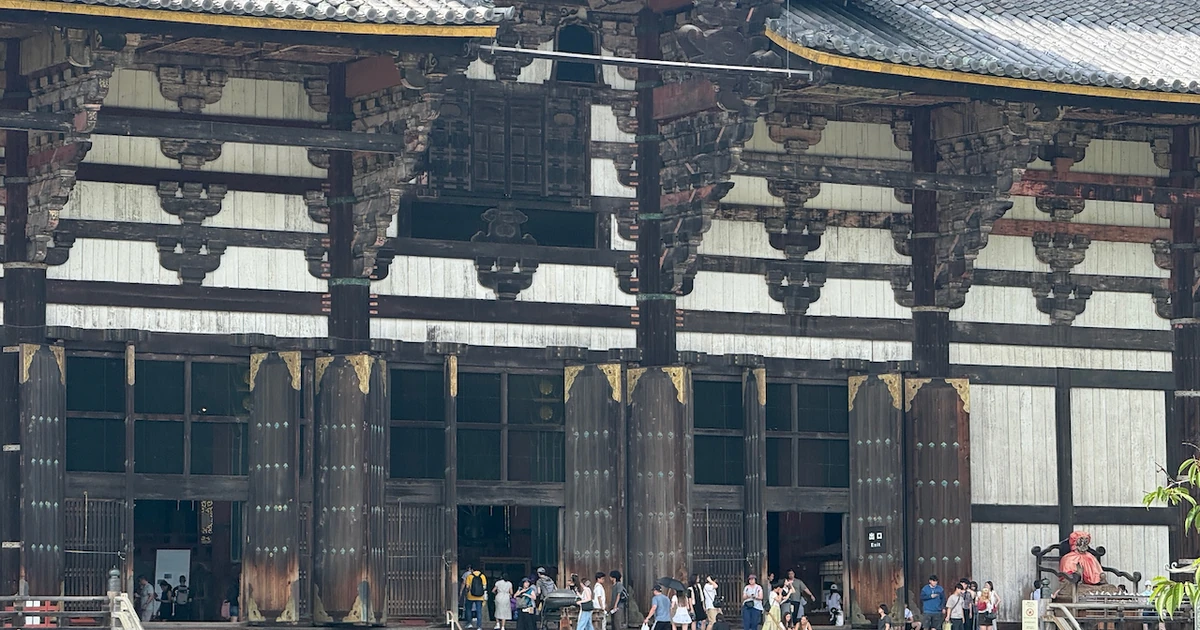
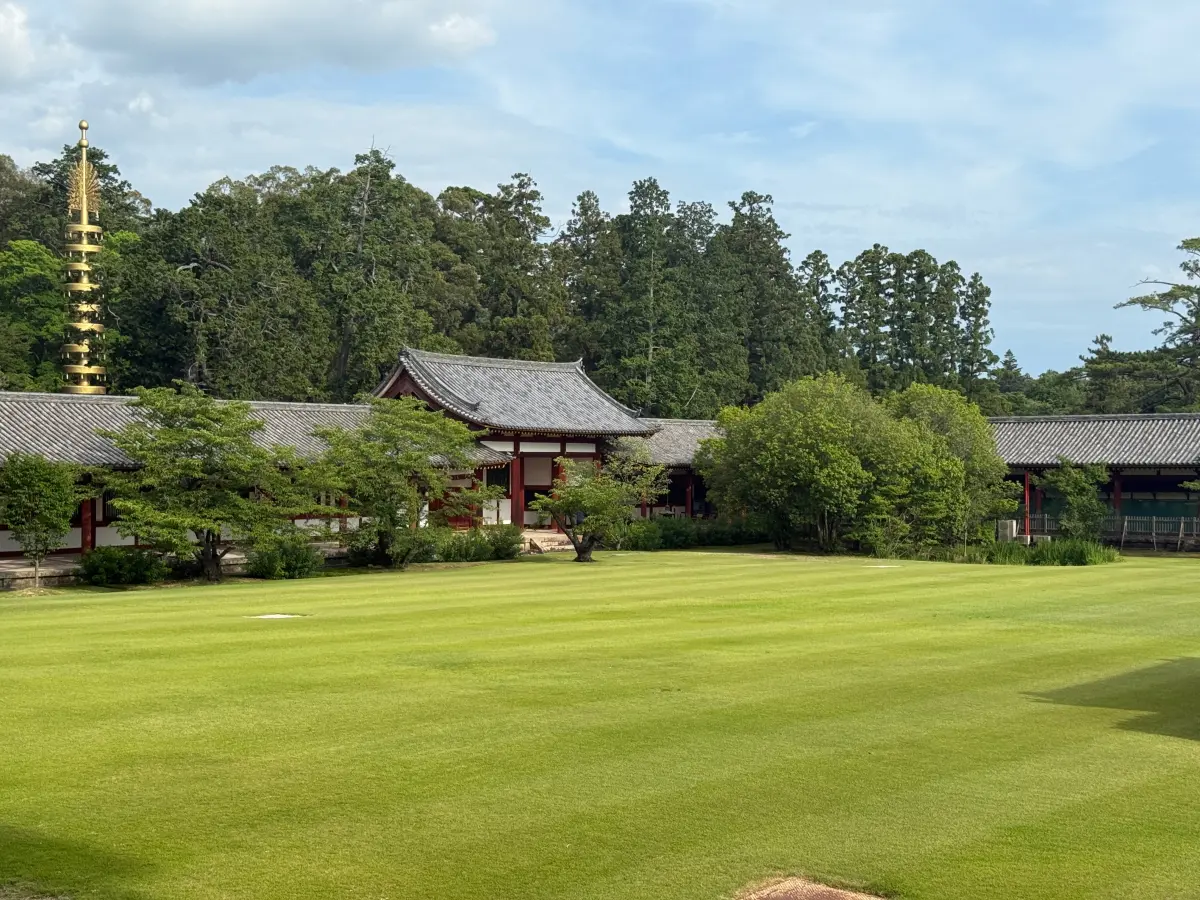
Right next to Nara Park, you find Tōdai-ji (東大寺) 🗾, or the “Eastern Great Temple,” a Buddhist temple complex that was once part of the Seven Great Temples. Founded in 738 CE and opened in 752 CE, the temple has seen several reconstructions. One of the most significant reconstructions happened in 1709 (due to cost limitations, it was then 30% smaller than the original), and its current appearance was completed using steel framing (to support the very heavy structure) by 1980. It is a UNESCO World Heritage Site.
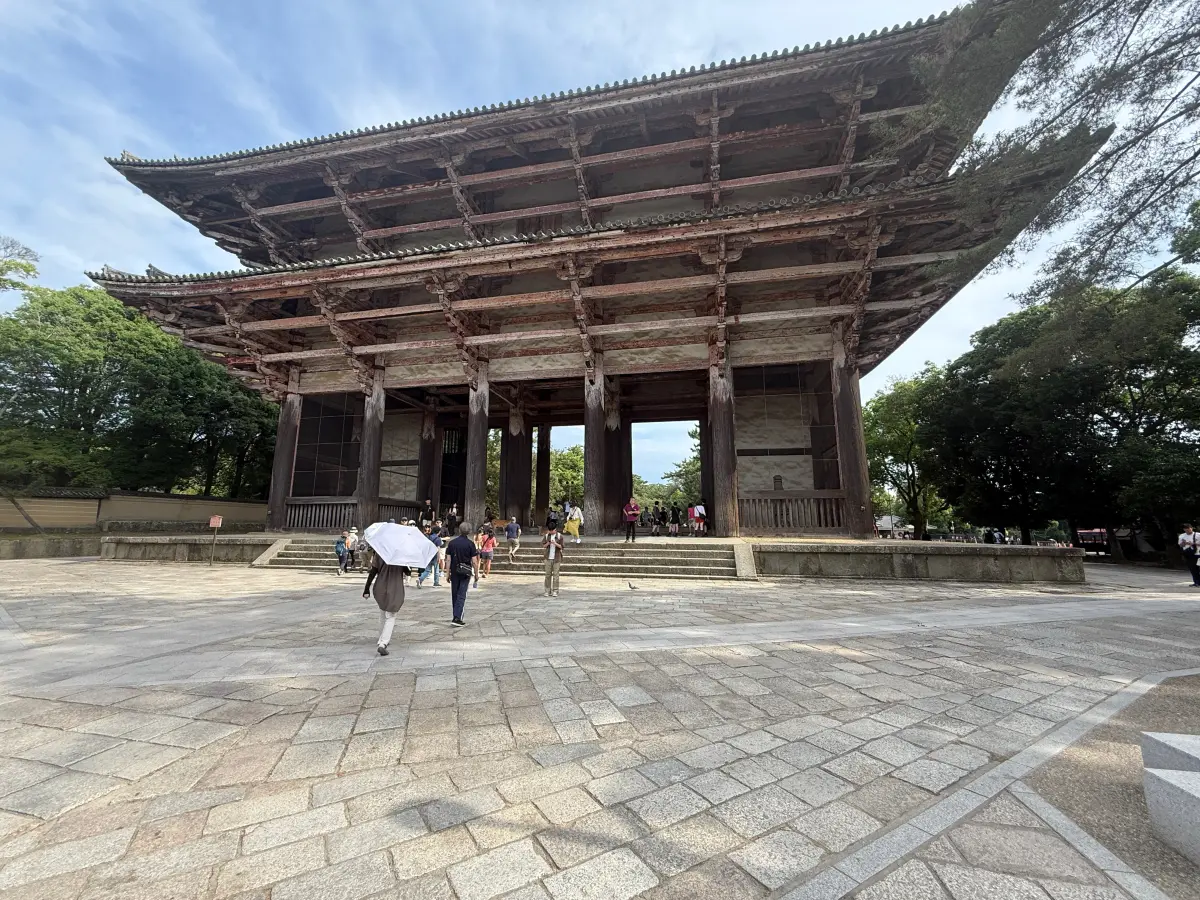
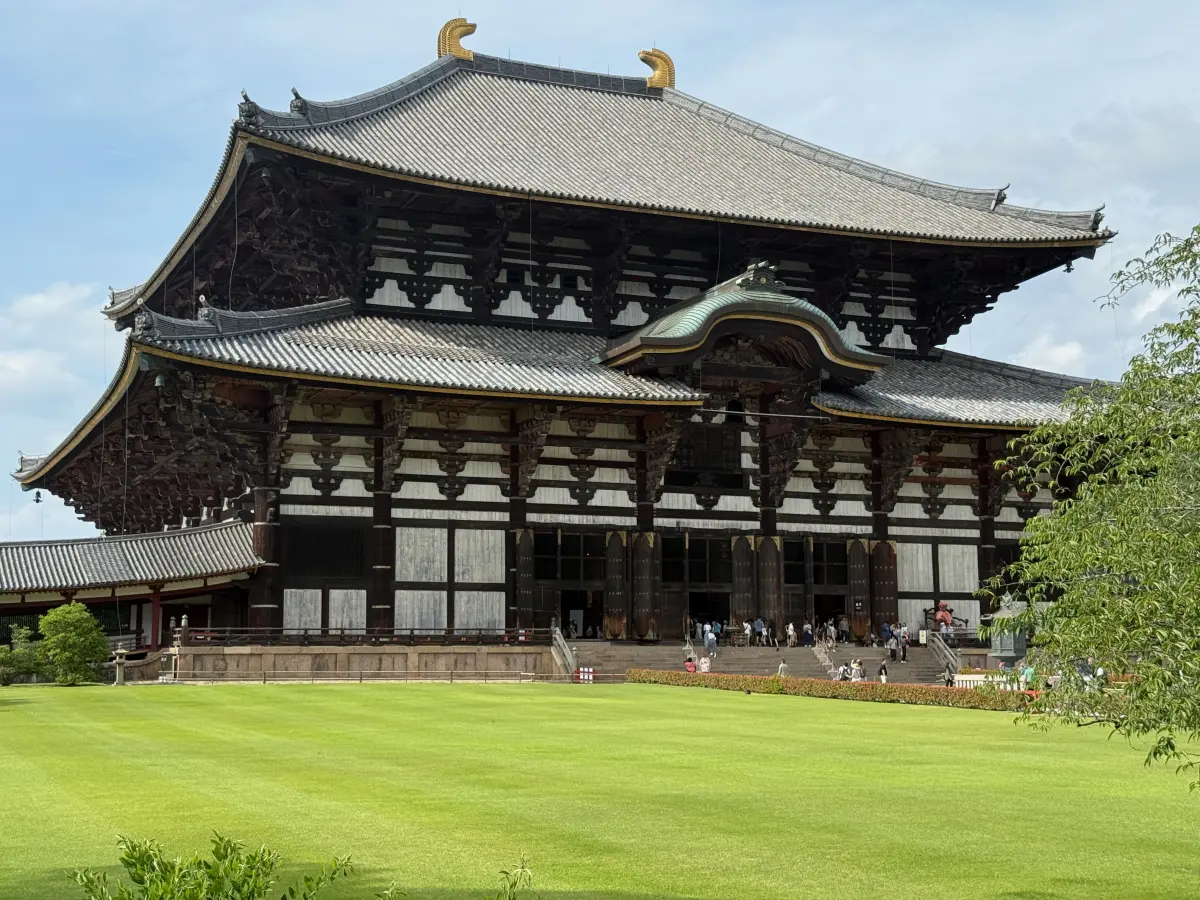
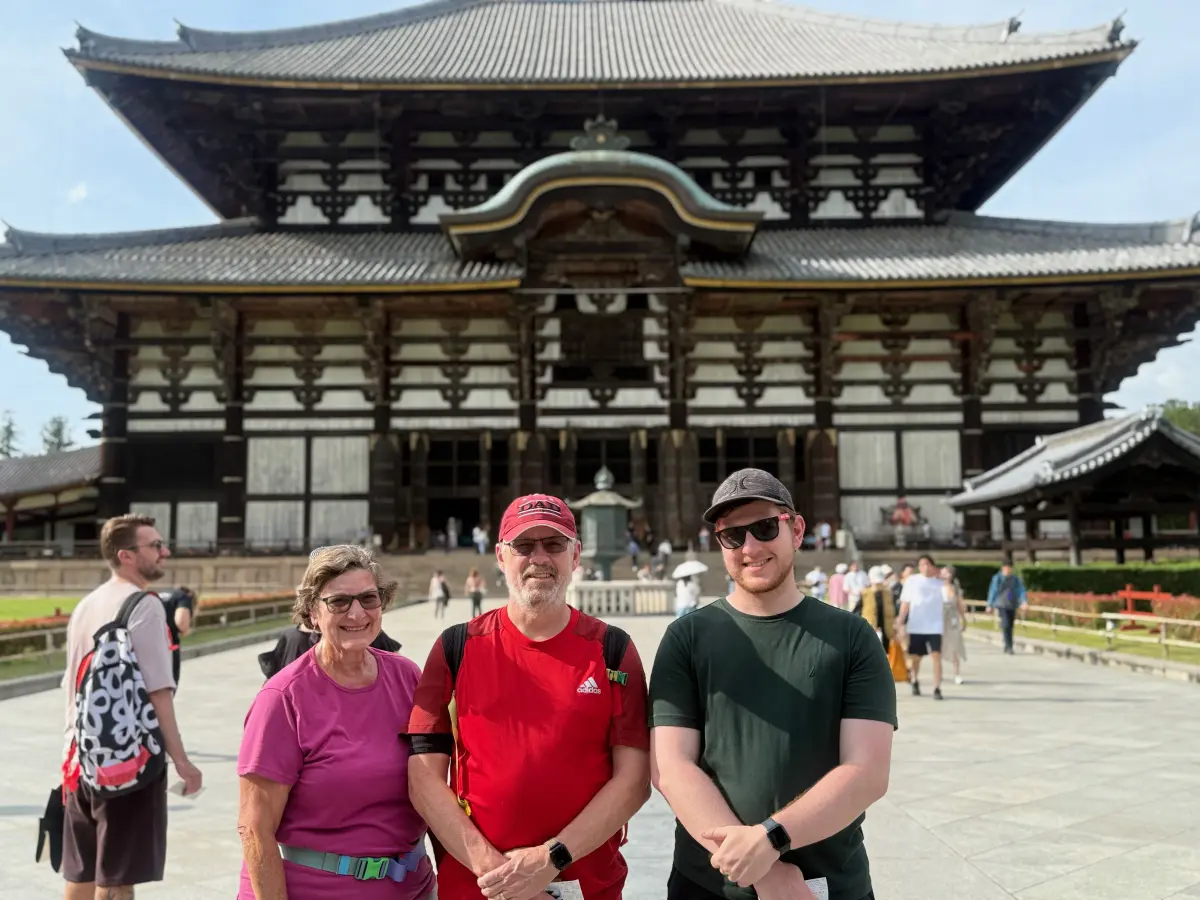
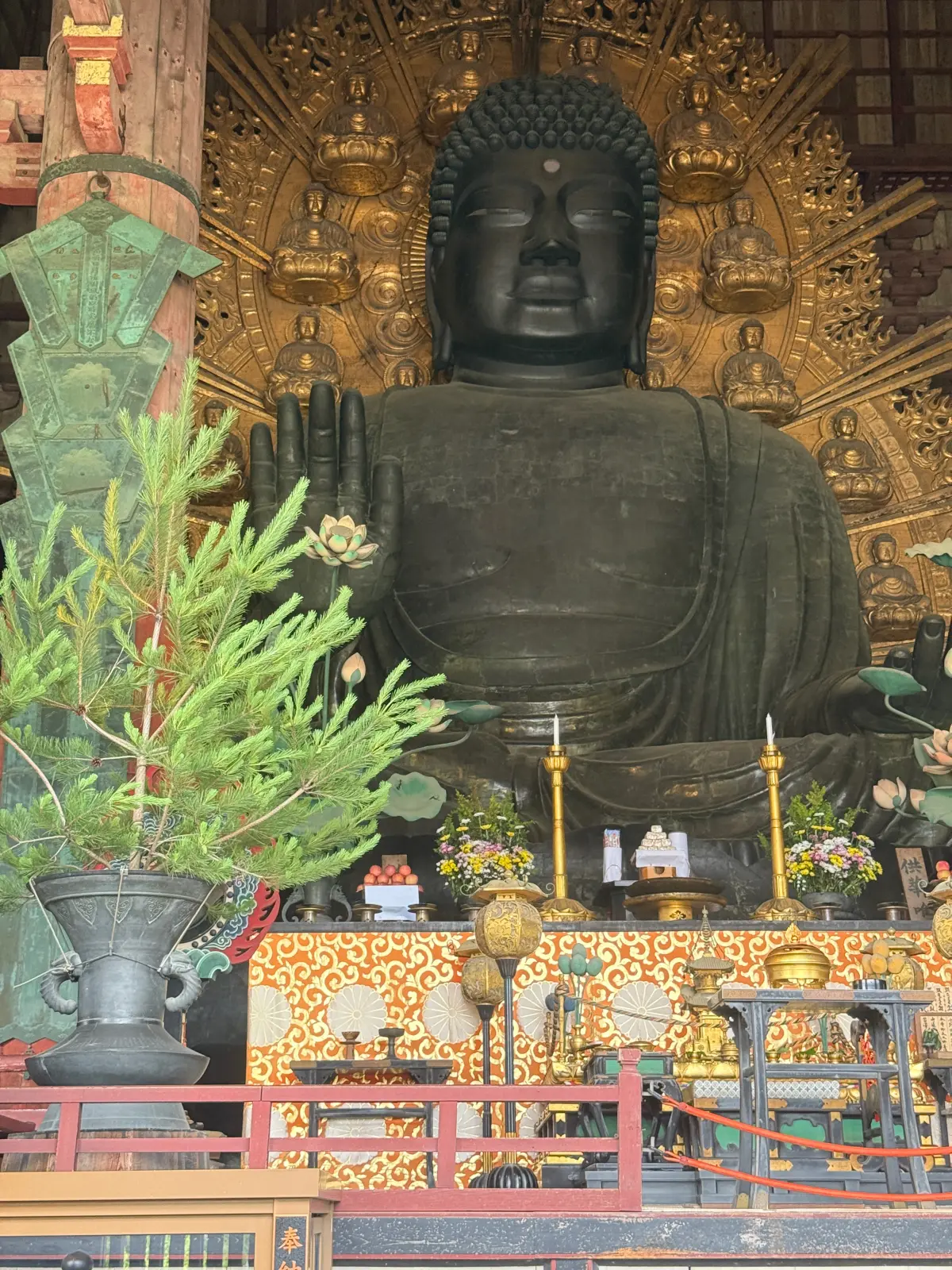
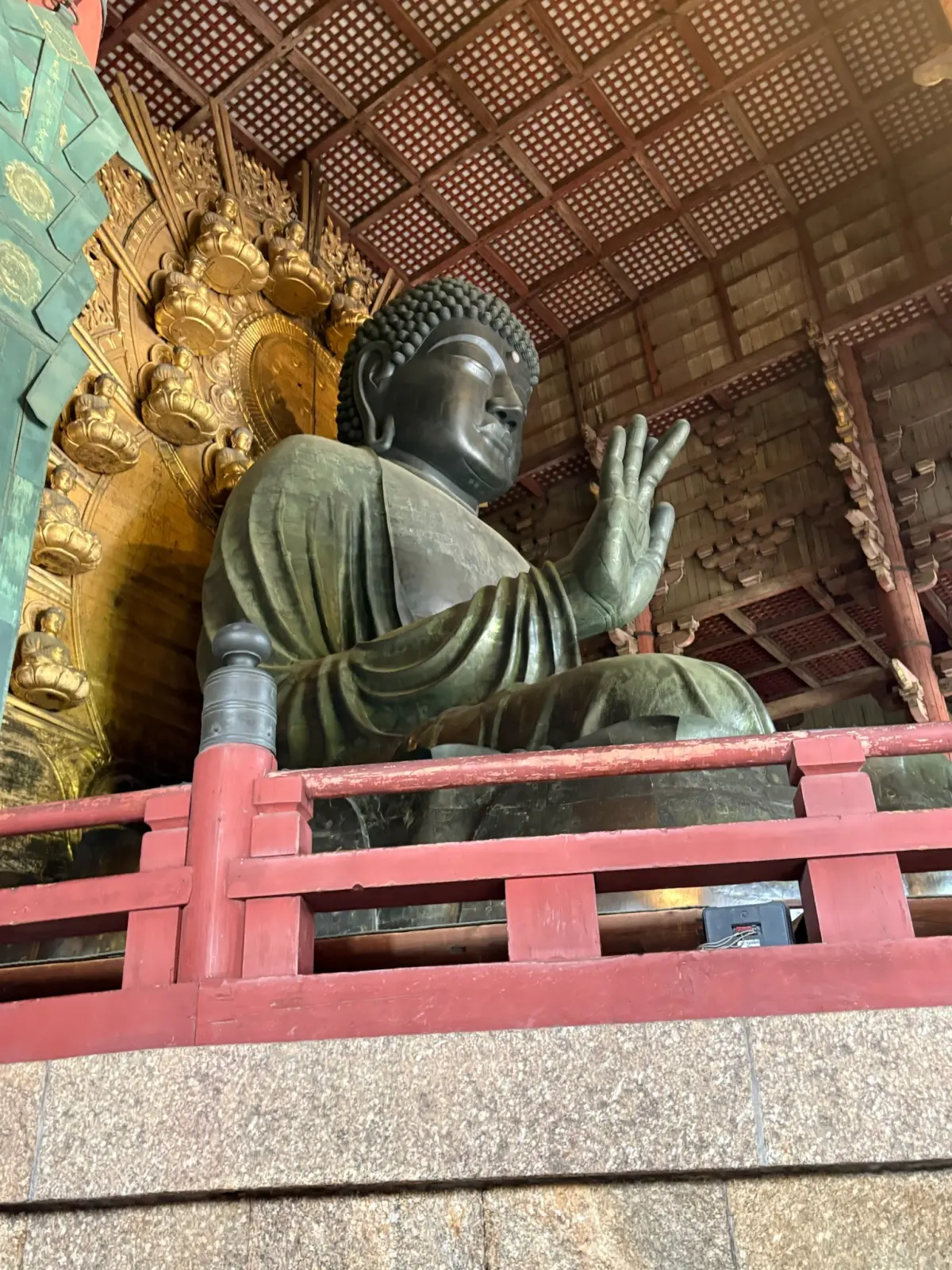
Birushana (毘盧遮那), often rendered as Vairocana or Mahavairocana, is the “Cosmic Buddha” or “Sun Buddha” who embodies the dharmakāya (truth body) and illuminates all existence with wisdom and compassion. The Great Buddha Hall (大仏殿 Daibutsuden) houses the world’s largest bronze statue of this Buddha, known in Japanese as Daibutsu (大仏). The statue is almost 50 ft (15 m) tall, and is one of the largest in the world. The original construction included 437 tons of copper, 8.5 tons of tin, and hundreds of kilograms of gold. The statue is housed in the world’s largest wooden building (until 1998).
Around to the left of the great Buddha, you can see the Buddha raising its right hand (better than from the front). It represents Abhaya Mudra (Gesture of Fearlessness).
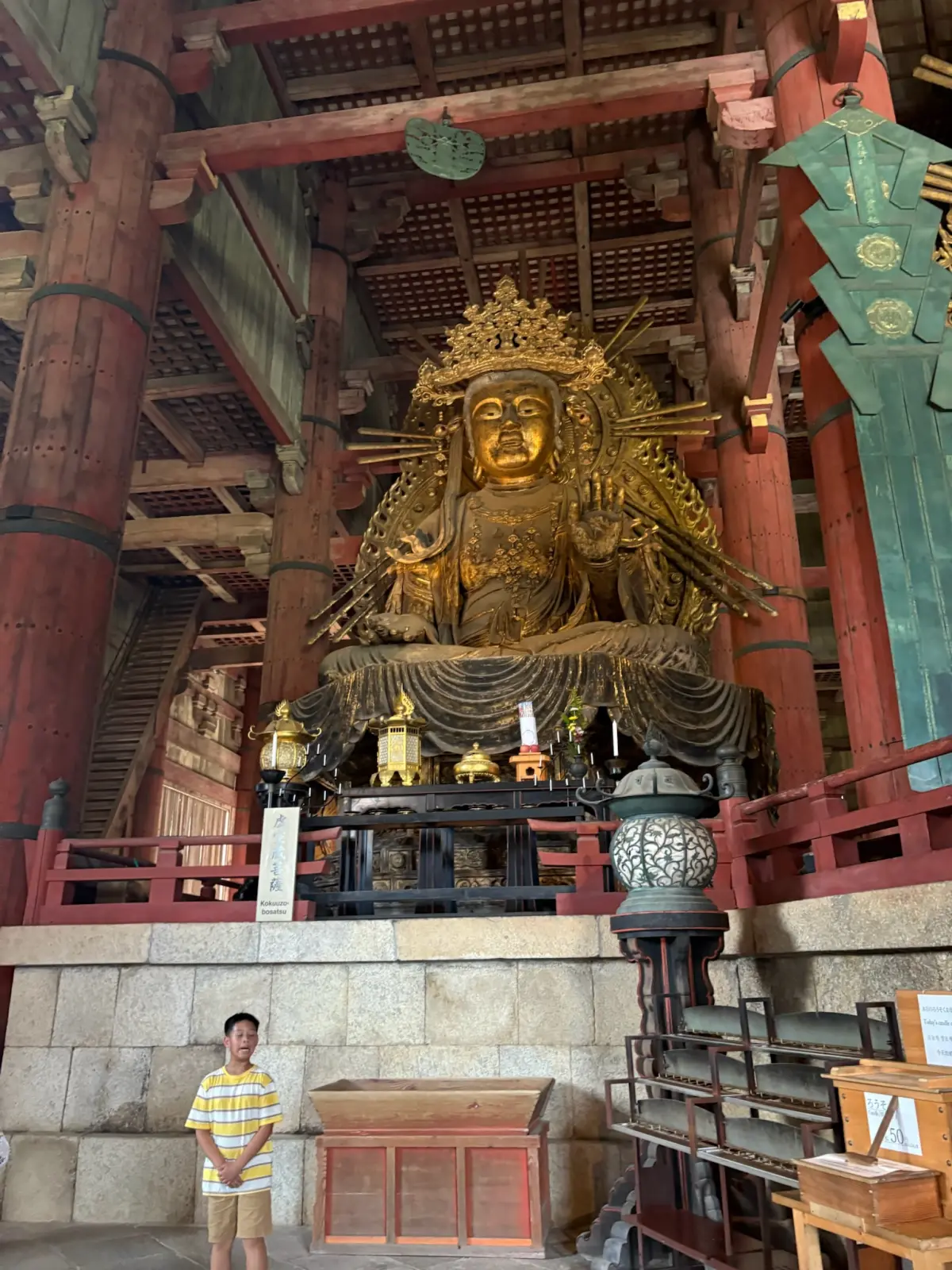
Further in that direction, you find the statue of Nyoirin Kannon, or the “Jewel-holding Wheel-turning Lord”. This is a compassionate Japanese Bodhisattva in Esoteric Buddhism, specifically an Avalokiteśvara form. Characterized by six arms (sometimes two), this deity brings salvation and fulfills wishes, often depicted seated in a relaxed meditative pose, holding a sacred jewel (nyoi hōju) and a dharma wheel (rin).
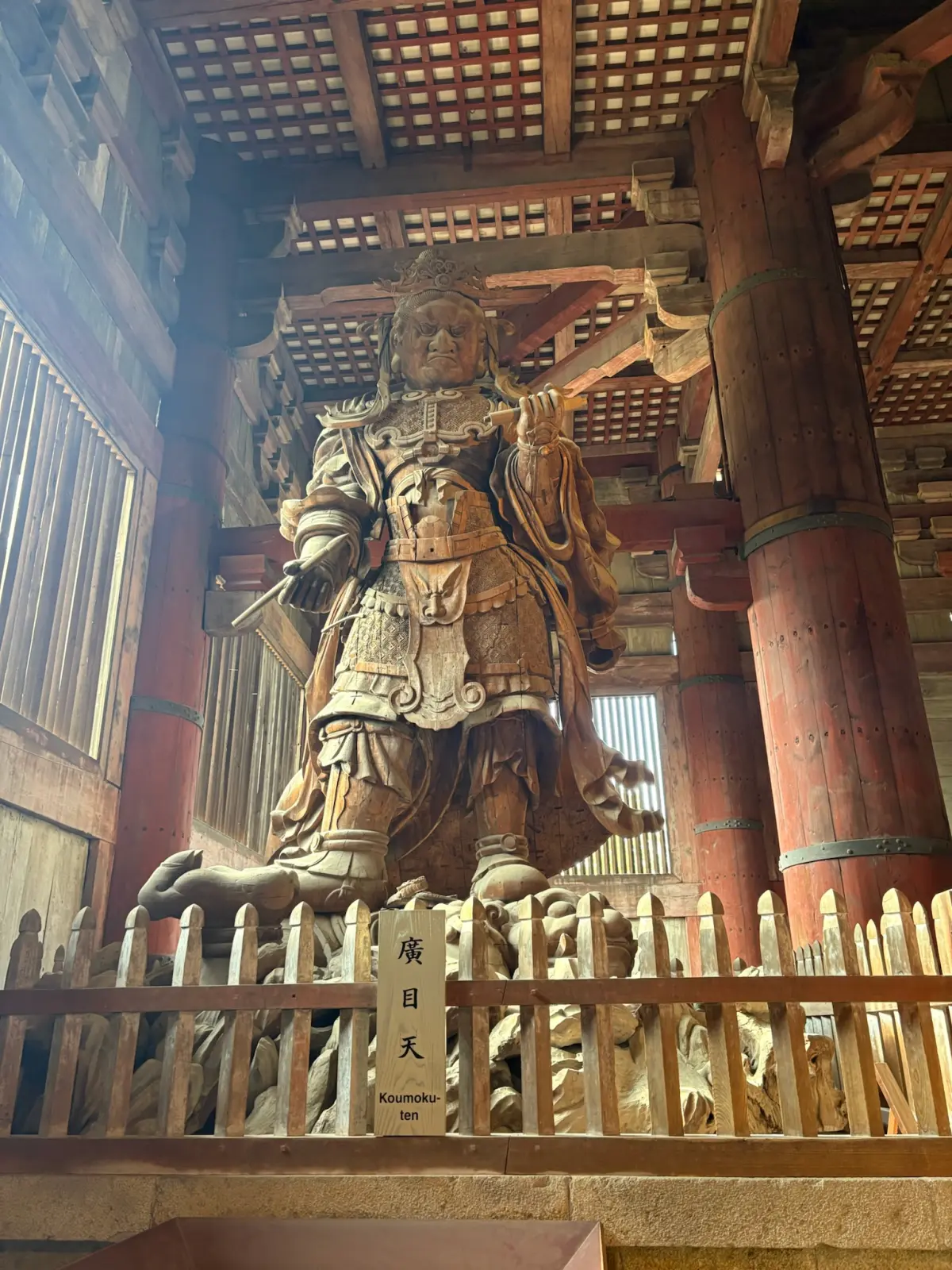
More towards the back, we encounter a statue of Kōmokuten (Heavenly King and Guardian of the West). Kōmokuten literally means “wide-eyed” or “expansive vision” - he encourages enlightenment. His foot is on the squished head of an evil force.
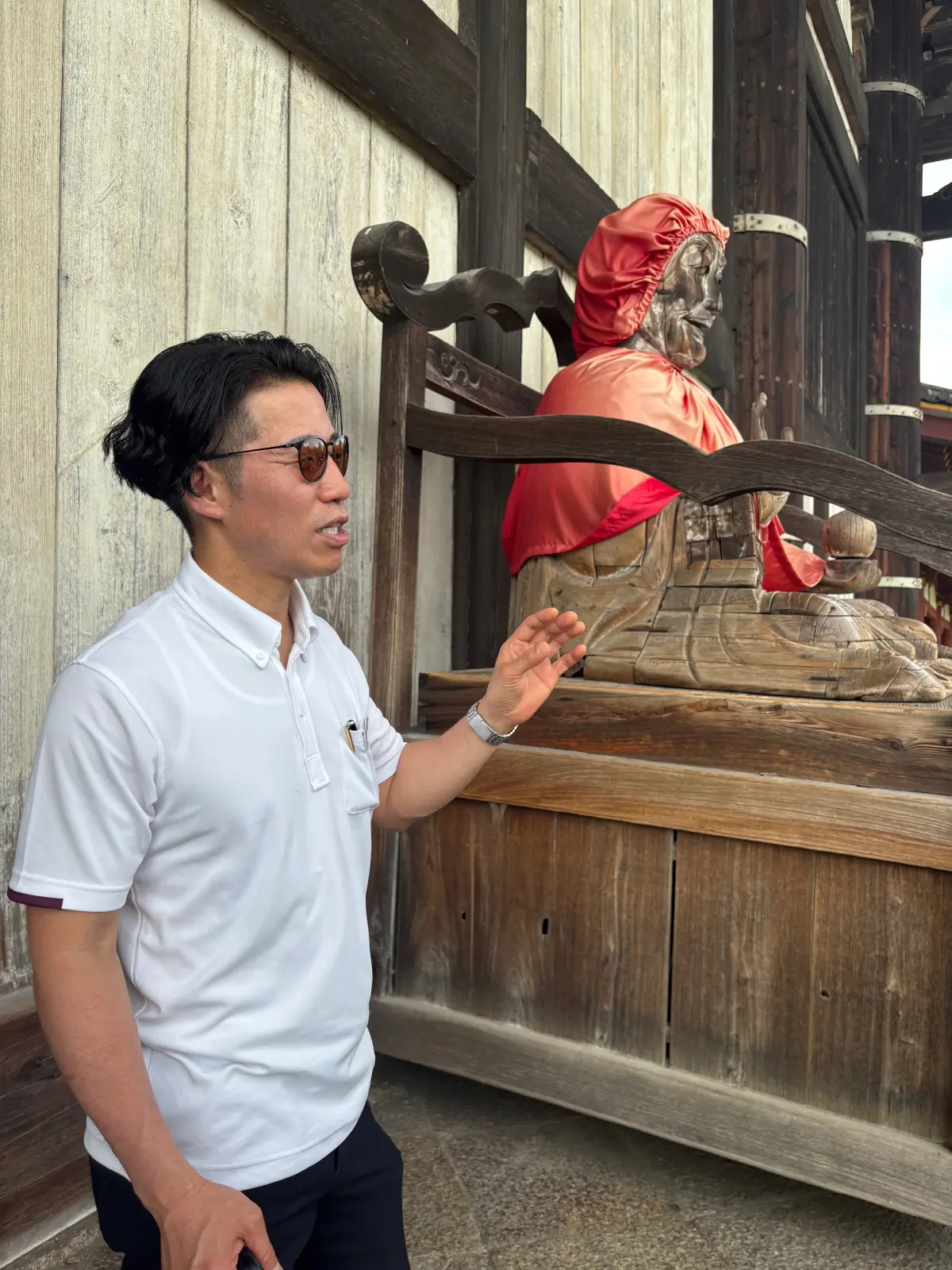
Nearby is a statue of “Binzuru (Pindola Bharadvaja), sitting in the lotus position, and dressed in a red robe. One of four Arhats asked by the Buddha to remain in the world (Chinese: 住世) to propagate Buddhist law (dharma). Statues of him are usually well-worn, since the devotees follow the custom of rubbing a part of the effigy corresponding to the sick parts of their bodies, as he is reputed to have the gift of healing. The red dress is an offer to him, asking him to watch over babies and children.
Another interesting item is “Buddha’s Nostril” (Pillar Hole), a hole in a wooden pillar behind the Buddha, said to be the same size as the Buddha’s nostril. Passing through brings enlightenment.