Hiroshima: Itsukushima (Miyajima) Island
We visit Miyajima Island, its famous Tori gate and shrine, and eat delicious local oysters.
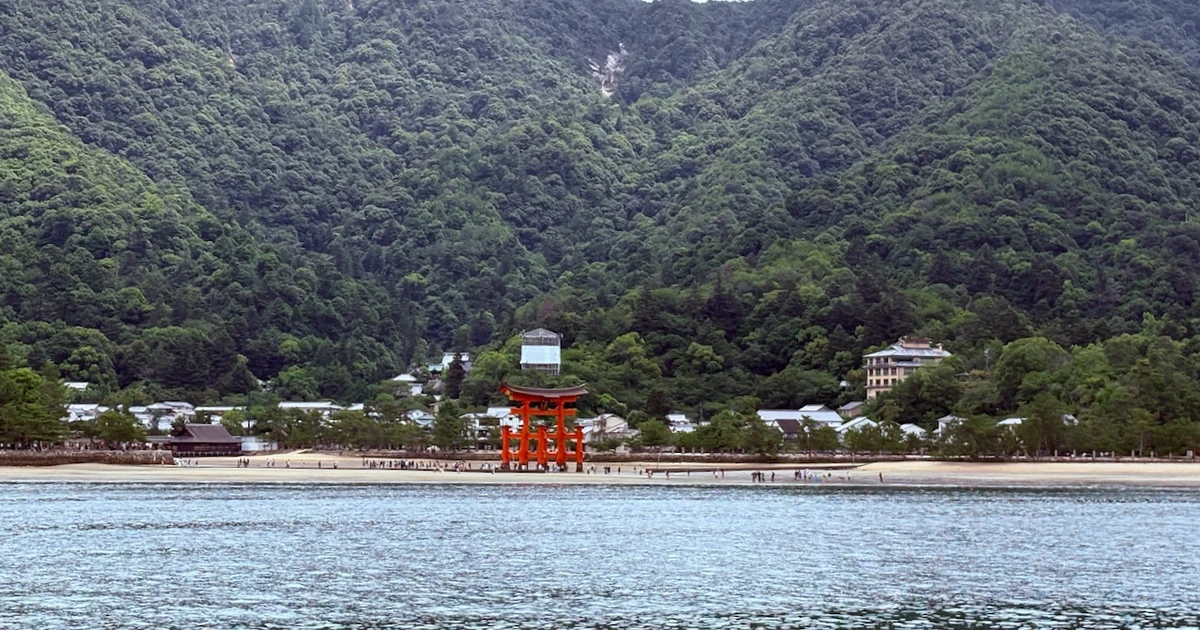
Tram to Yokogawa Station (横川駅) 🗾 and then the train took us to Miyajima-Guchi Station (京都駅) 🗾, from where it is a short walk to the JR Ferry building.
The ferry takes you across to Itsukushima (厳島) island, more commonly known as Miyajima Island (meaning “Shrine Island”), and Miyajima-chō (宮島町) is the small town on the island. While often associated with Hiroshima, the town is now technically part of the city of Hatsukaichi (廿日市市), which annexed it in 2004.
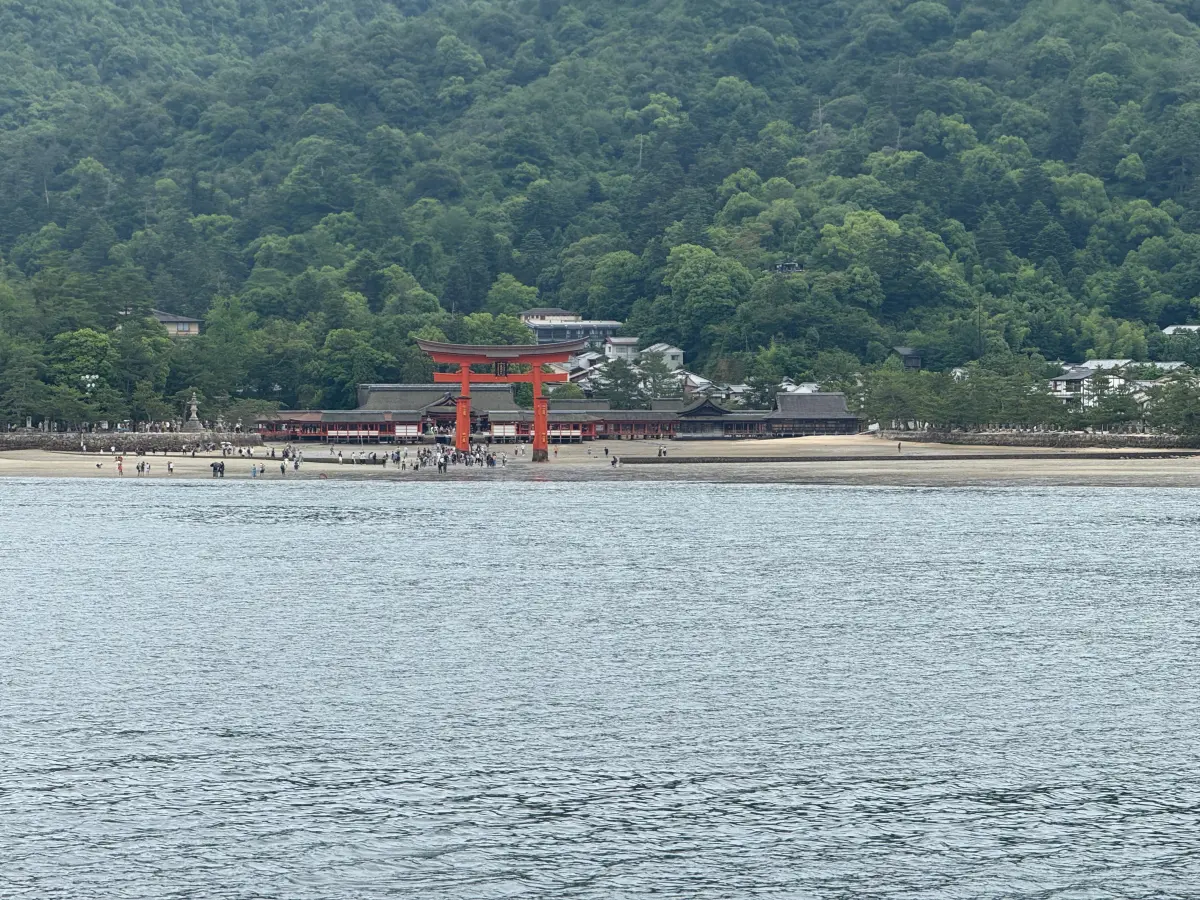
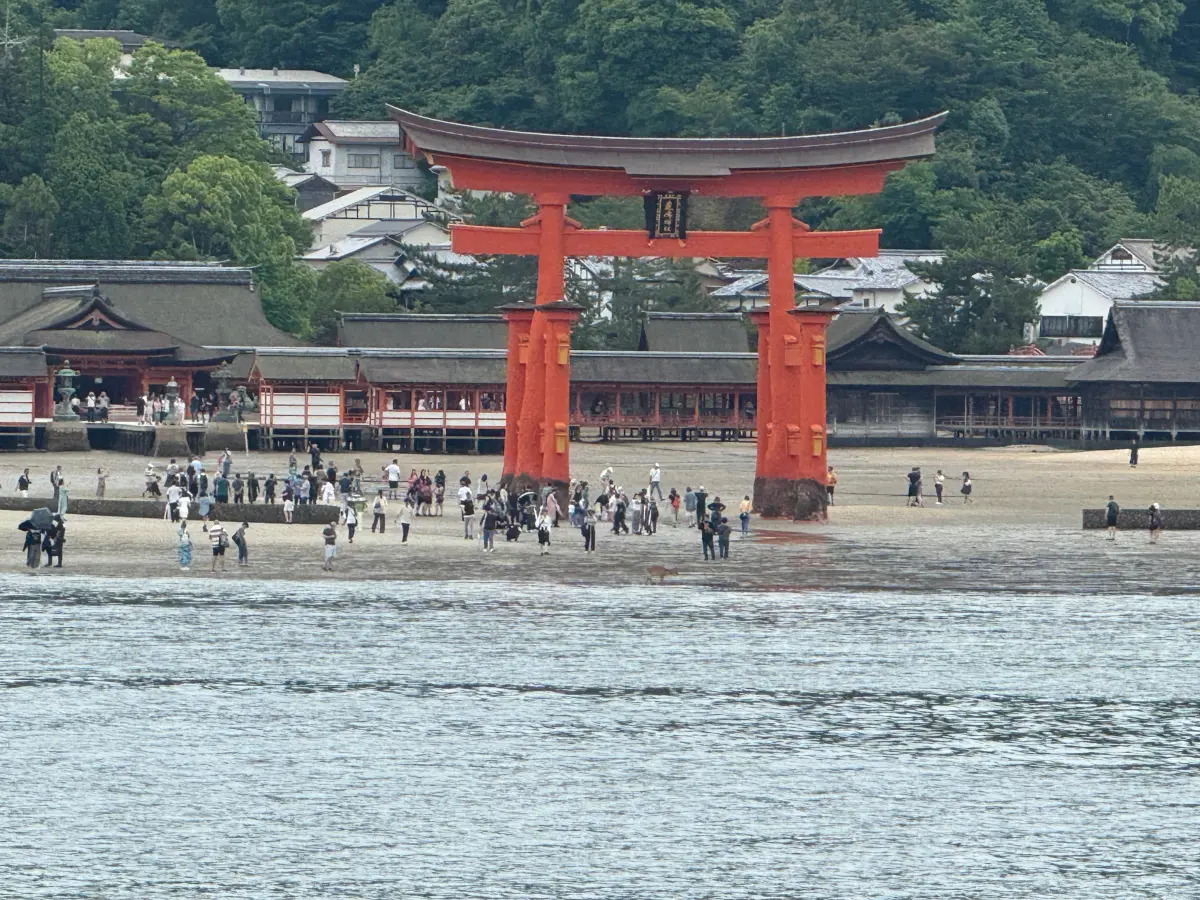
 The island is best known from iconic photographs of its “floating” Torii gate. This gate belongs to the Itsukushima Shrine on the island. On the way to the island, make sure you are on the right side of the ferry, and you will get great views of this gate. The island of Itsukushima, including the waters around it (part of Seto Inland Sea), lies within Setonaikai National Park. The Seto Inland Sea experiences strong tides. At low tide, the bottom of the sea is exposed past the island’s torii. At high tide, the sea covers all the previously exposed seabed mud and fills areas underneath the shrine boardwalk.
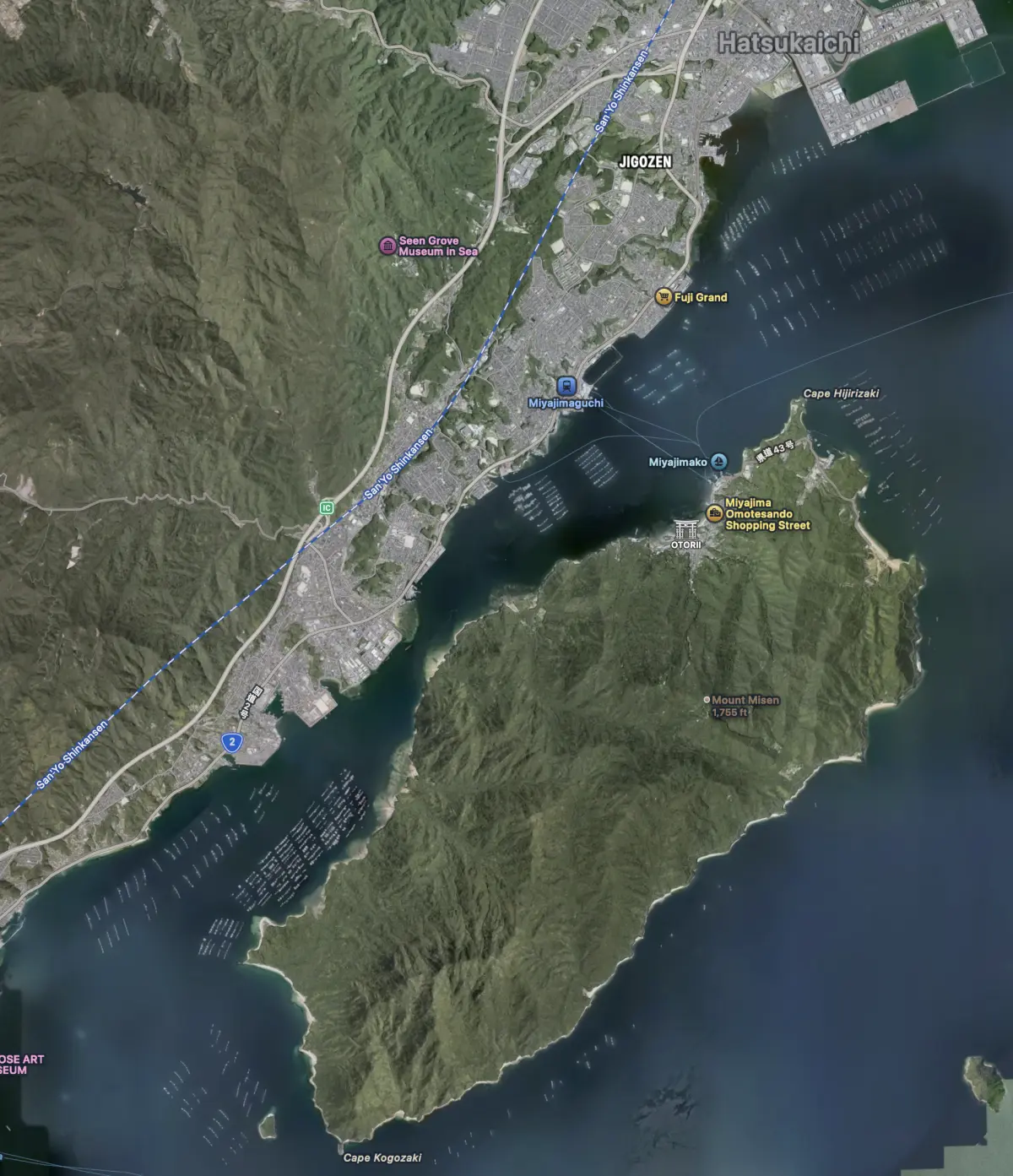
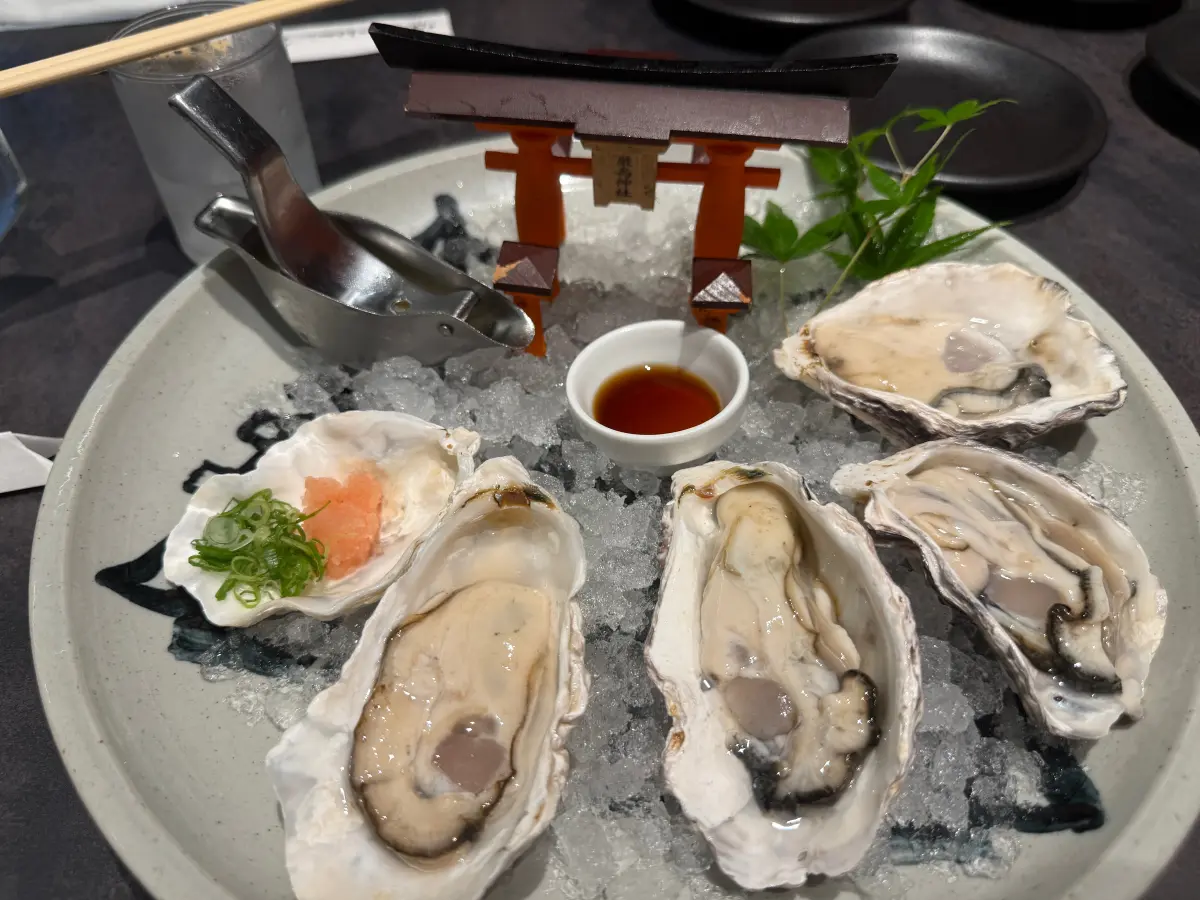
Leaving the ferry, we walked through tourist-filled streets to find the lunch spot recommended by our guide: Yakigaki No Hayashi (焼がきのはやし) 🗾. This restaurant supposedly is the originator of shell-baked oysters in Japan. Of course, we had a lunch centered around Jigozen-gaki oysters. These are premium, large, and meaty oysters cultivated in the nutrient-rich waters of Jigozen in Hiroshima’s Seto Inland Sea, prized for their deep umami flavor. You can clearly see the oyster farms on the satellite photo on the right.
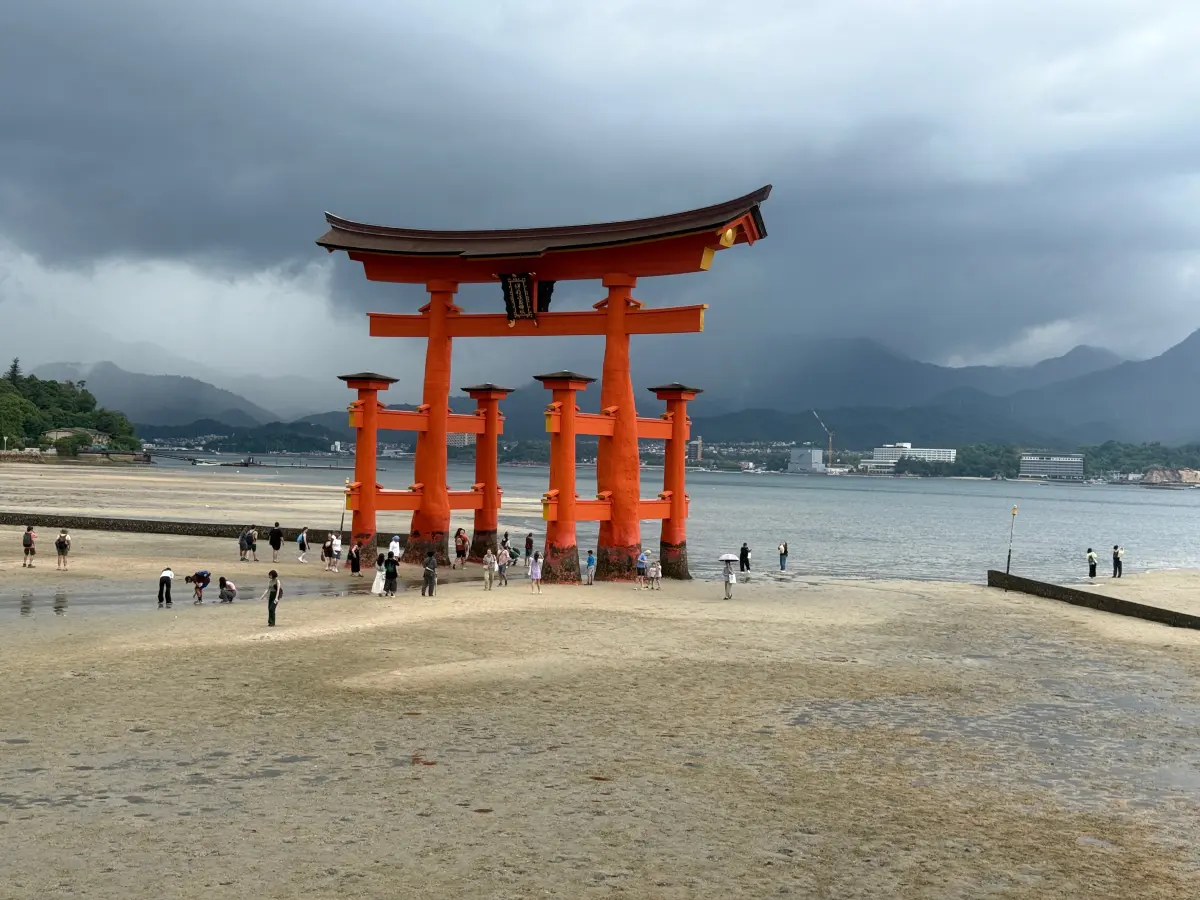
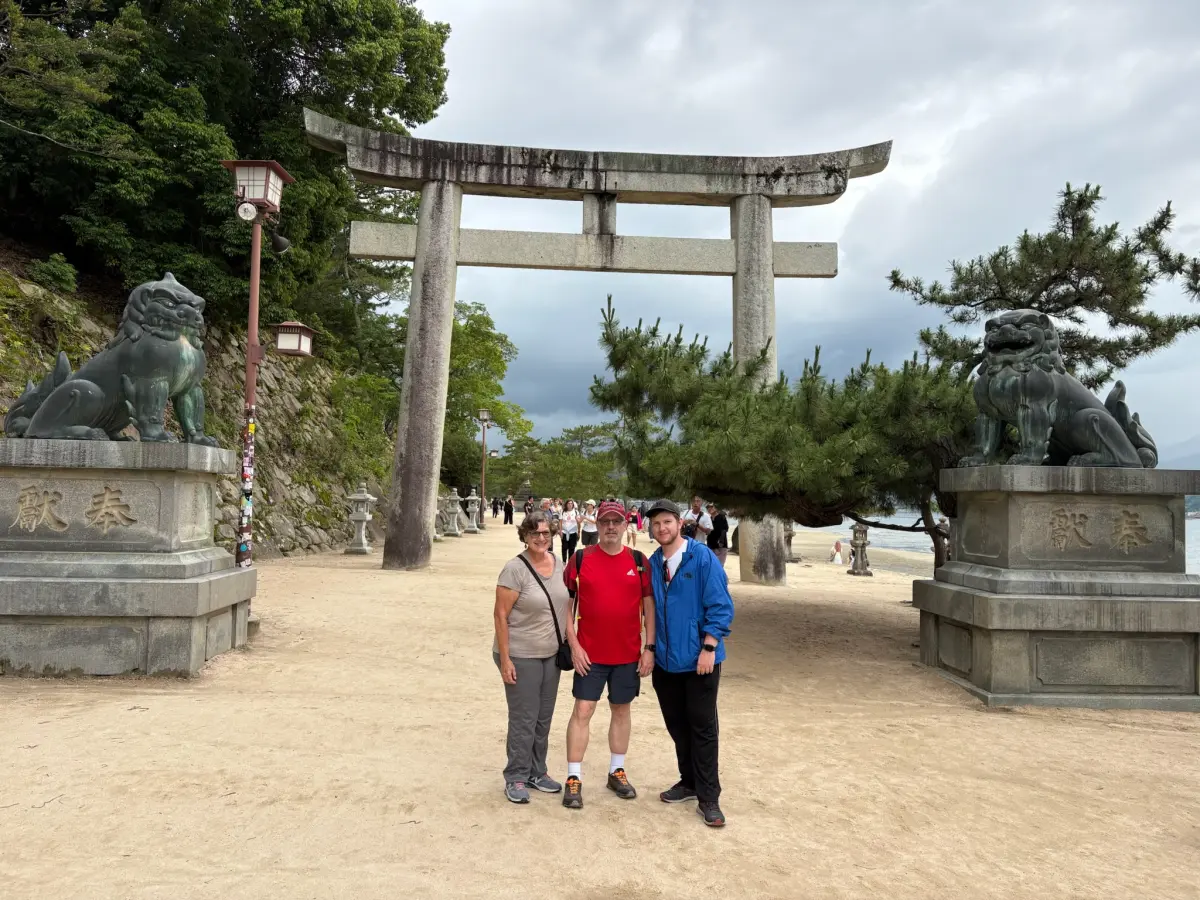
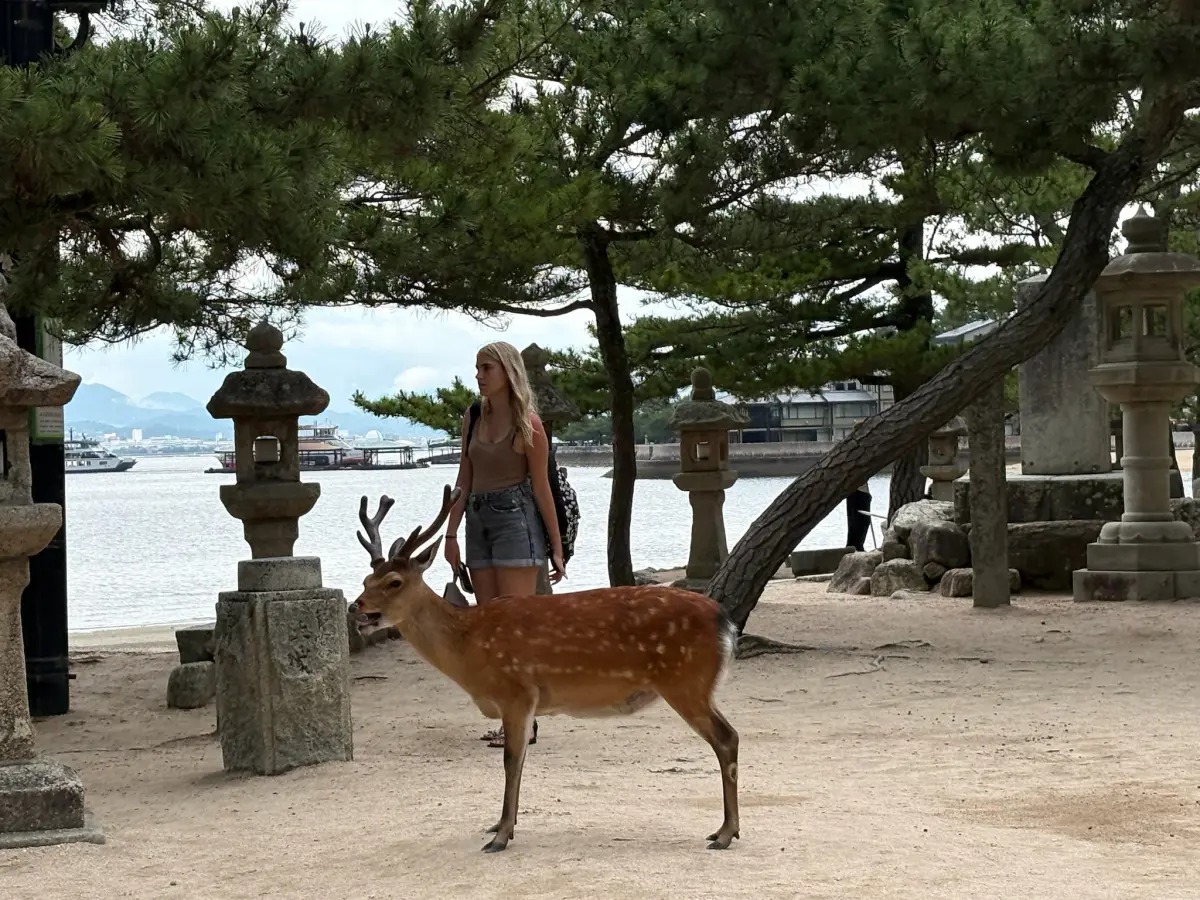
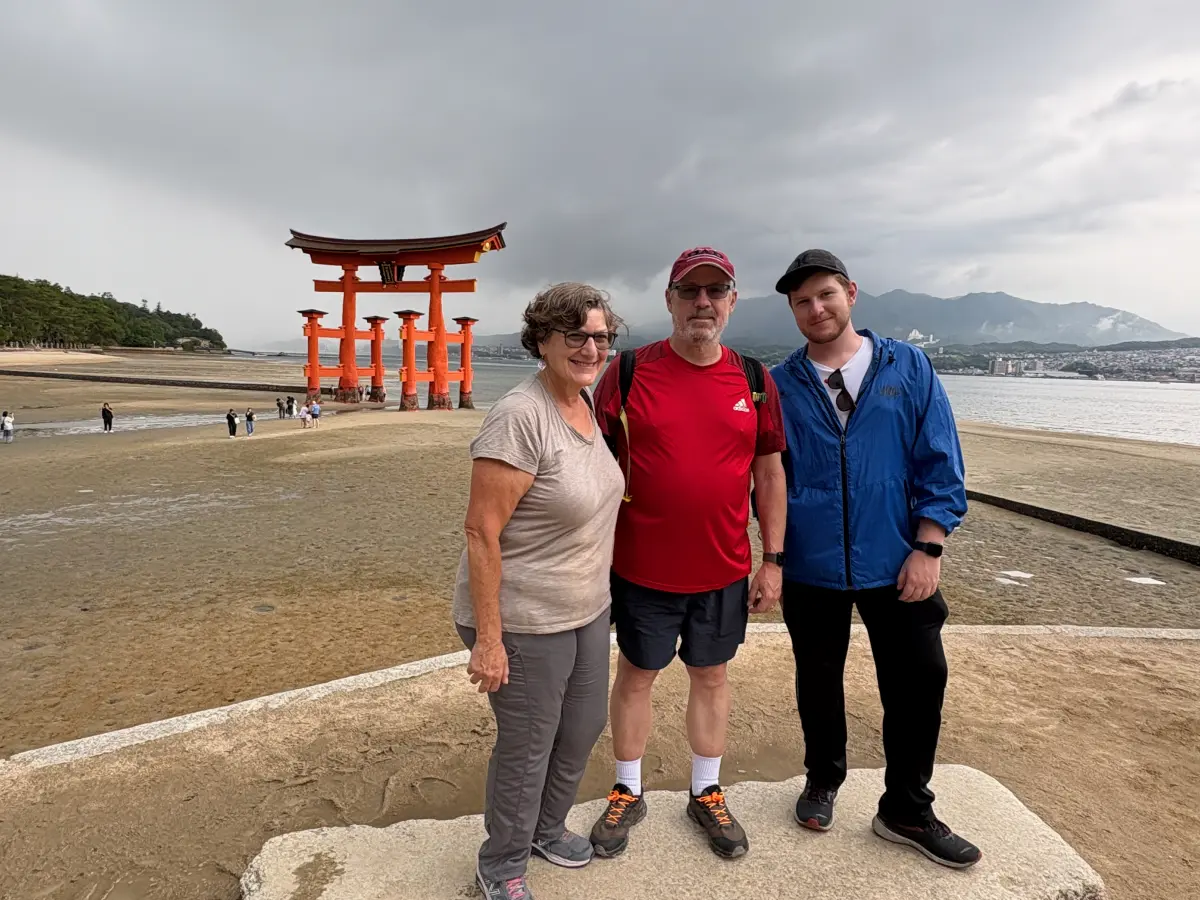
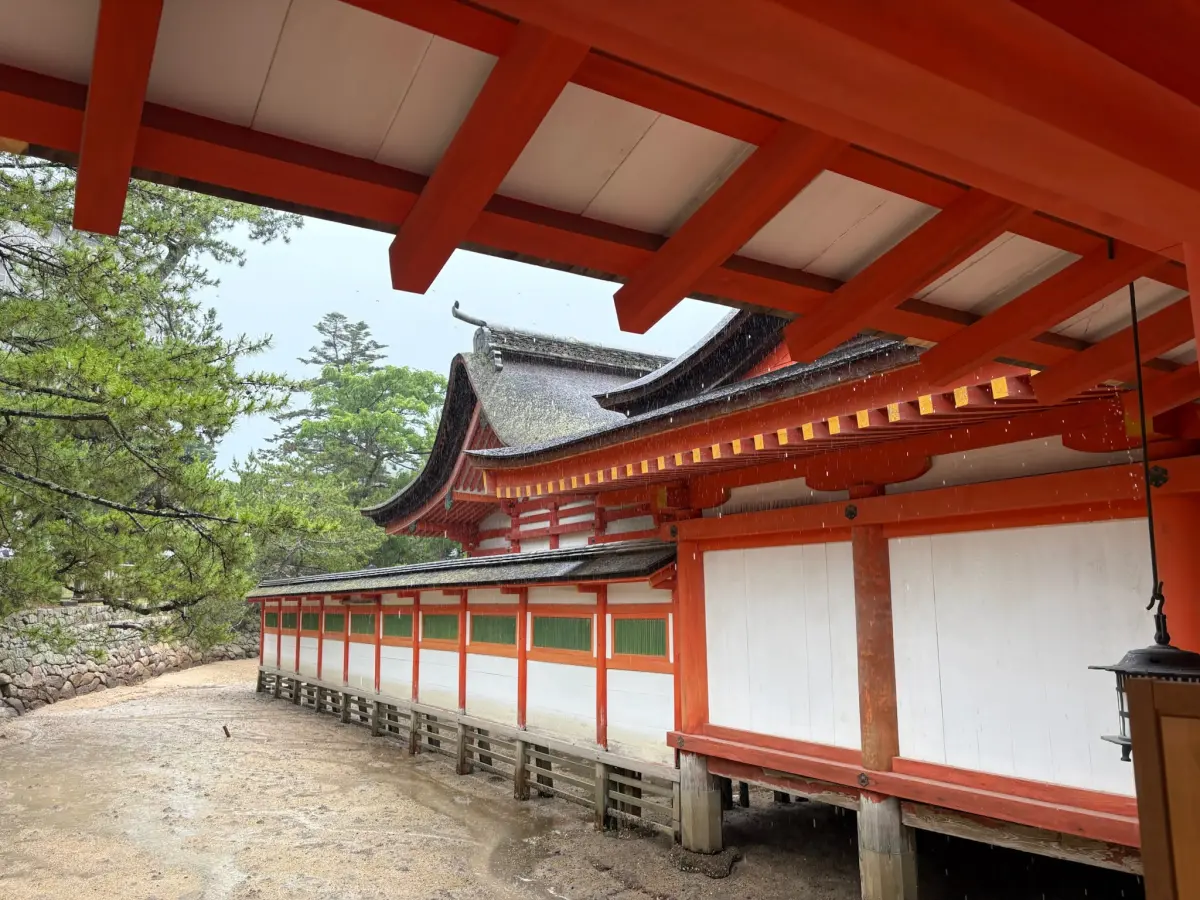
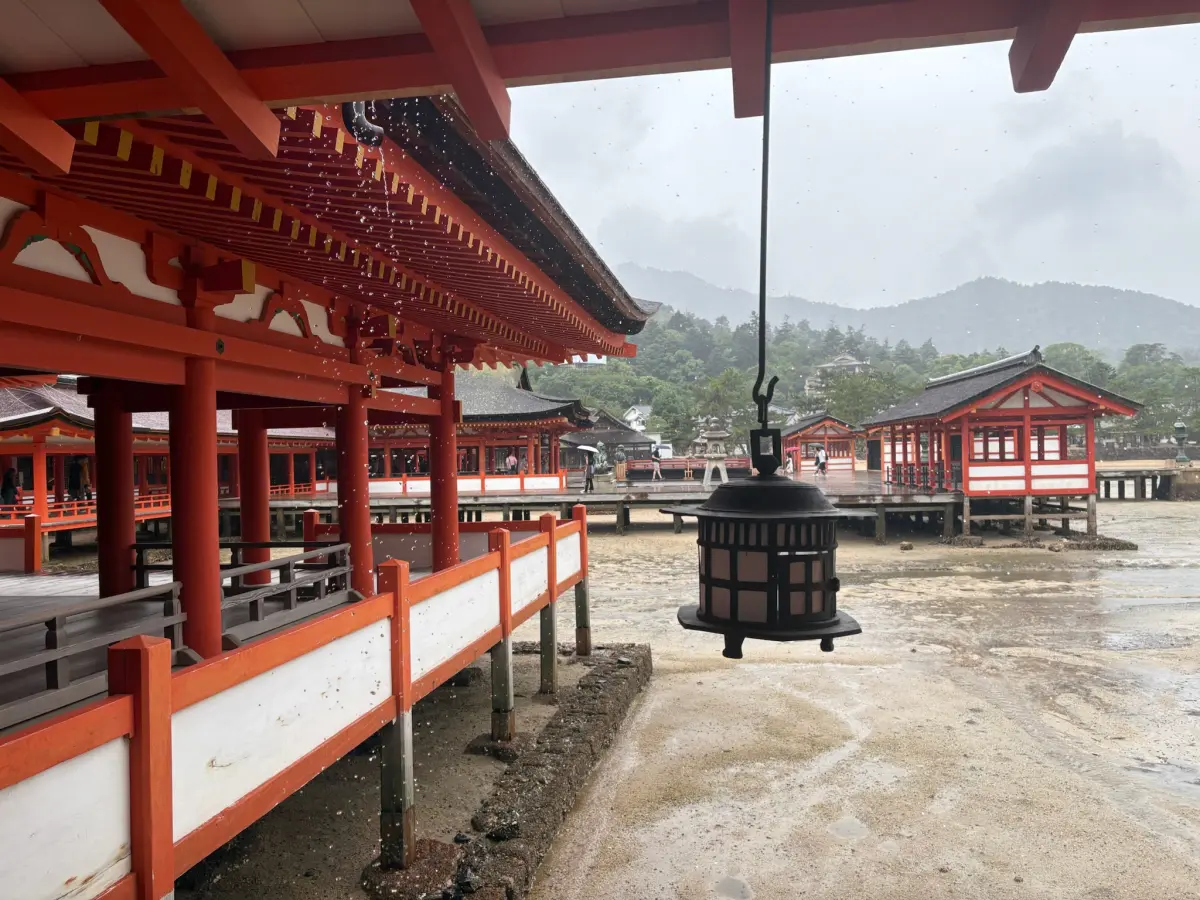
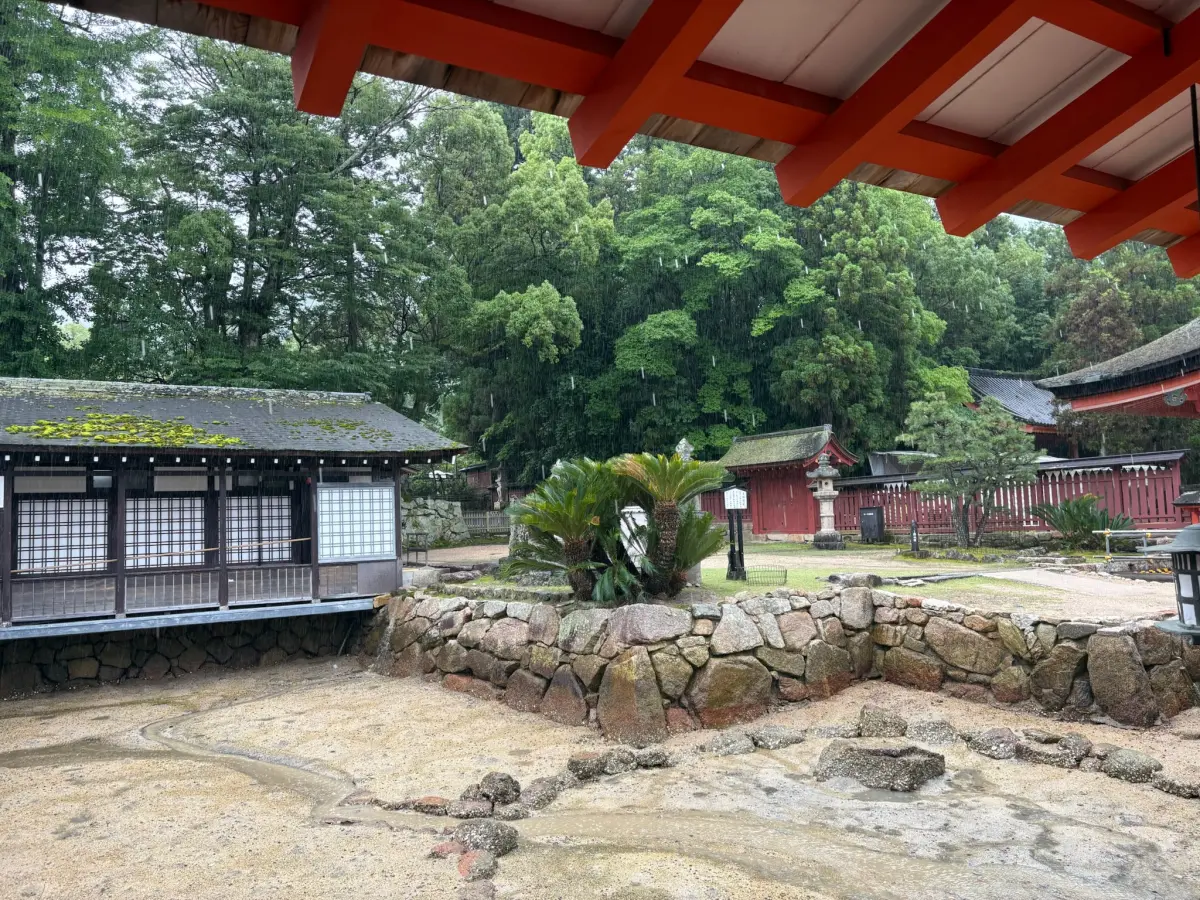
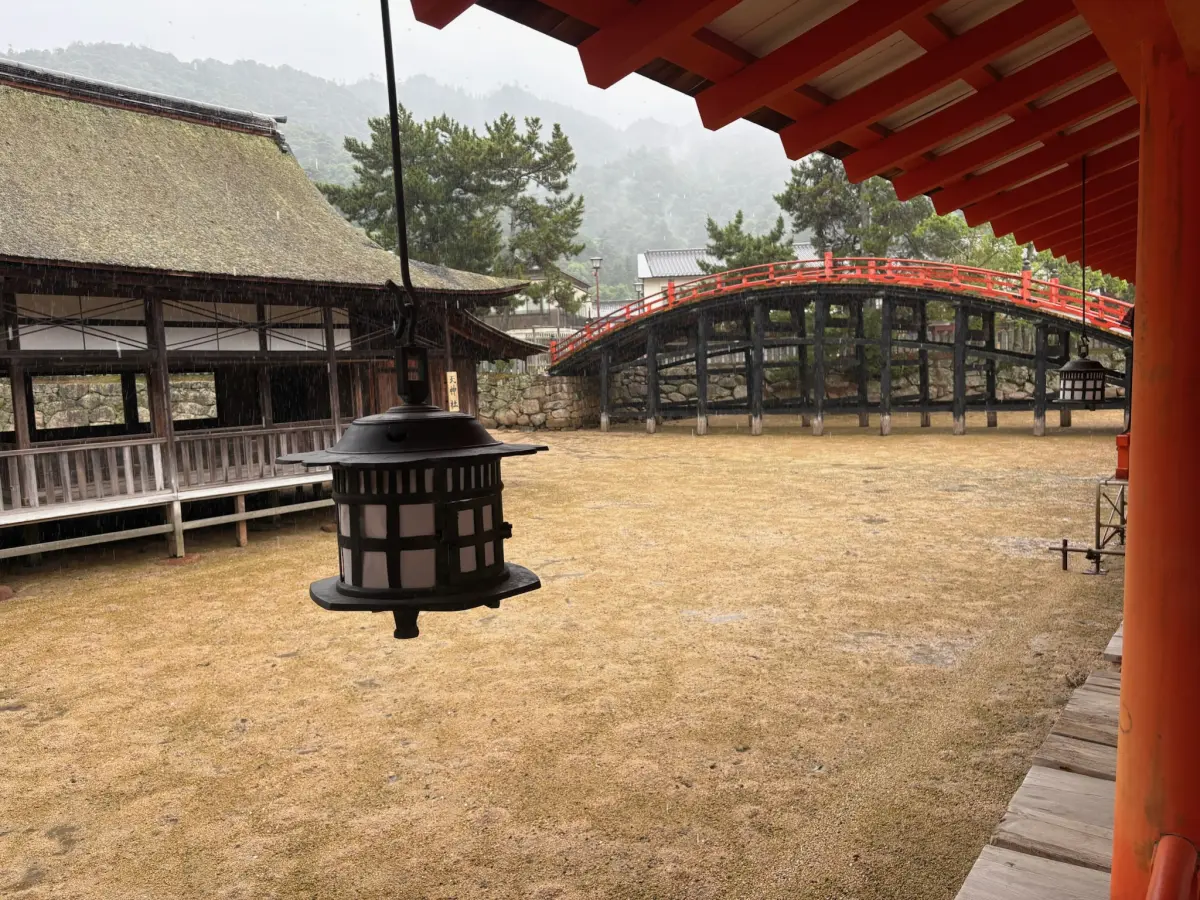
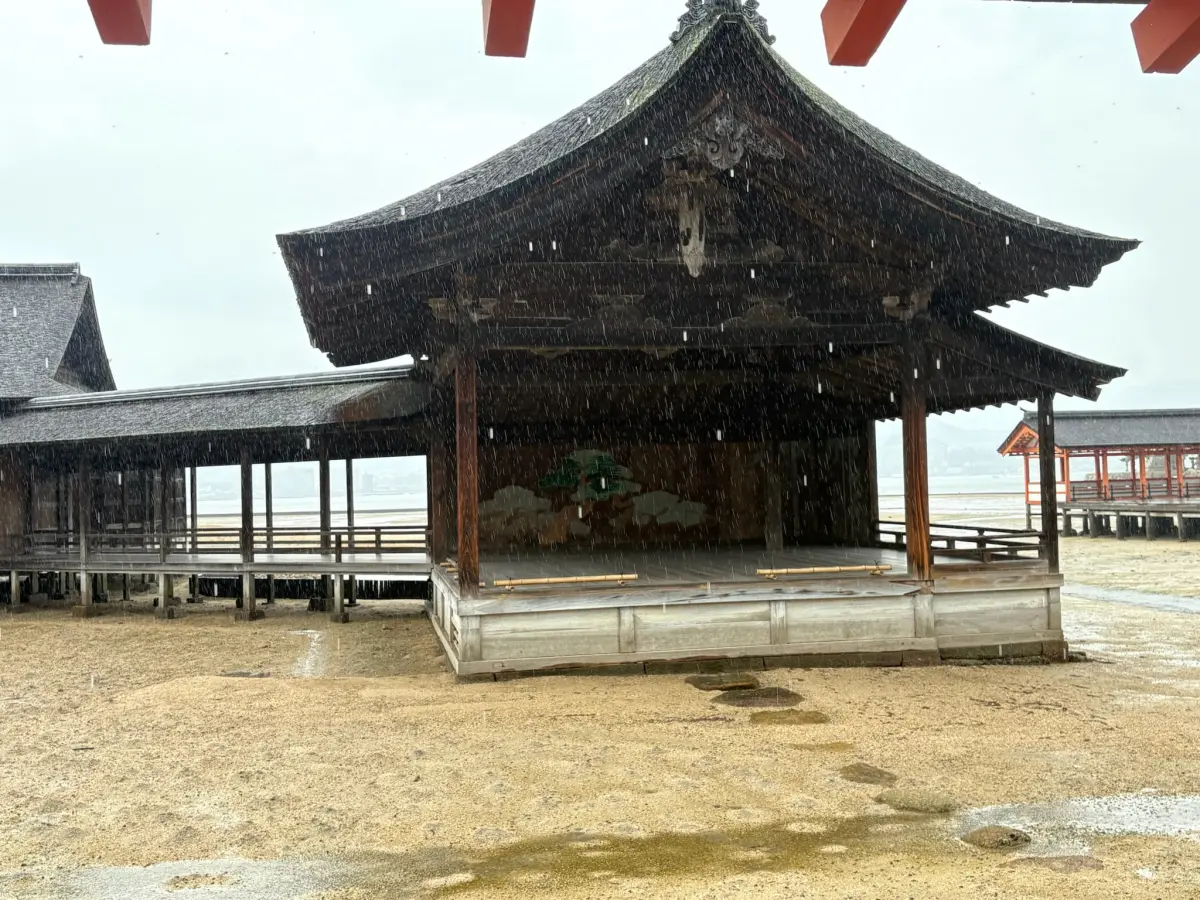
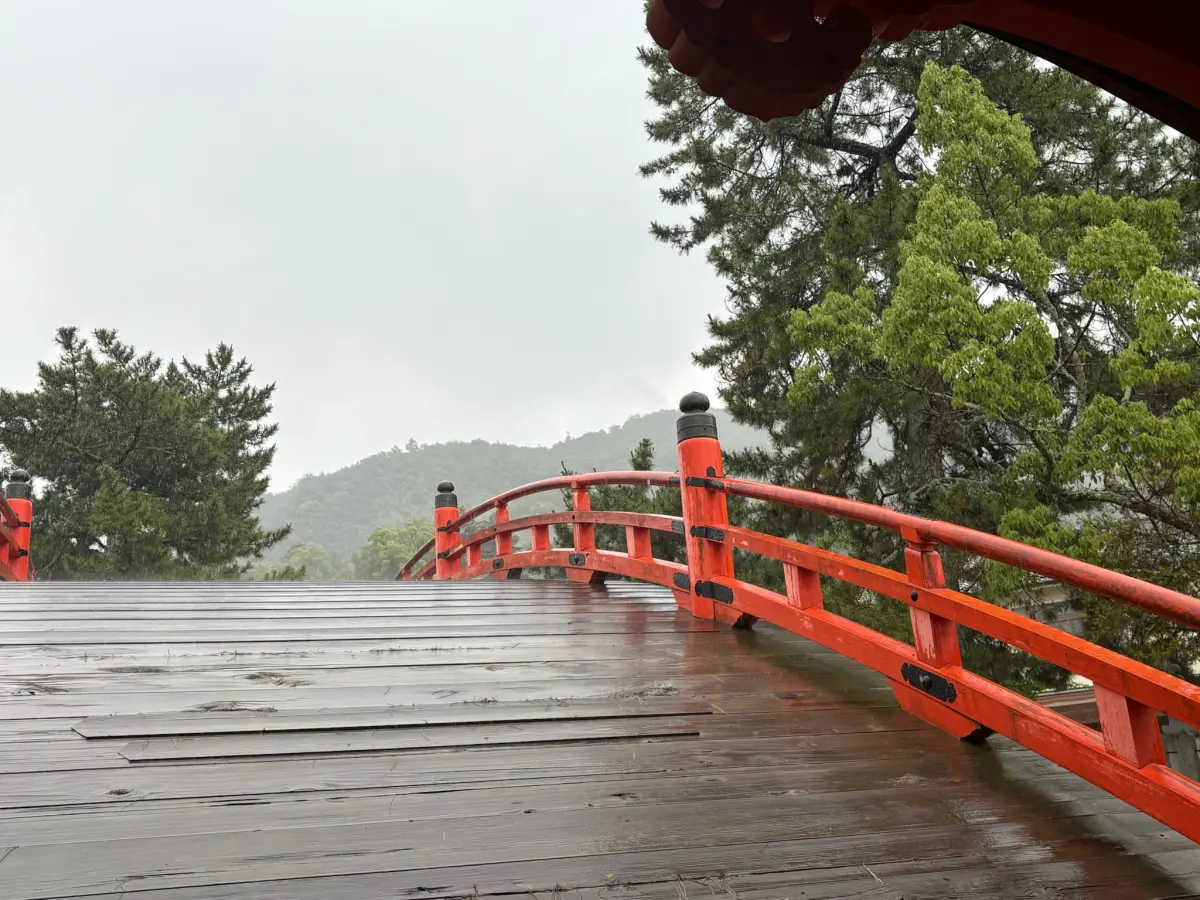
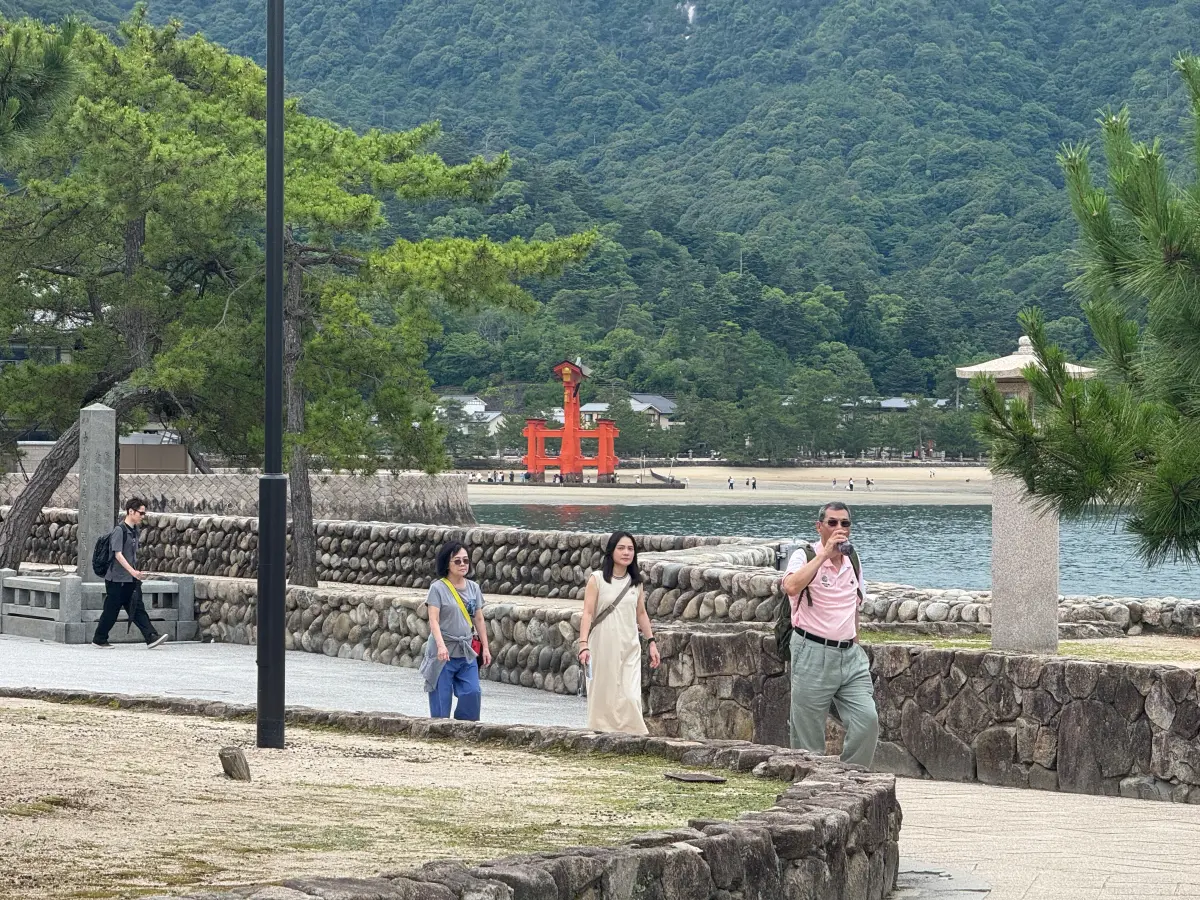
After lunch, we proceeded towards the shrine and its Torii. In the pictures, you can see the tide was coming in (compare to pictures from the ferry), and we were planning to get under it before the tide came in too far. Just then, torrential rain came down. We decided to proceed directly to the shrine buildings instead. We were able to shield ourselves from the rain while exploring the shrine.
Leaving the shrine in the back, via the Sori-bashi bridge (very steep), we walked into the village to find a bakery where we could get a fresh, warm, and famous “special cookie” (more accurately, cakes). They are called Momiji Manju and are maple-leaf-shaped castella cakes typically filled with red bean paste, cream cheese, chocolate, or custard. We found one at what I believe to be Momijido Main Store.
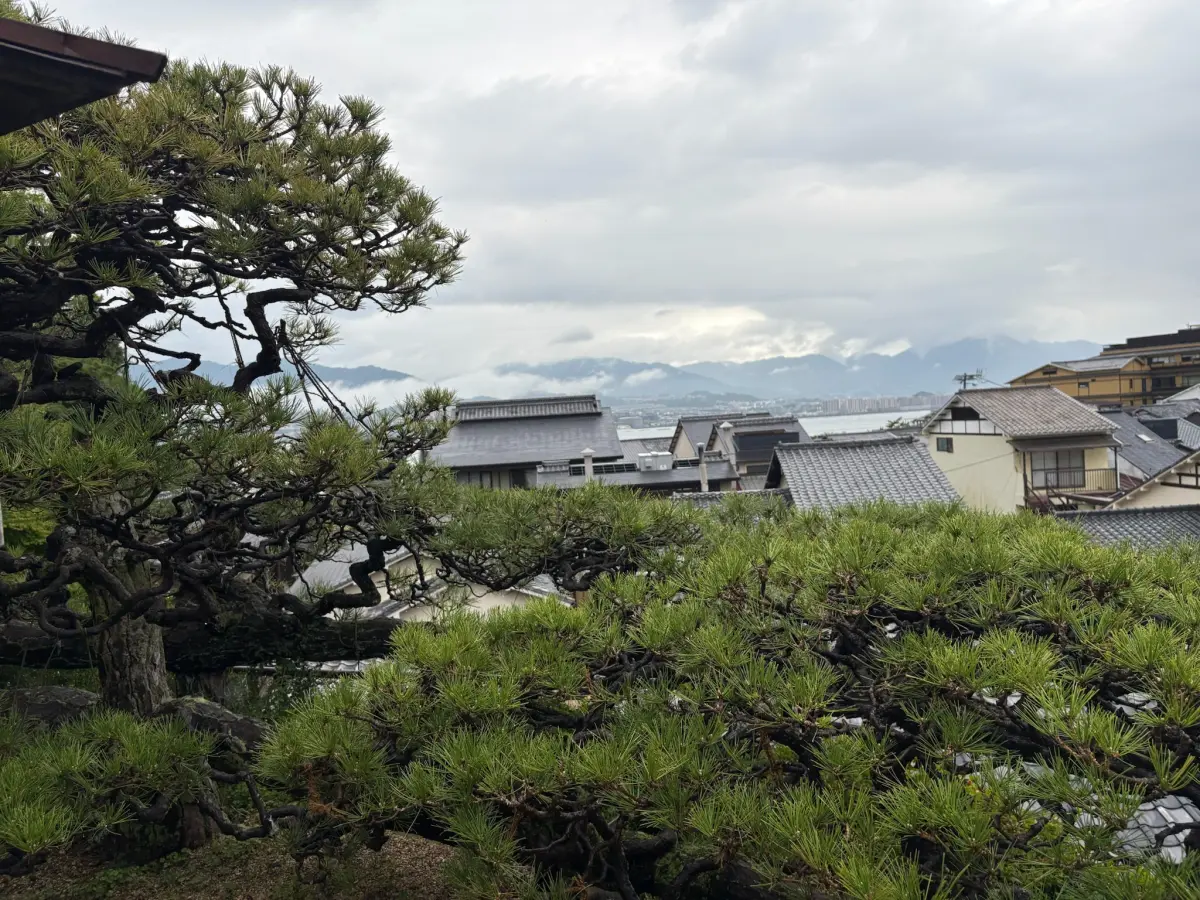
From there, we walked back streets through the village to Itsukushima Jinja Gojūnotō, a five-storied pagoda. It was covered up for renovations, but its elevated location offered some views before returning to the ferry to go back to the hotel. I didn’t feel great and went to sleep while my wife and son enjoyed an easy dinner at the hotel restaurant.