Tour Asakusa with a guide
In the morning, a private guide met us in the hotel to take us to Asakusa and nearby areas for a tour.
Private tour of Asakusa with a guide
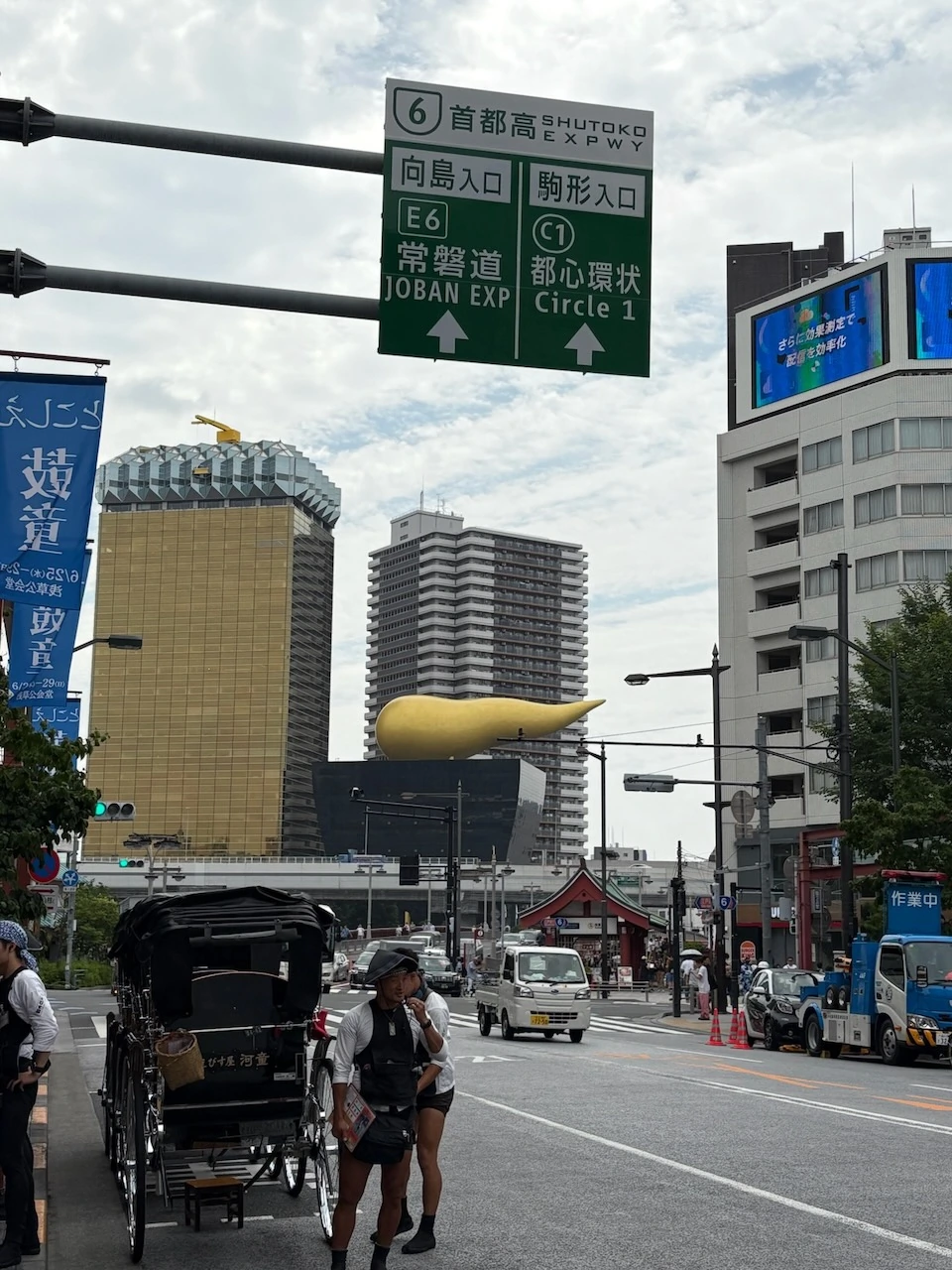
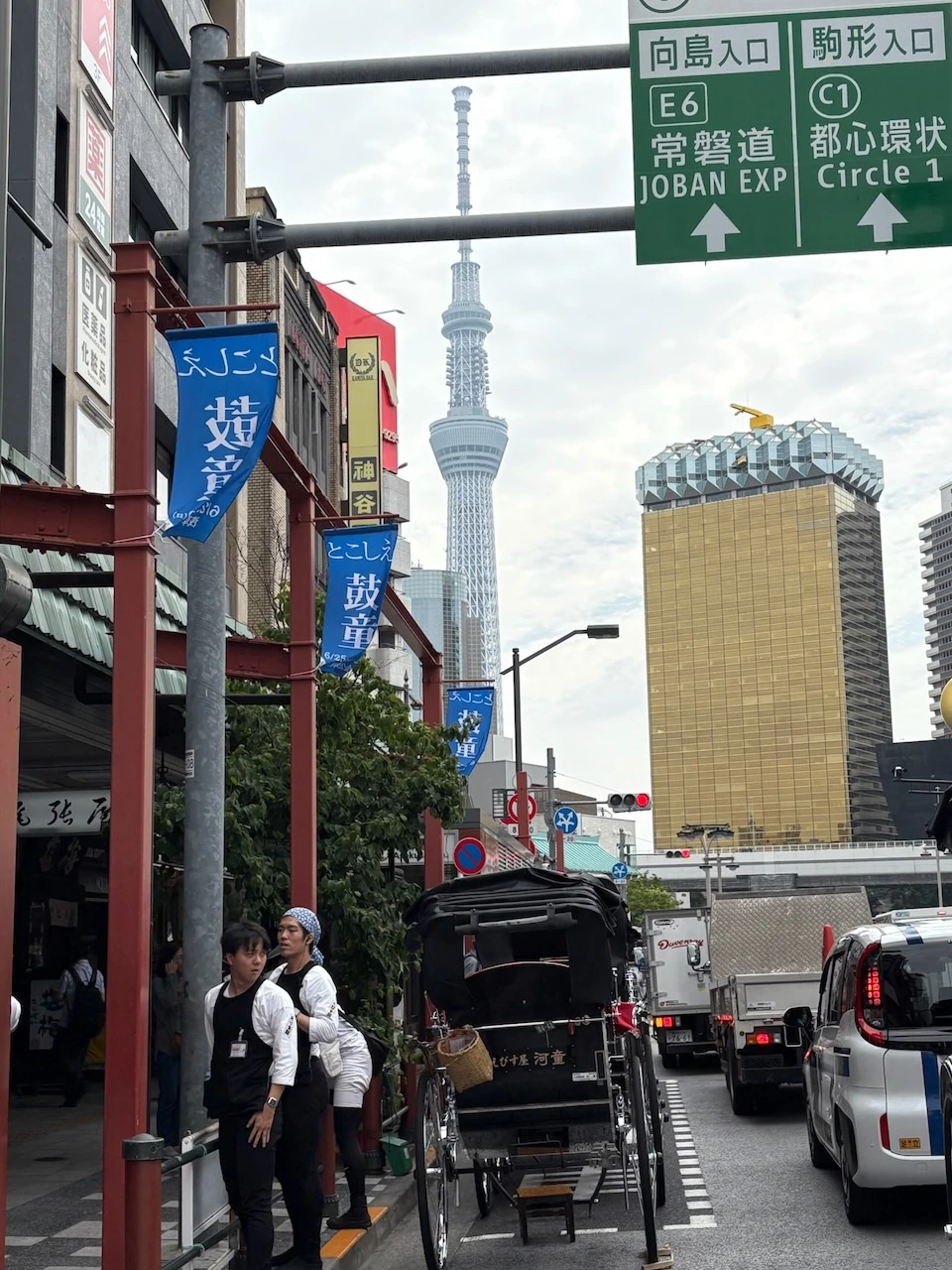
We were met in our hotel lobby by Mike Reddy, a private guide who has been living in Japan for quite some years. He proposed to tour the Asakusa (浅草) 🗾 area. To get there, we walked an above-ground walkway from the hotel, passing the adjacent NTV building with a clock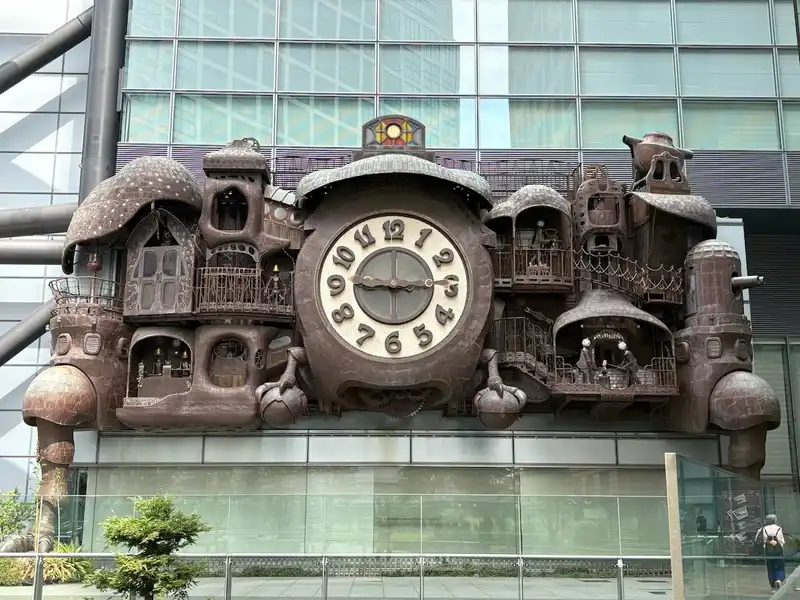
Asakusa is located somewhat North of central Tokyo’s core, in what is called Taito City (technically this is called a “special ward”). Asakusa retains the vibe of an older Tokyo, with traditional craft shops and street-food stalls along Nakamise Street near the ancient Sensō-ji temple.
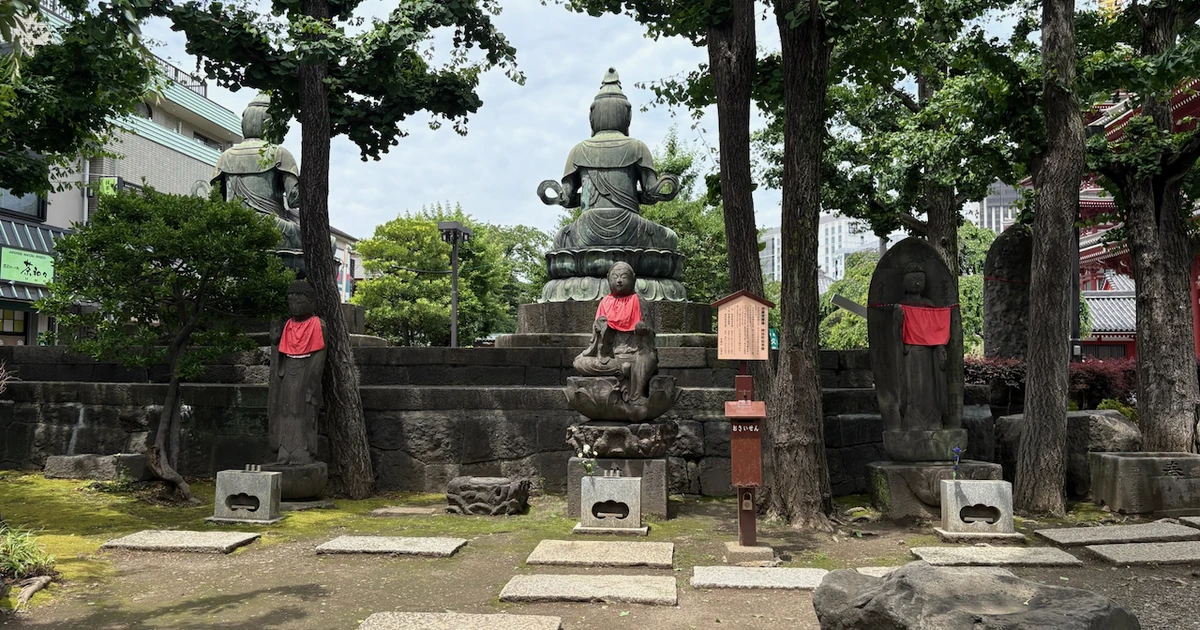
We visited the Kaminarimon (雷門) 🗾, or Thunder Gate, and the temple grounds of the Sensō-ji (浅草寺) 🗾. Located right next to it is a Shinto shrine named Asakusa-jinja (浅草神社) 🗾, which we also visited. Sensō-ji is Tokyo’s oldest-established temple, and one of its most significant. It is dedicated to Kannon, the bodhisattva of compassion (not coincidentally, the name of the camera company Canon). The temple was destroyed during a 10 March 1945 firebombing air raid on Tokyo during World War II. Thus, the gate and temple we saw were not the original. This is a theme we encountered frequently during our trip!
There is a page with more information on religion, temples, and shrines.
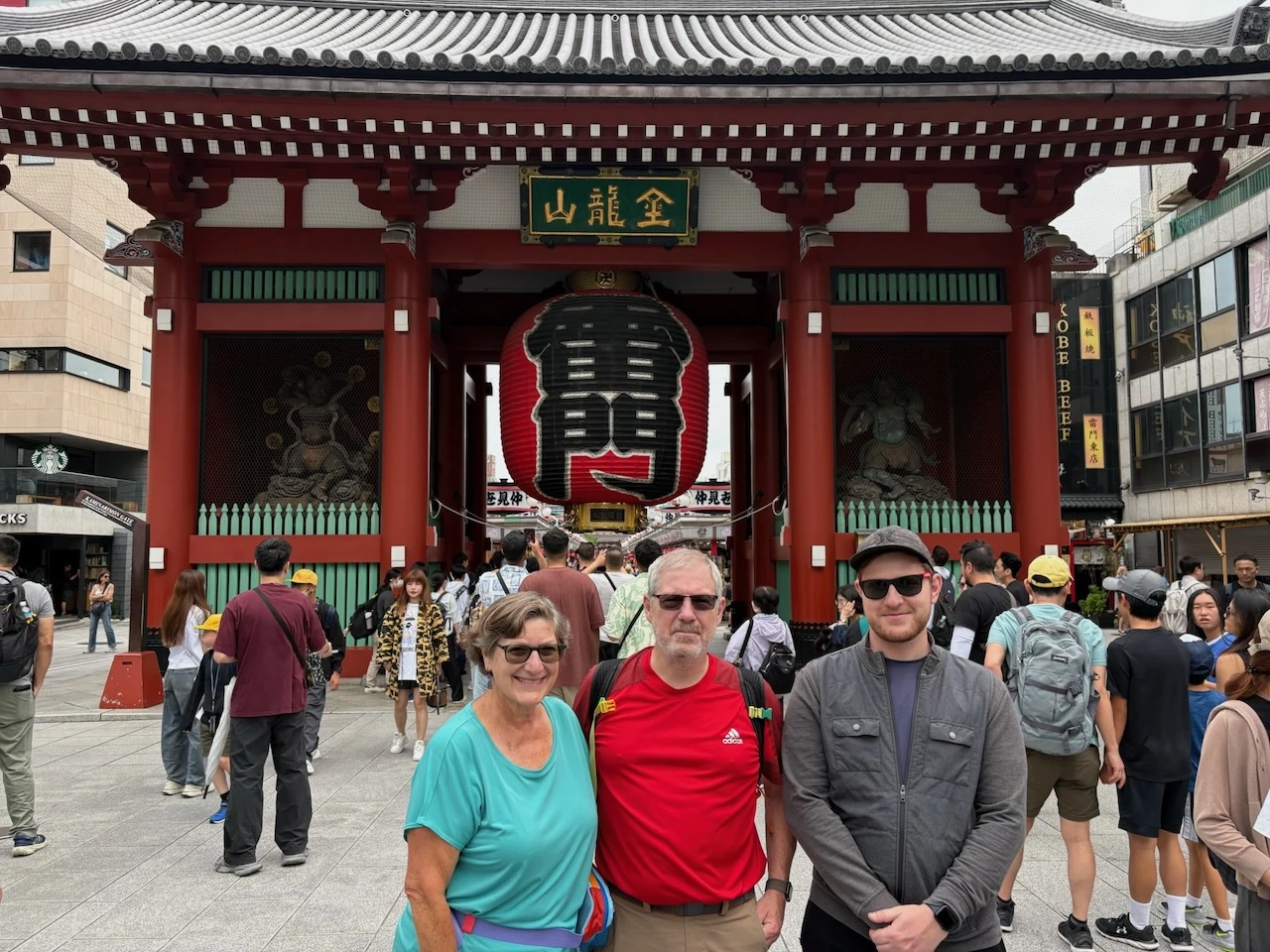
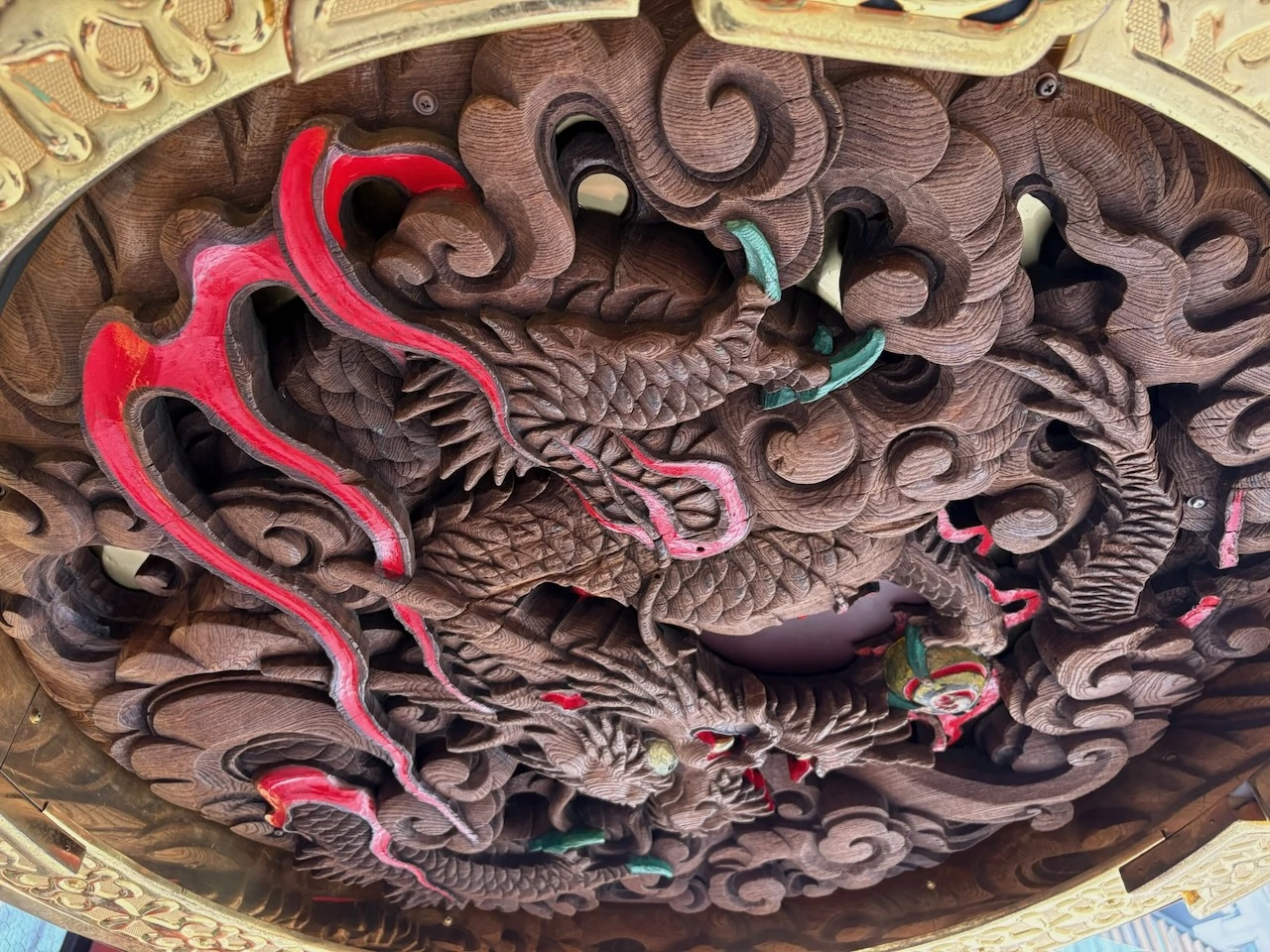
We learned how to ritually purify ourselves before entering a shrine. Usually, after the main Torii gate, there is an approach path to the inner temple. One is to walk on the side of that path, as the center is reserved for the Deities. To the side of this approach, before entering the inner main shrine and worship hall, is a place to wash your hands. Called Chōzu-ya or temizu-ya (手水舎), this is an important place to purify one’s mind and body before approaching the main shrine and conversing with the gods, and to symbolize this, people wash their hands and mouth in a small personal purification ritual before going further into the shrine. This is also where we were first reminded that, while in Japan, one typically carries a small towel for each person. Towels of any kind are rarely provided (not even in bathrooms, except in some hotels), so please bring your own, or buy a small one locally.
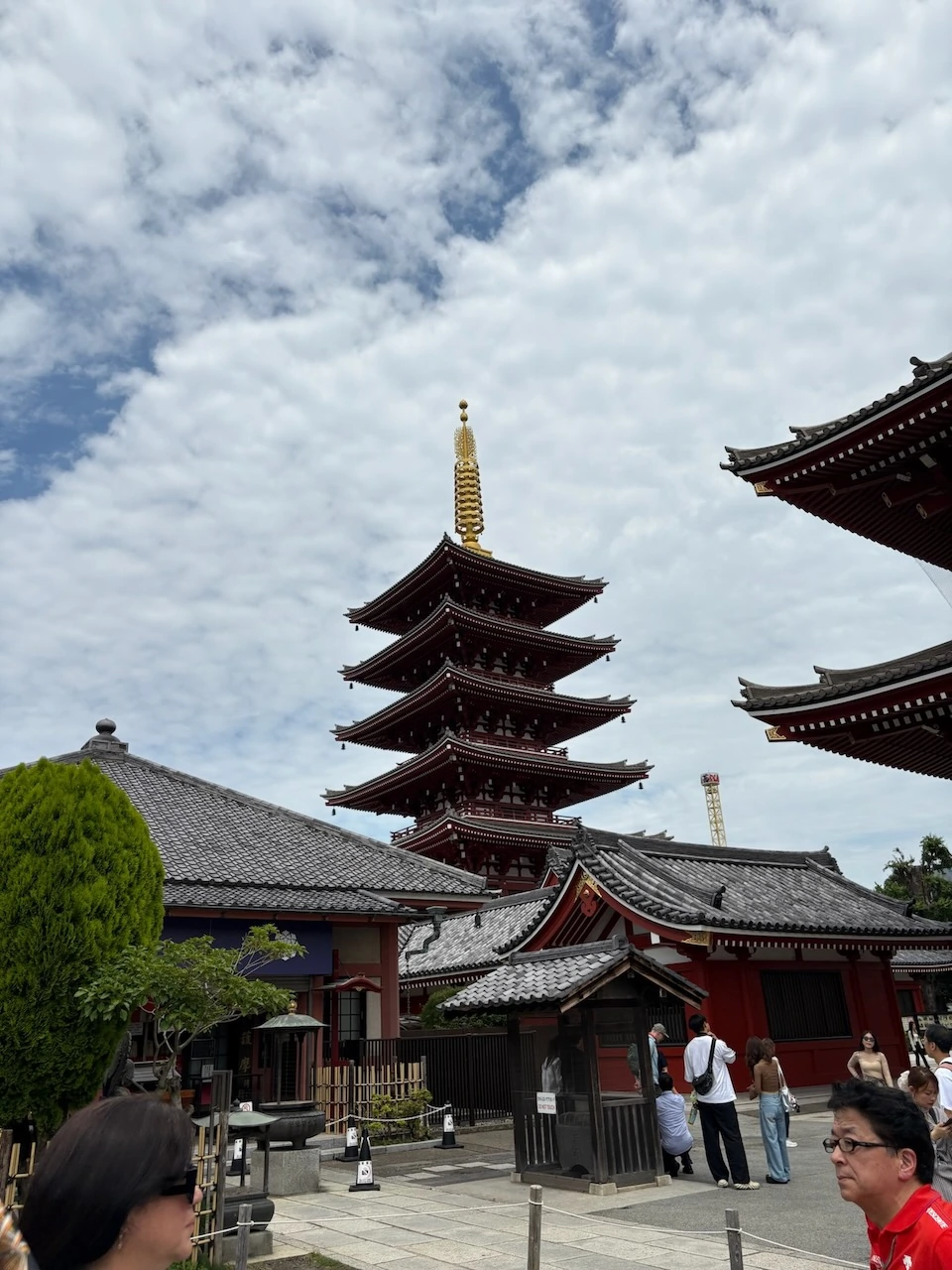
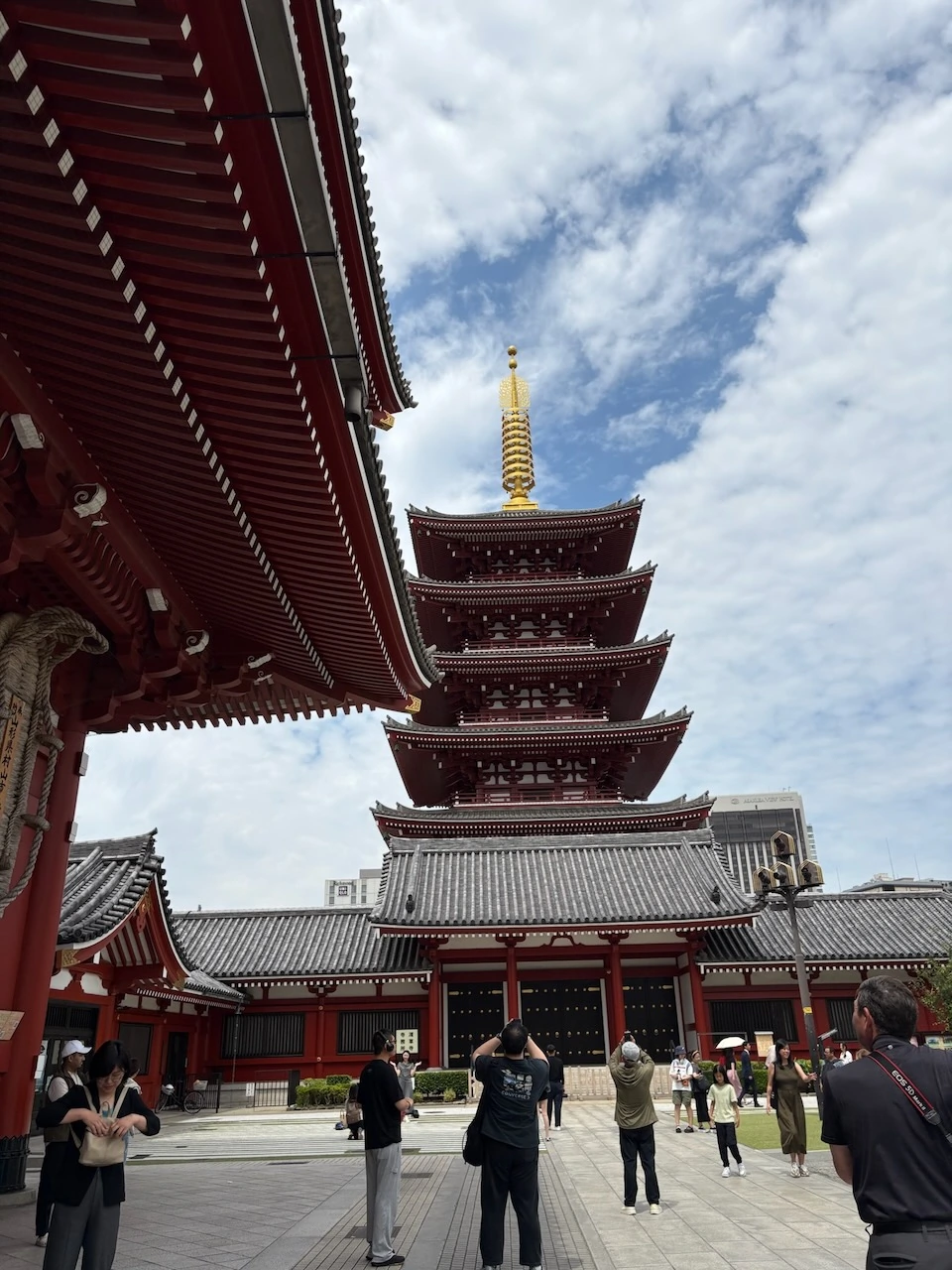
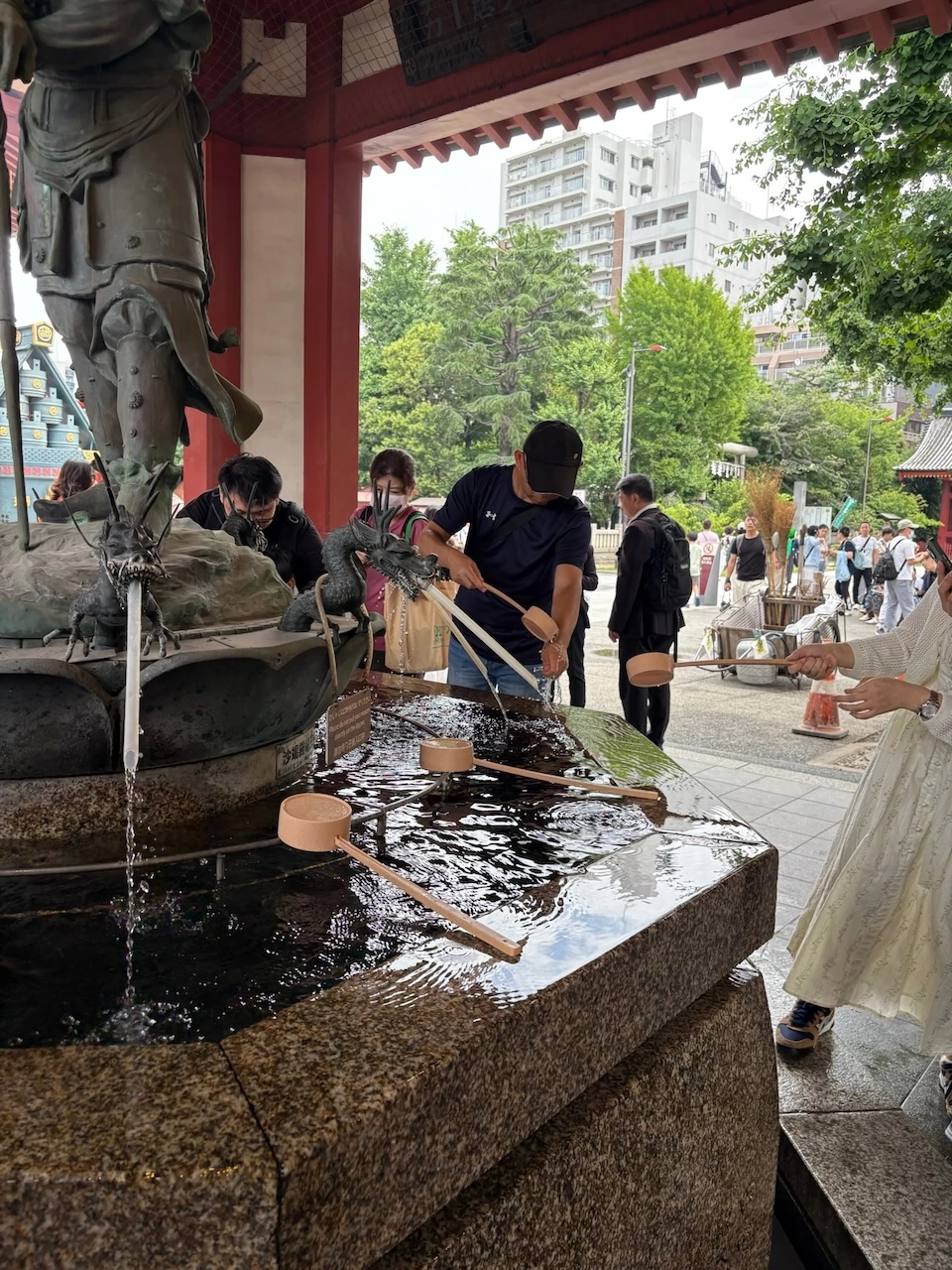
Next to Sensō-ji, one can find Asakusa-jinja (浅草神社) 🗾.
More temples in Yanaka (谷中)
We made our way from Asakusa to Yanaka, an area in Taito City near Nippori Station (日暮里駅) 🗾. From there, we first visited the Kyōōji (経王寺) 🗾 temple. Then we walked down the street to Yanaka Ginza (谷中銀座) 🗾, a traditional shopping street that has existed since the 1950s, featuring around 60 stores and restaurants.
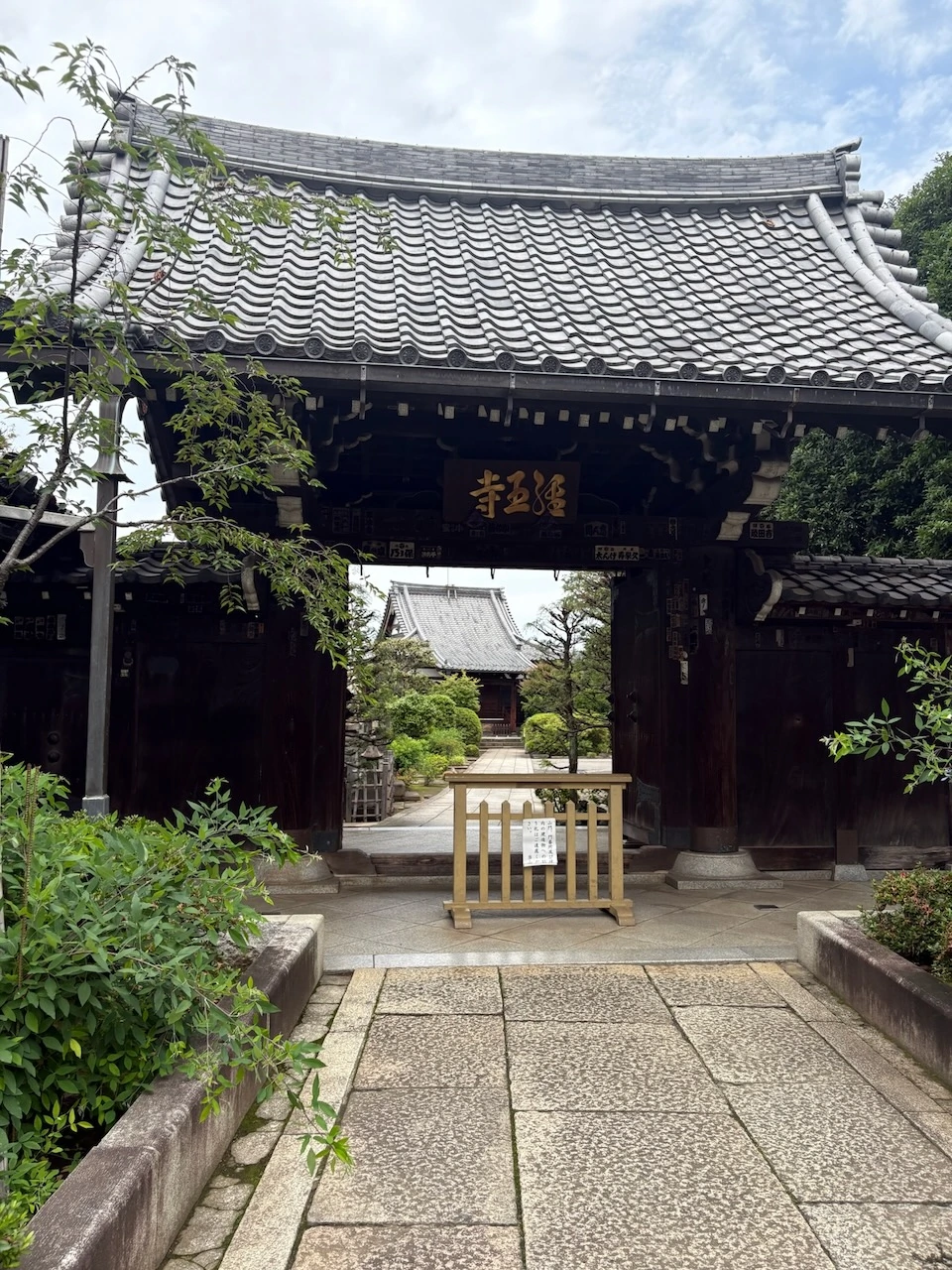
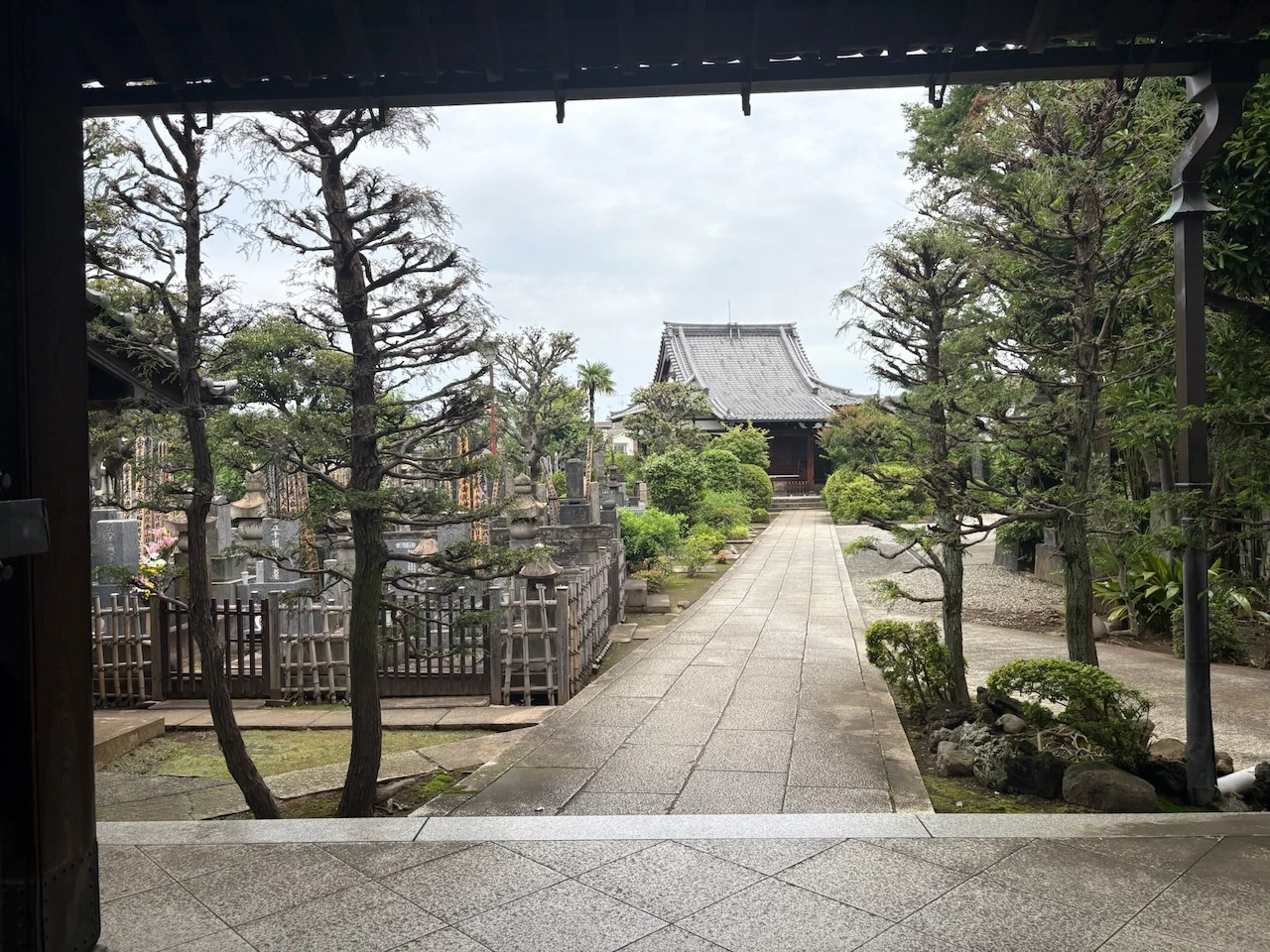
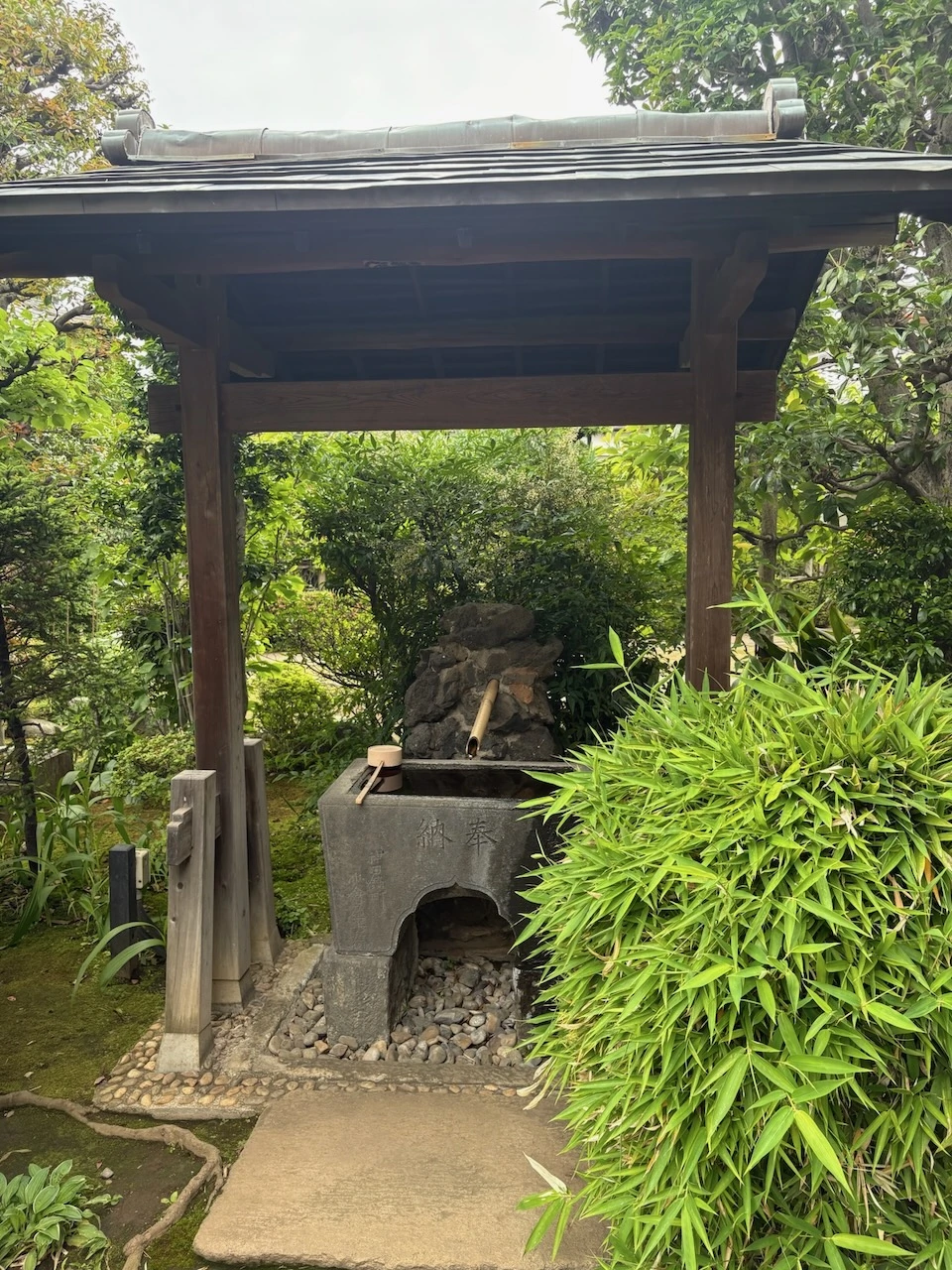
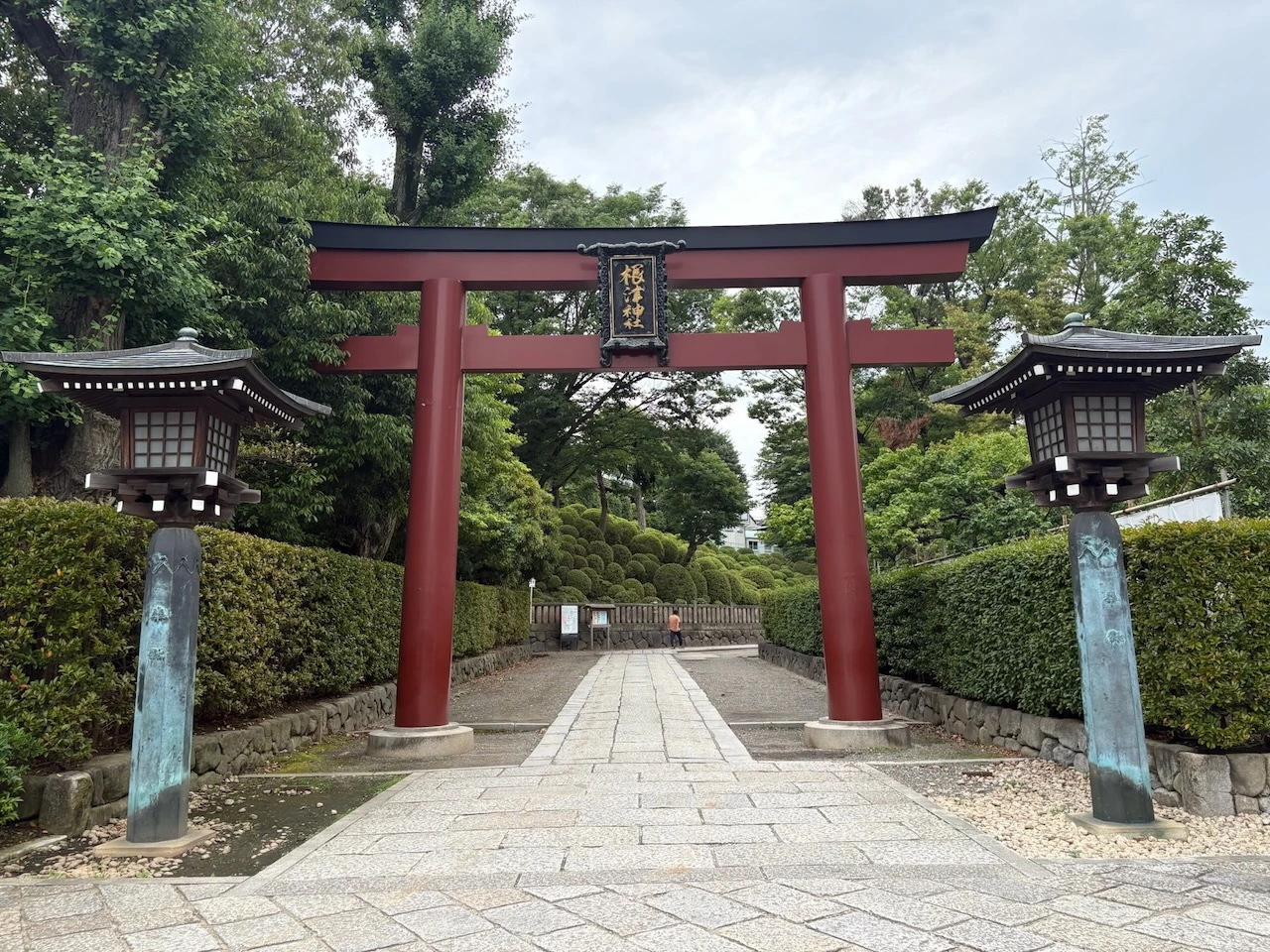
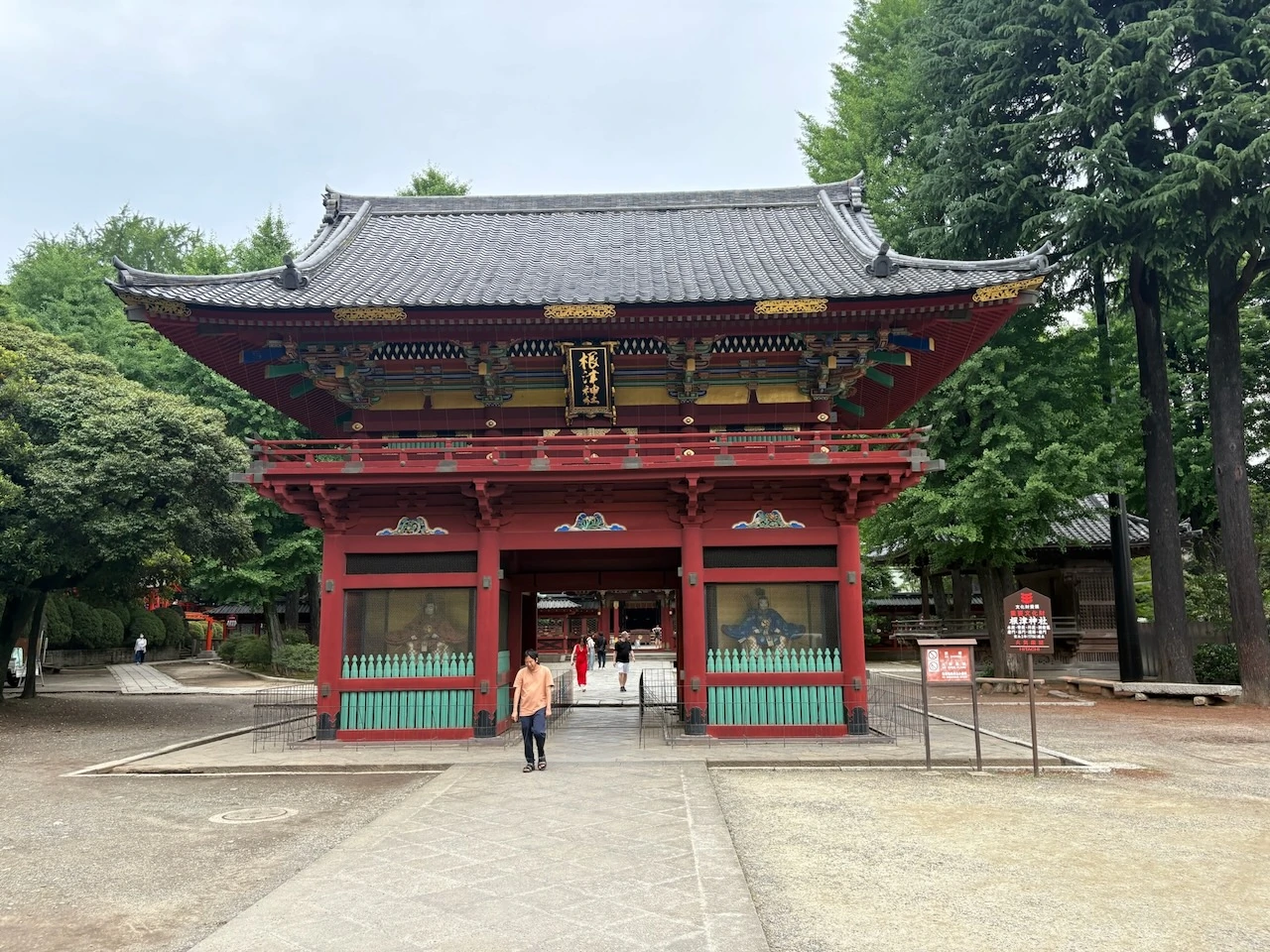
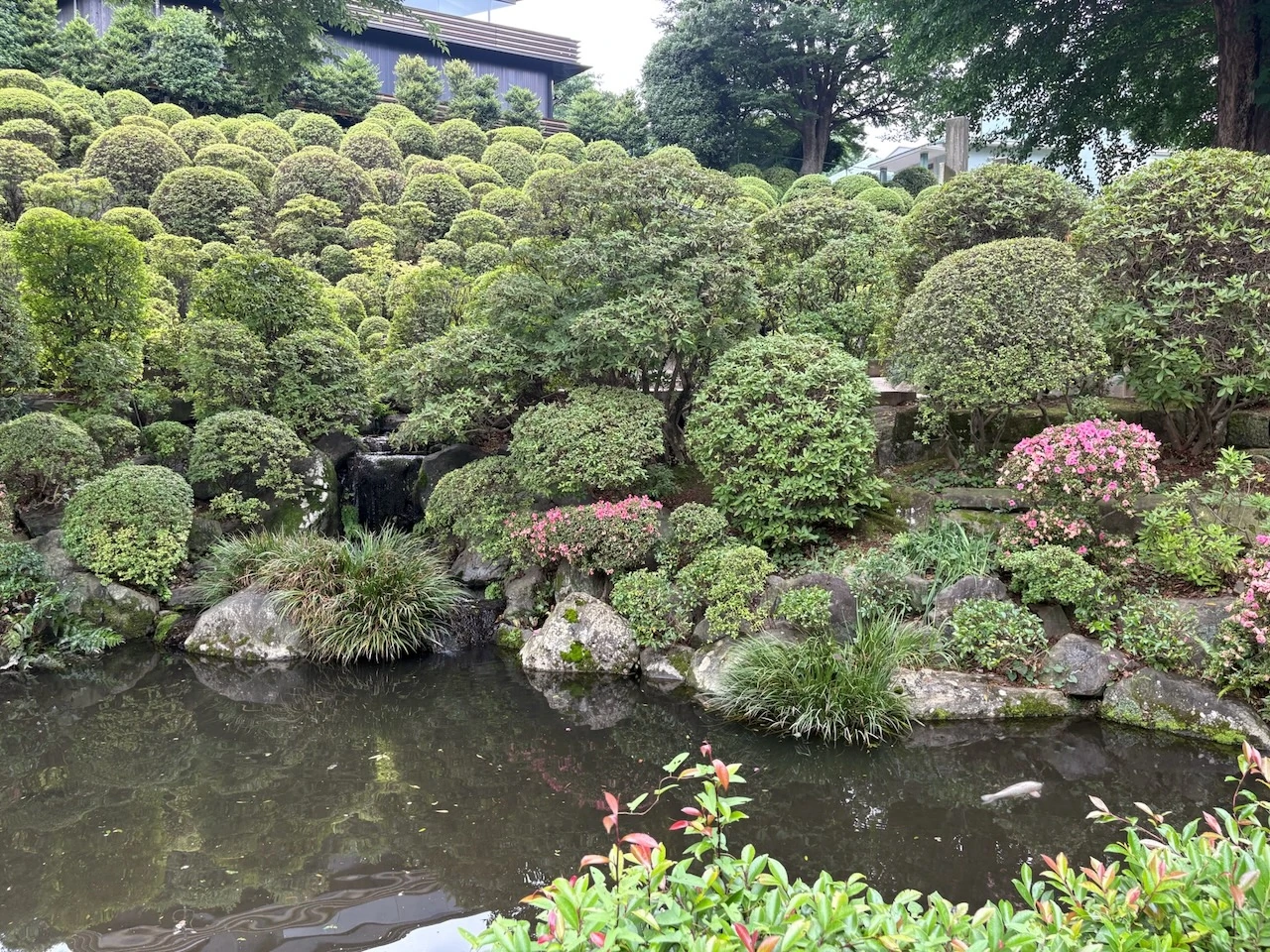
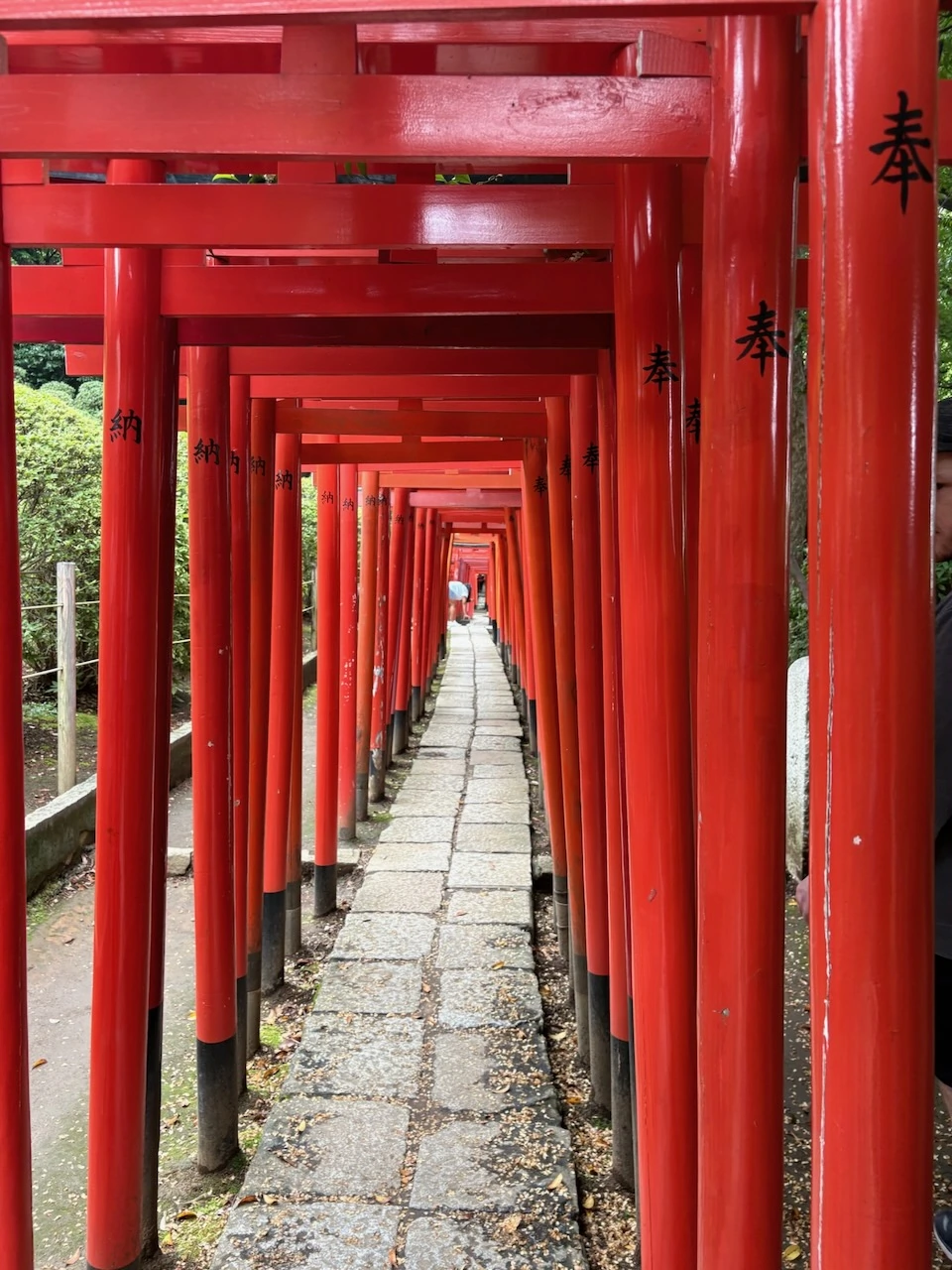
After that, we headed to a small, windy street that doesn’t seem to have a name but runs roughly north-south (passing Log & Log Pastries, which I used for an identifying mark), eventually leading us to Nezu Shrine (根津神社) 🗾. The shrine features a long row of Torii gates, which we walked through before reaching the main shrine, where entry is restricted, and photography is prohibited.
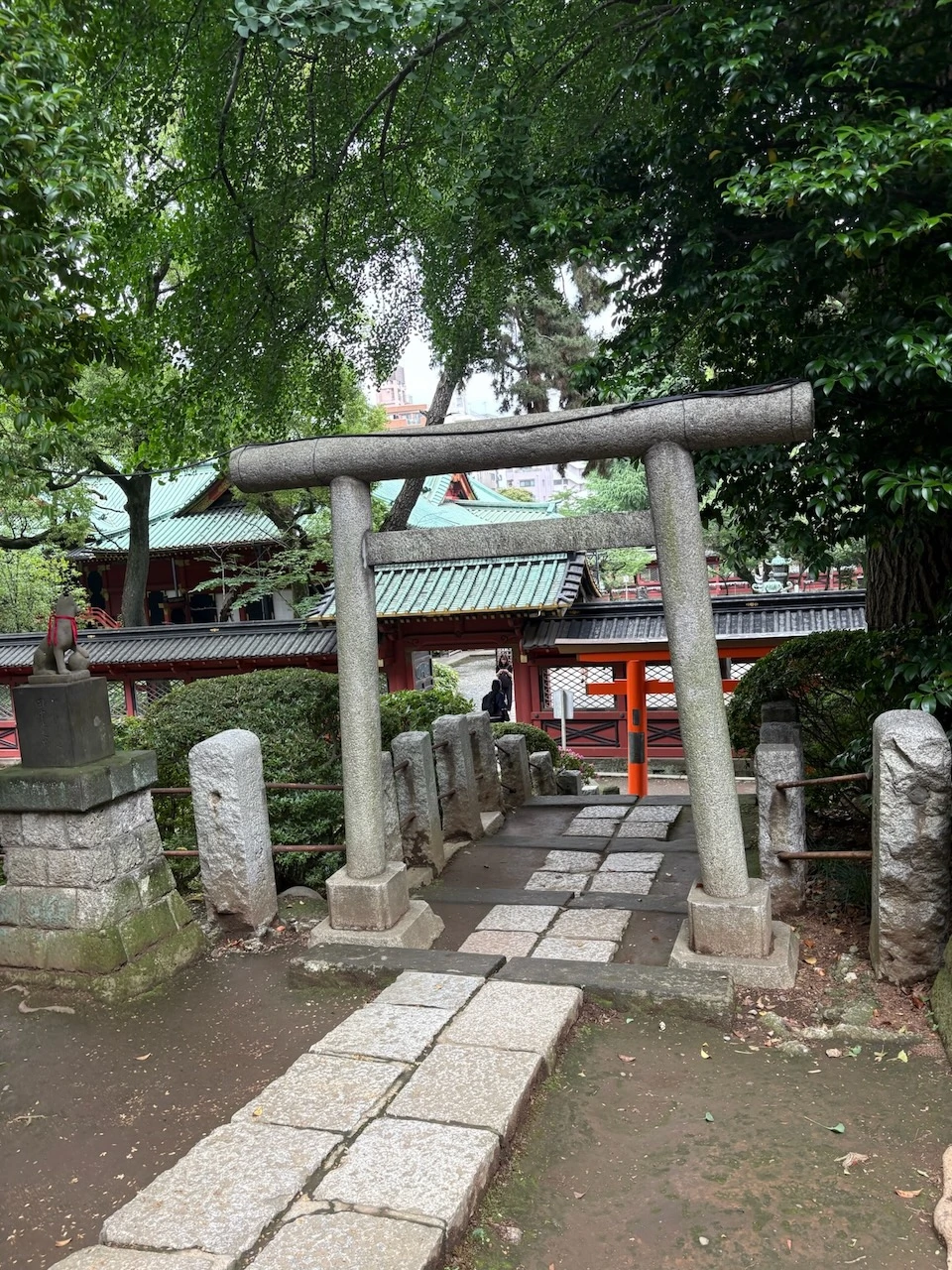
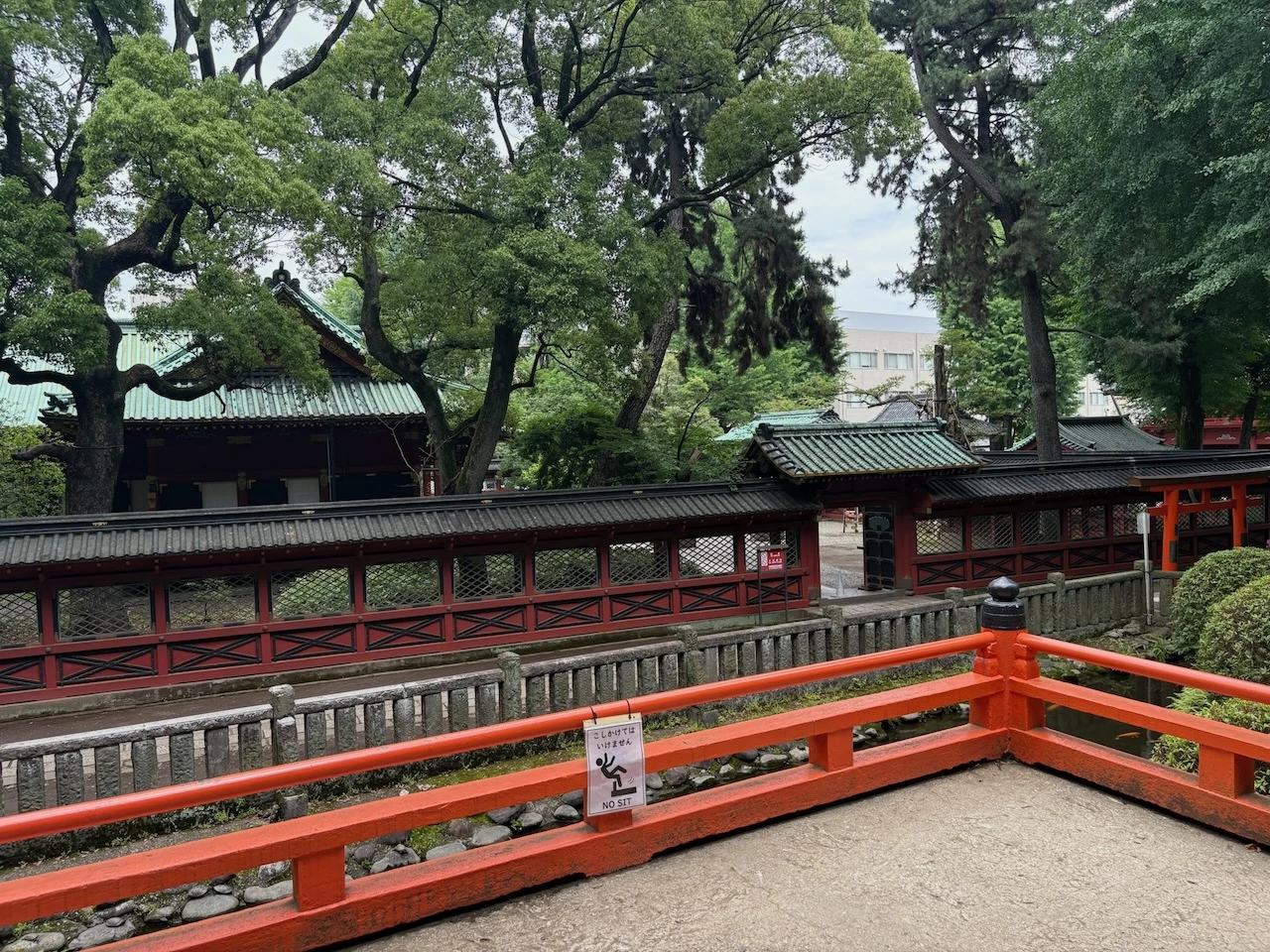
Since this was only a half-day tour, we headed back toward our hotel. We walked to Hakusan Station (白山駅) Hakusan Station (白山駅), where we took the Namboku line to Daimon Station (大門駅), near our agreed-upon lunch spot.