Kanazawa: Higashi Chaya and Kazuemachi Chaya
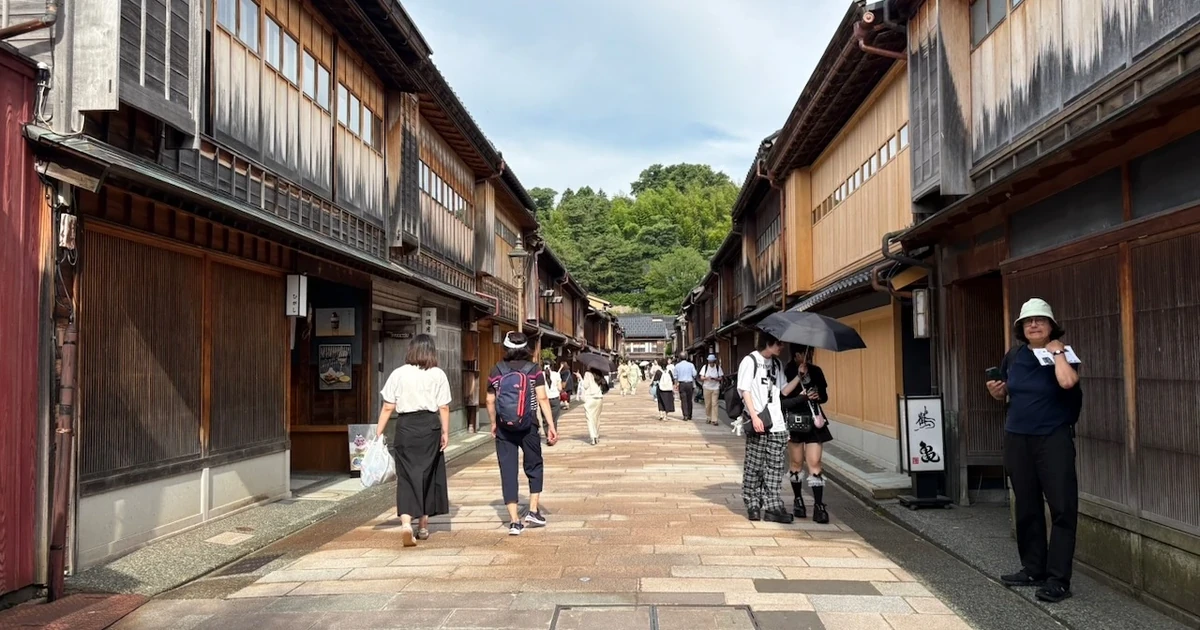
We crossed the Asano River (North-East of the castle grounds) into the Higashi Chaya(芸者), or Geisha district 🗾. It was a reasonable distance away, so we took a taxi.
Gold Leaf Manufacturing
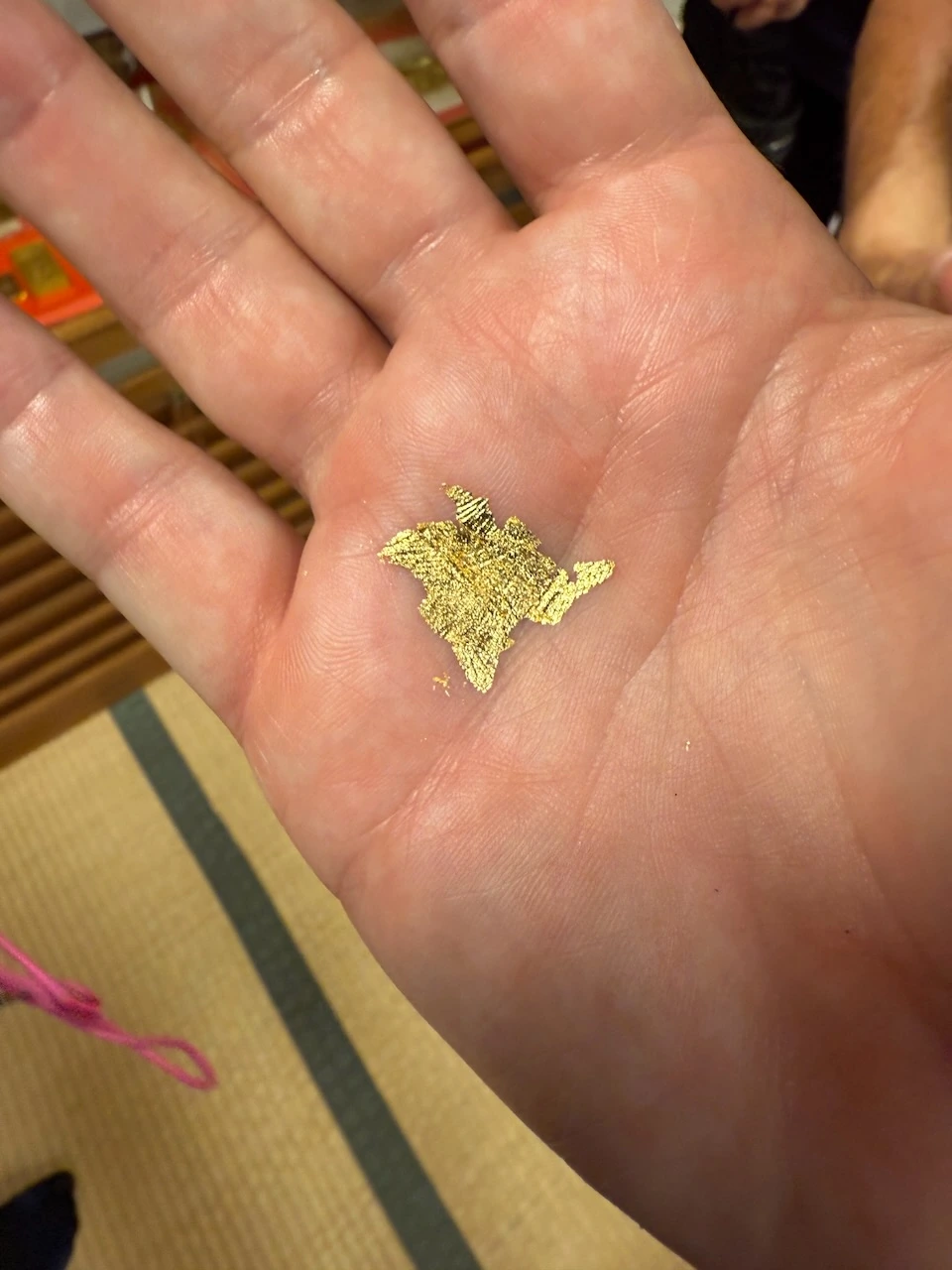
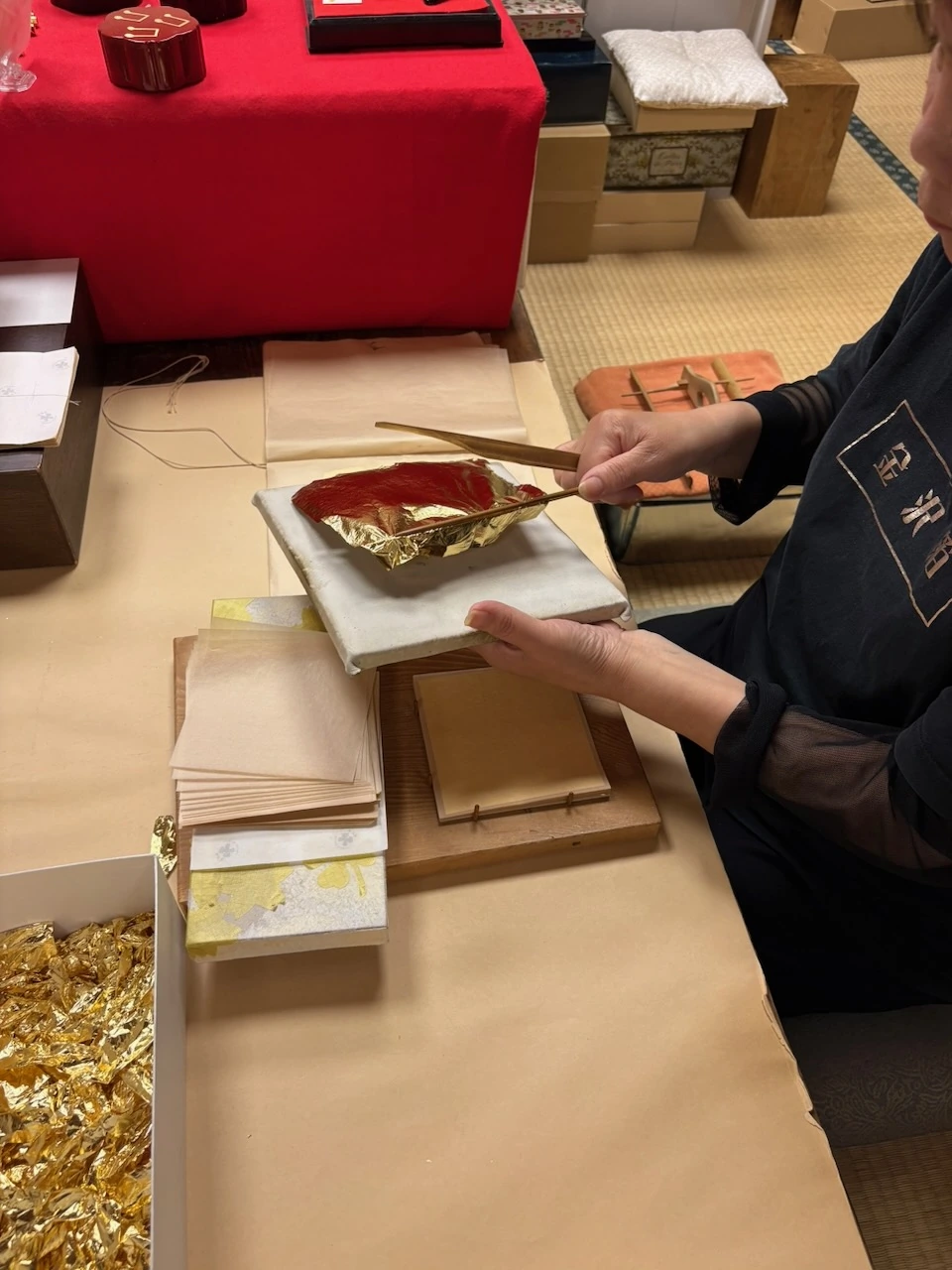
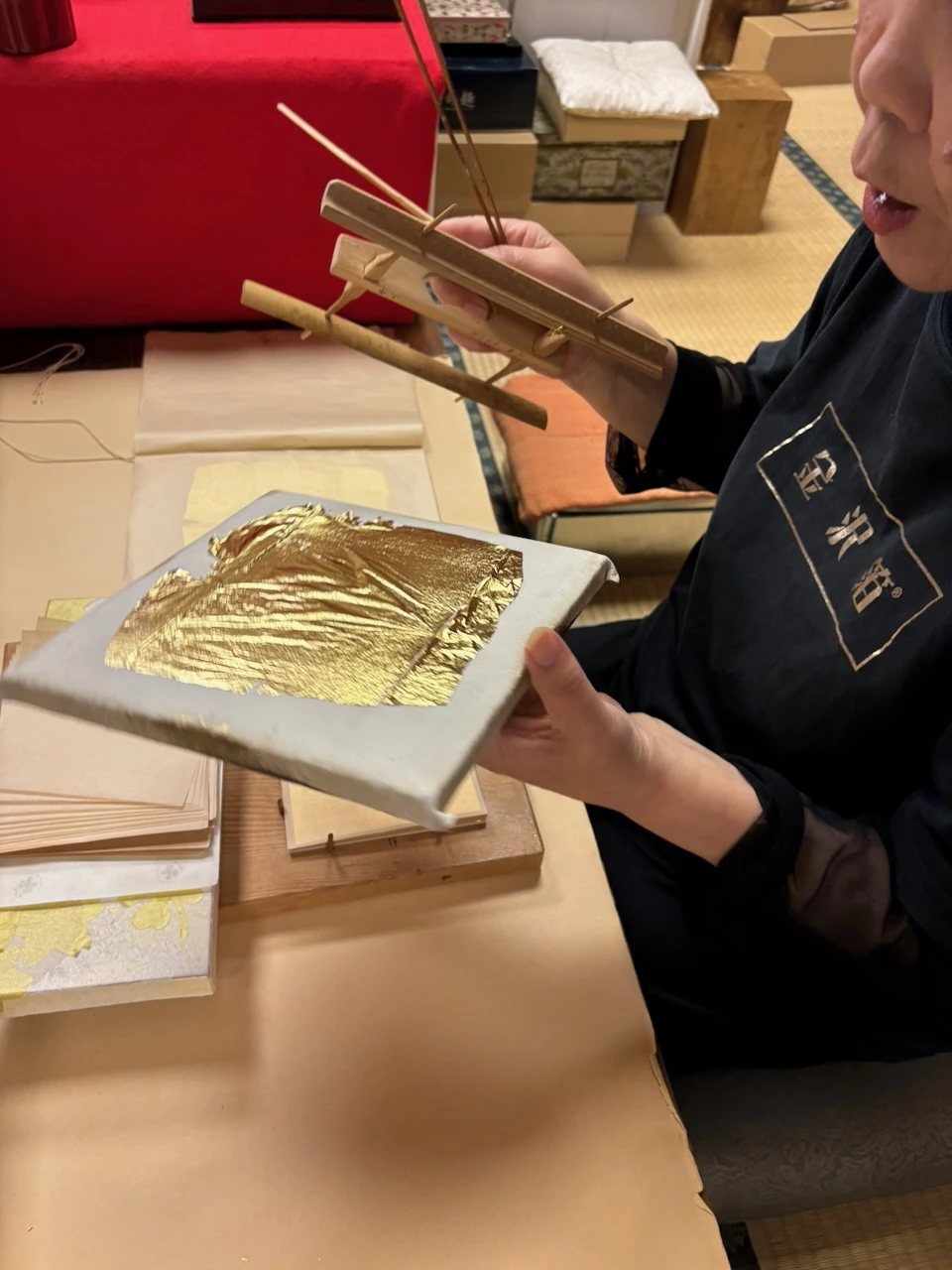
We learned that Kanazawa, Japan, is well known for its gold-leaf industry. It produces over 98% of Japan’s domestic gold leaf. This craft has a 400-year history in the city, dating back to the Maeda clan’s patronage during the Edo period. This district has a premier manufacturer, Kinpakuya Sakuda Gold Leaf Shop & Workshop (金箔屋さくだ 本店) 🗾 (it is all pretty much artisan hand labor), which was visited. We received a demonstration of part of the process (final thinning and cutting to standard size), and each of us received a small piece (about an inch square) that we “glued” to our hand (the skin oils are all that is needed). The gold leaf dissolved over the next few hours. They also have a shop where my wife bought my Father’s Day present (a nice set of lacquerware chopsticks).
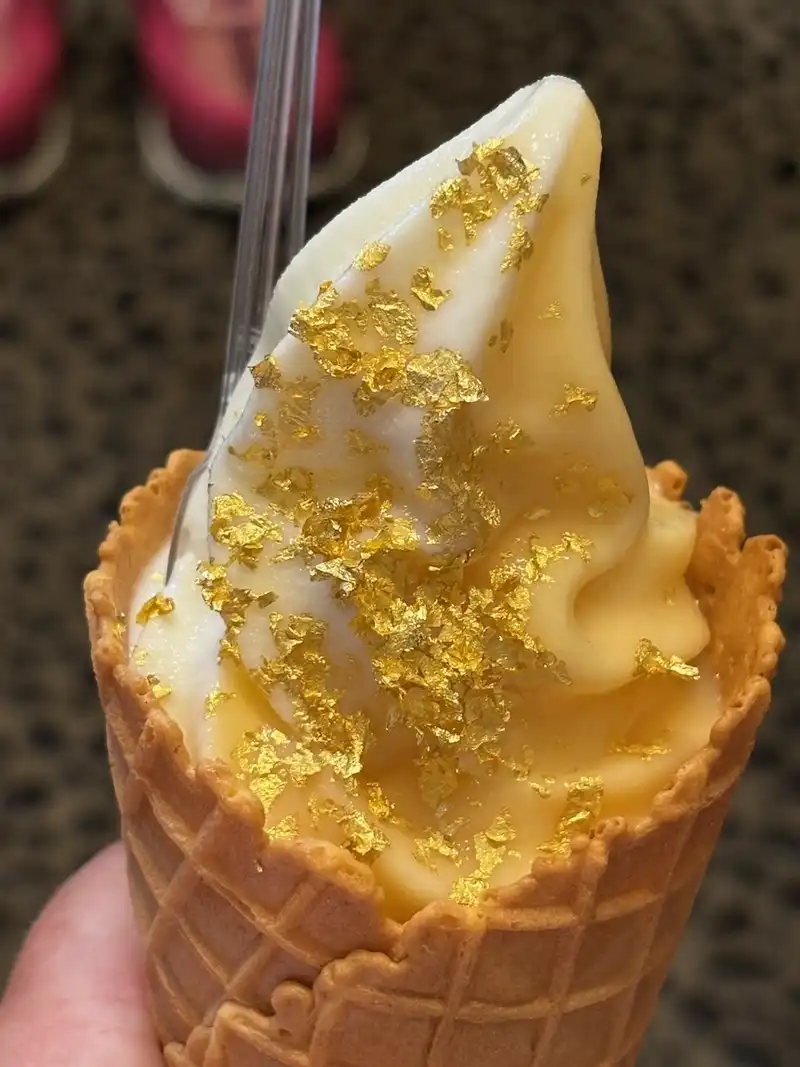
Next, we walked around the corner to the Ukeian Higashiyama Store (烏鶏庵 東山店) 🗾. Kanazawa gold leaf custard ice cream is a popular treat in Kanazawa, Japan, renowned for its distinctive use of edible gold leaf in a soft-serve ice cream. The gold leaf (of course, produced in Kanazawa) adds a visually stunning element to the ice cream, but you don’t really taste it. Fancy restaurants all over the world use it to decorate dishes.
Besides the novelty aspect (to us), an ice cream was welcome on a day like that in the heat. Unlike here in the US, you cannot walk around and eat/lick your ice cream. You are supposed to consume it in the store. This is a general phenomenon in Japan, although it is occasionally seen otherwise.
Geisha Streets
After all this, we walked around a collection of Geisha houses, or Okiya (置屋), and received an education about the life of a Geisha, how they start as Maiko (apprentice geisha), and how they entertain (what they do, and what they don’t do!). Geisha entertain at parties known as ozashiki, often for the wealthy clientele, as well as on stage and at festivals.
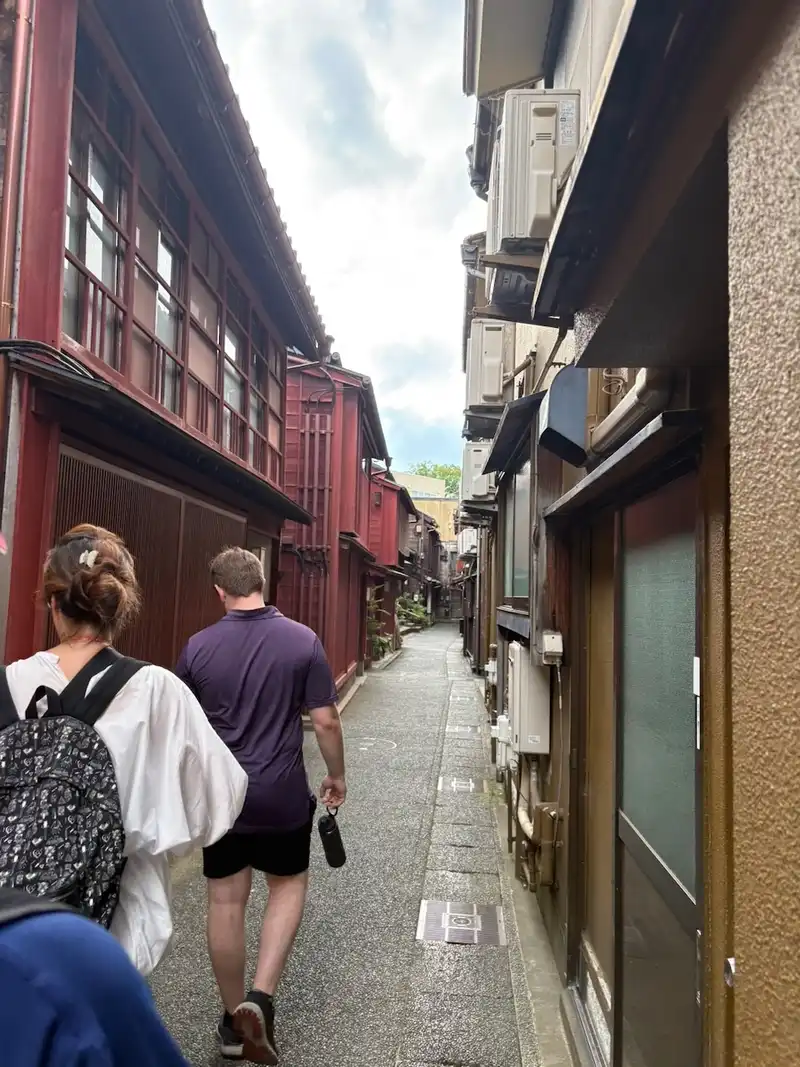
The Geisha house serves as living quarters, a rehearsal space, and an instrument practice area during the day, and occasionally as a venue for entertainment in the evening. Entertaining often takes place in restaurants or inns, but it is usually held at a teahouse. Unfortunately for us, we did not walk past any house where music was being practiced, as one can often hear it from outside. We also did not see a Geisha in full dress and makeup walking around (perhaps it was too hot).
After briefly visiting the nearby Kazuemachi Chaya District (主計町茶屋街) 🗾, on the other side of the river (we lucked out on hearing music here too), we took a Flat Bus (don’t ask, I have no idea why it is called that) back to the hotel. After all that walking on a hot and humid day, we needed a break before dinner, although it was a short one after a long day walking around.