Uji: Matcha and Byōdō-in
We visited Byōdō-in Omotesando (平等院表参道) and the Byōdō-in Temple (祇王寺) in Uji.
Taka picked us up at the hotel again, in the morning. Today will be dedicated to traveling outside Kyoto proper to Uji and Nara.
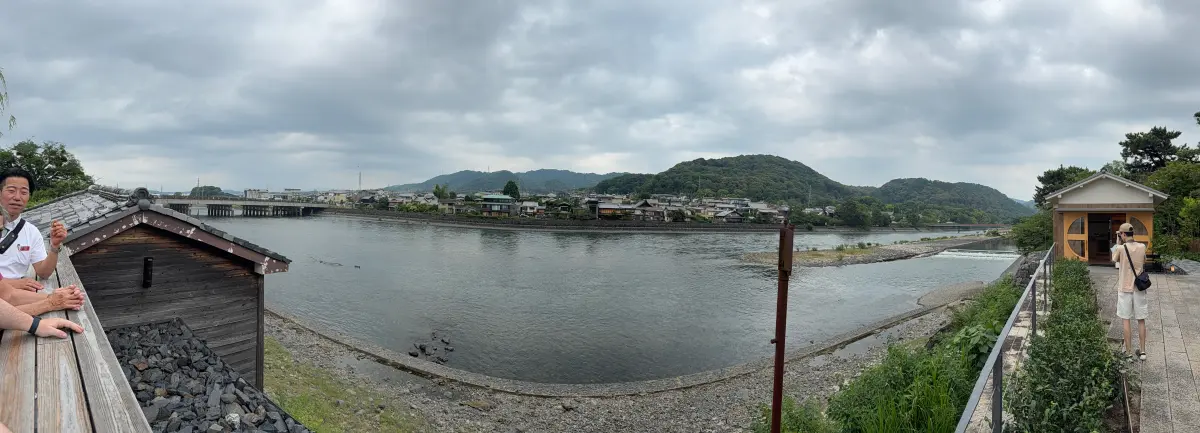
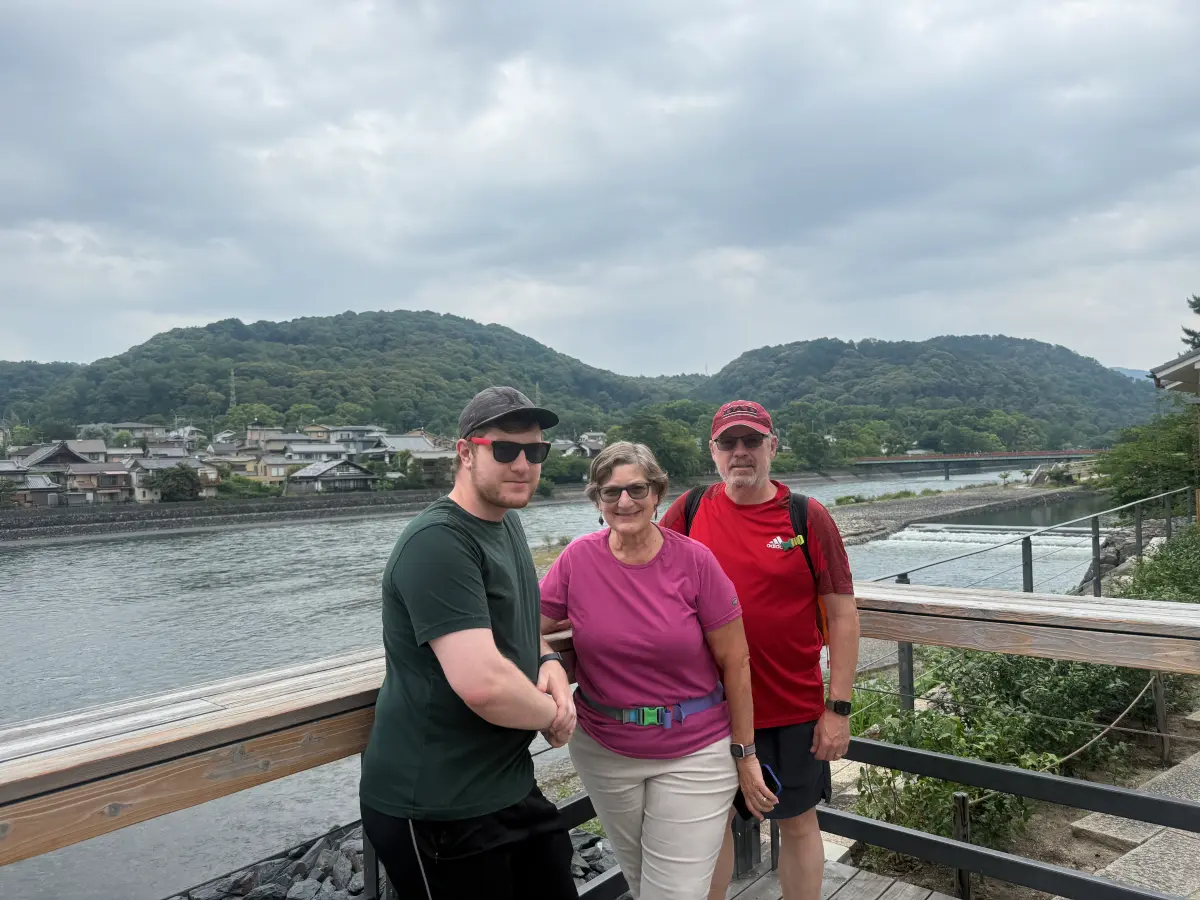
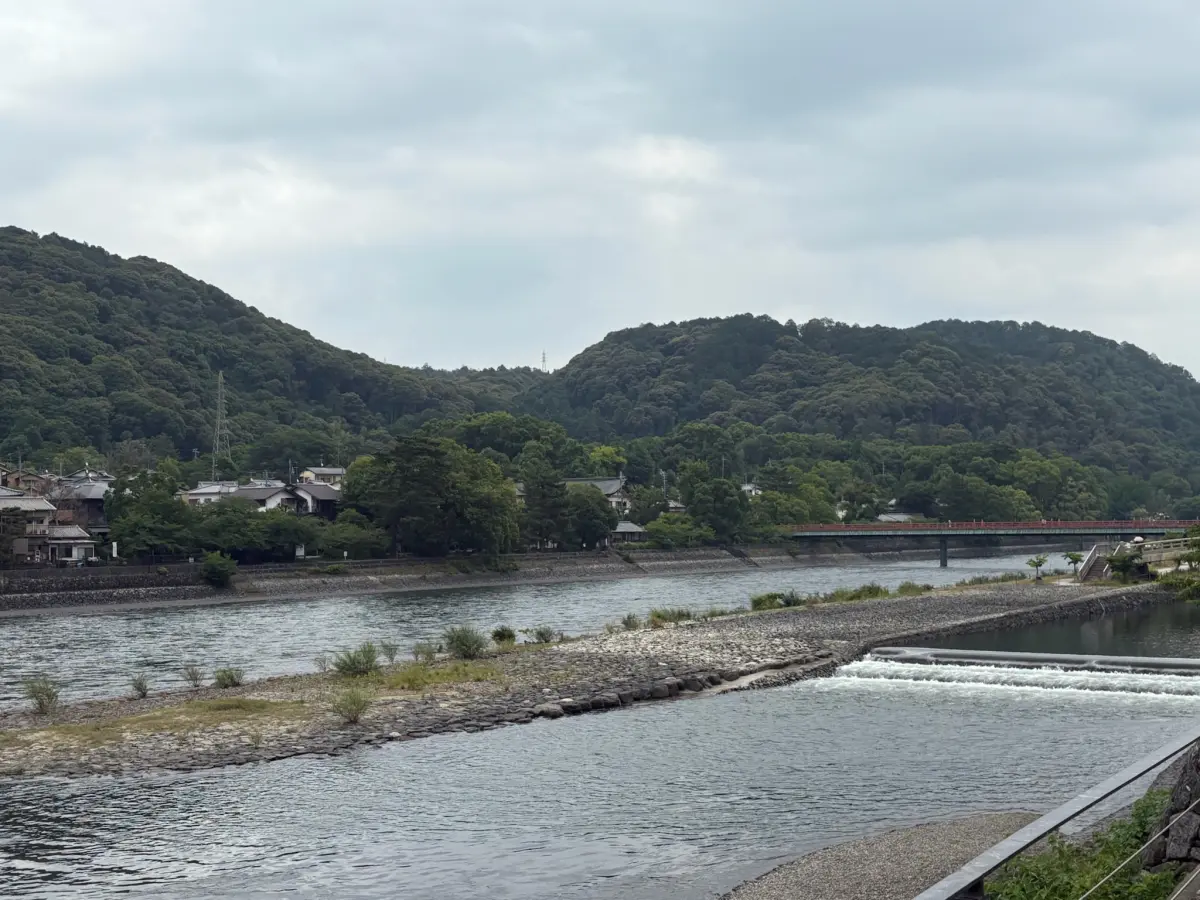
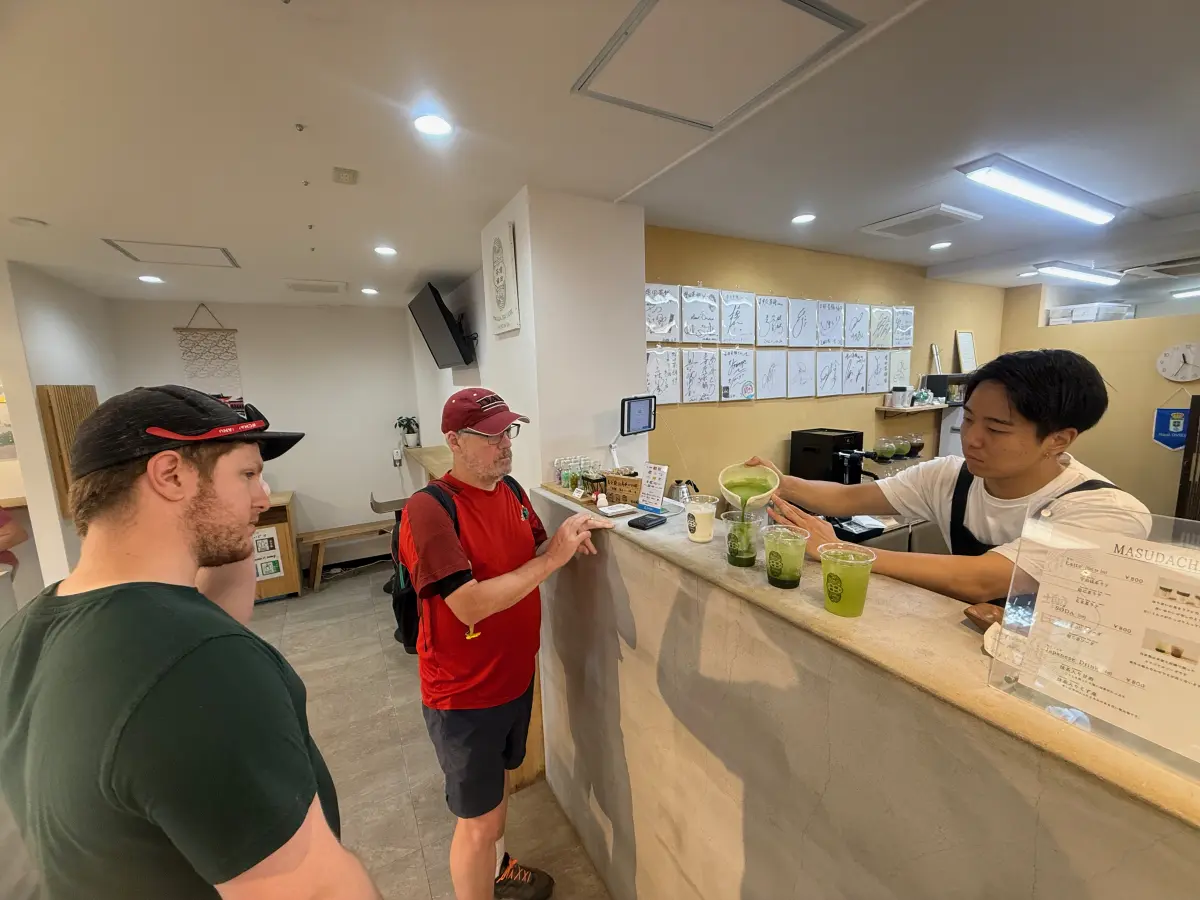
First, we drove to Byōdō-in Omotesando (平等院表参道) 🗾 in Uji. This is a short street leading to the Byōdō-in Temple (祇王寺) 🗾, with many tea shops along the way. We took some pictures by the Uji River, then visited Masuda Chaho (ますだ茶舗) 🗾, a green tea (matcha) shop, where we tried a few different matcha drinks.
From there, we walked along the Ometesando road towards the temple.

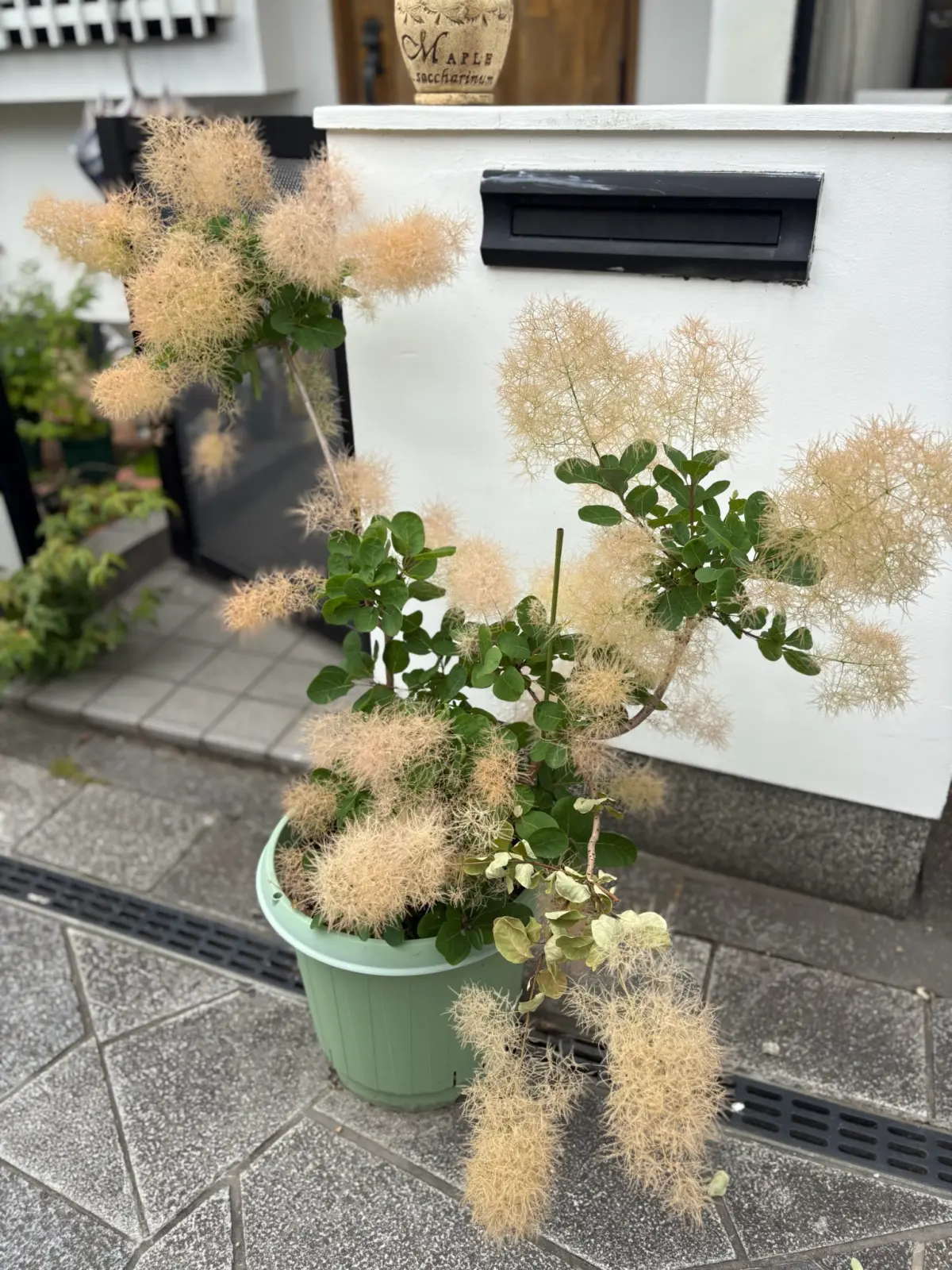
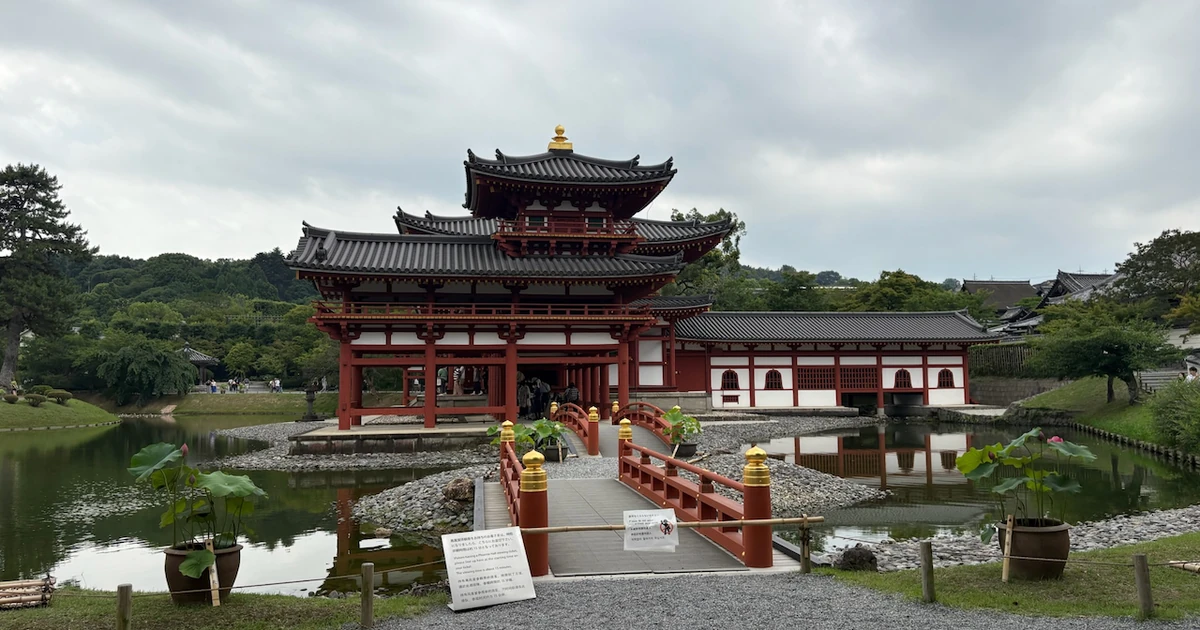
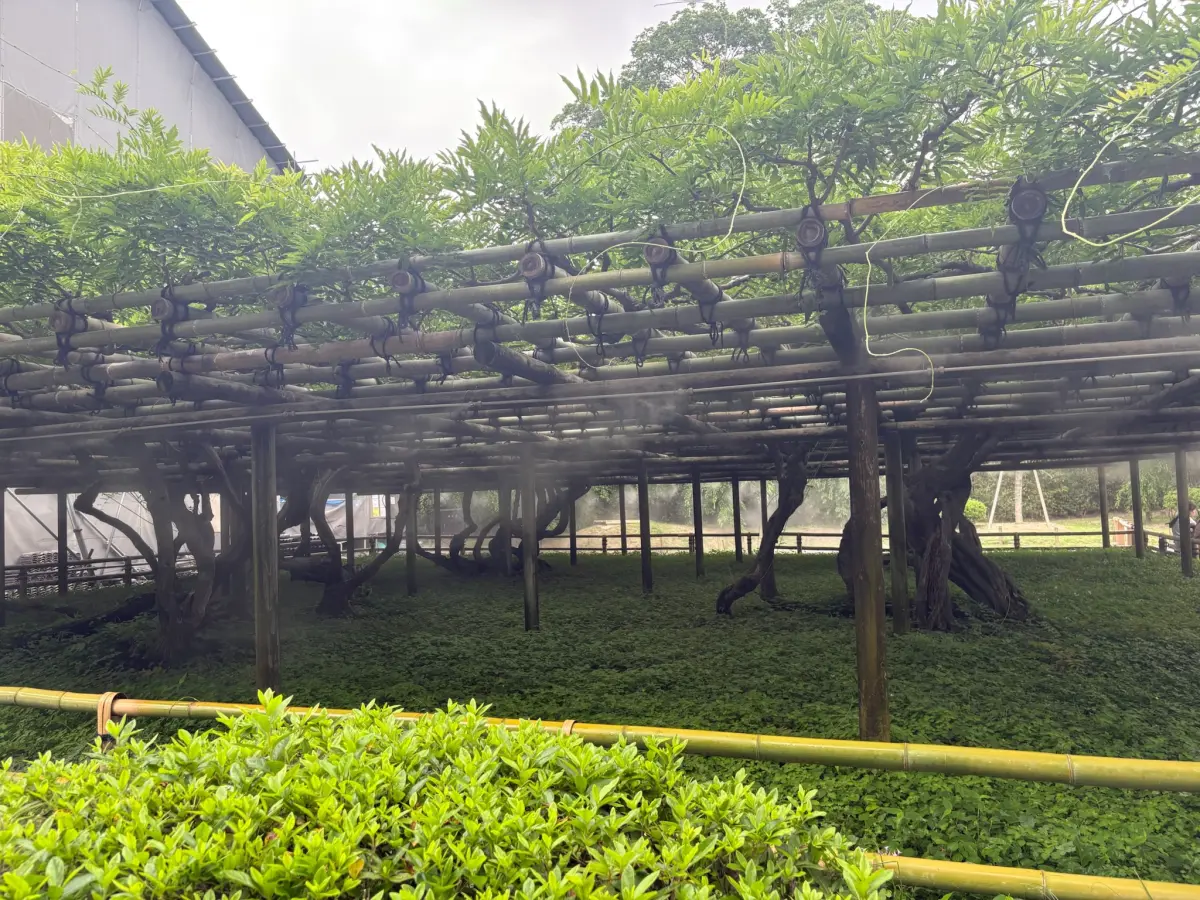
Byōdō-in Temple (Temple of Equality) in Uji, Japan, is a UNESCO World Heritage site known for its 11th-century Phoenix Hall, set in a scenic garden with, among other flora, a famous roughly 250-year-old wisteria trellis that blooms in late April to early May. This temple was originally built in 998 during the Heian period as a rural villa for the high-ranking courtier Minamoto no Shigenobu, Minister of the Left. It was converted to a Buddhist temple in 1052.
A replica of this 900-year old temple was dedicated in August 1968 on the island of Oʻahu in Hawaiʻi to commemorate the 100th anniversary of the first Japanese immigrants to Hawaiʻi.
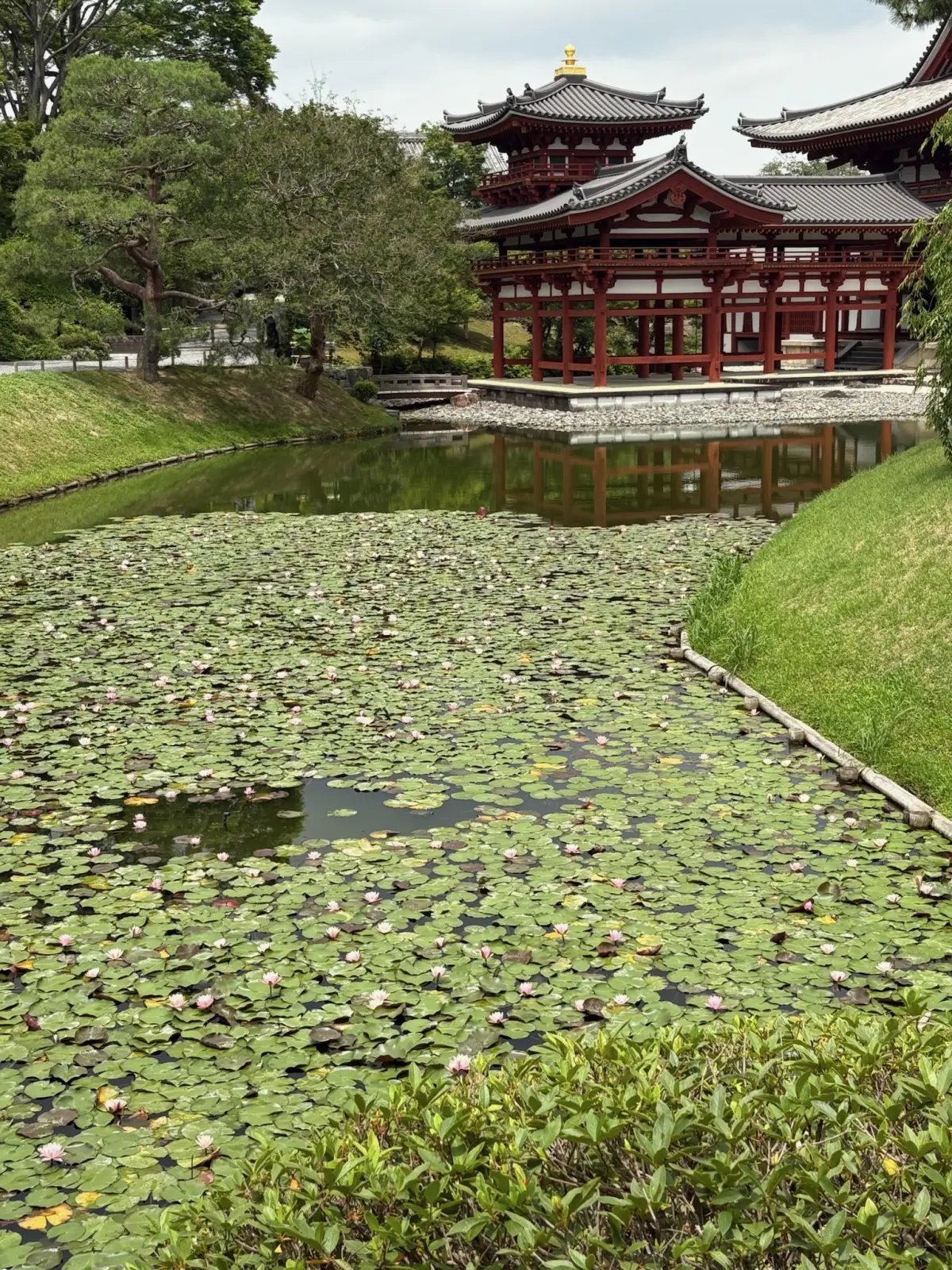
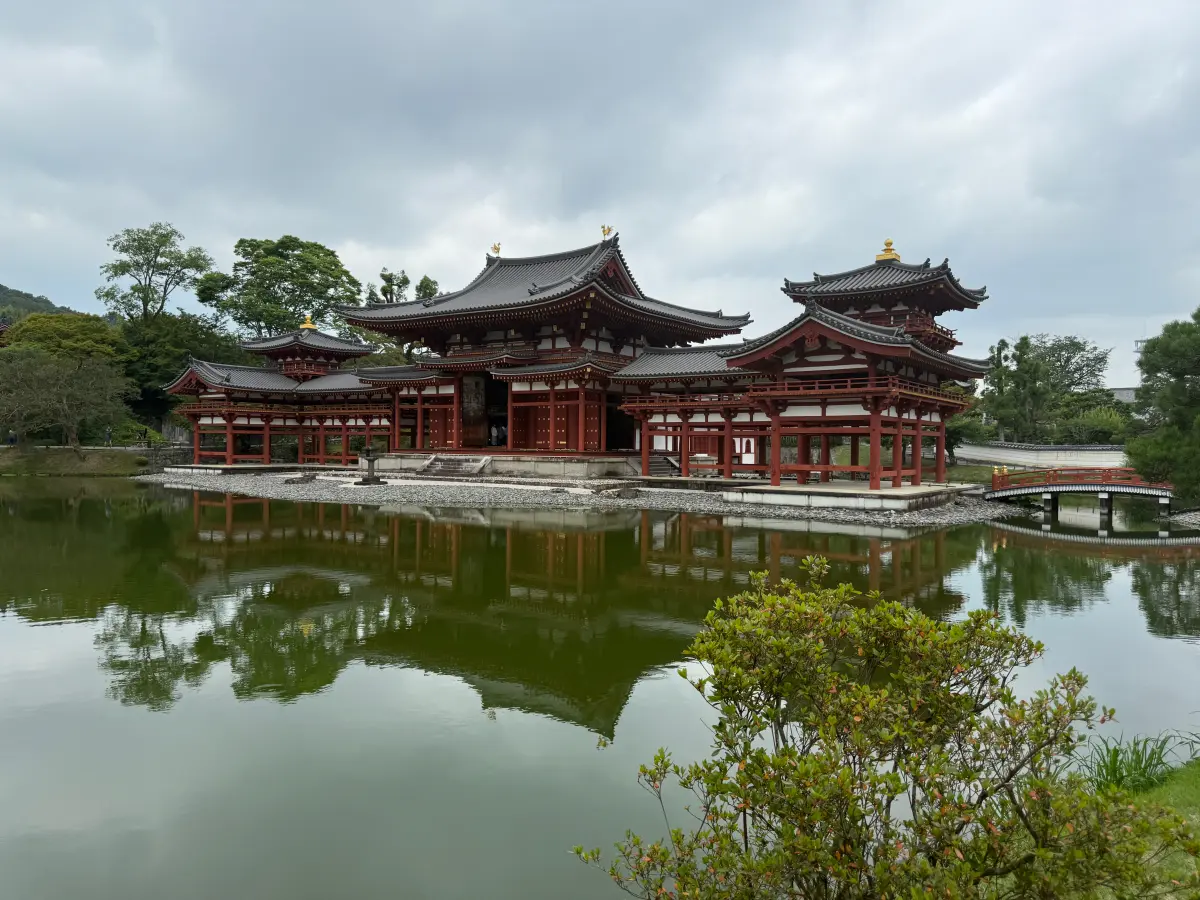
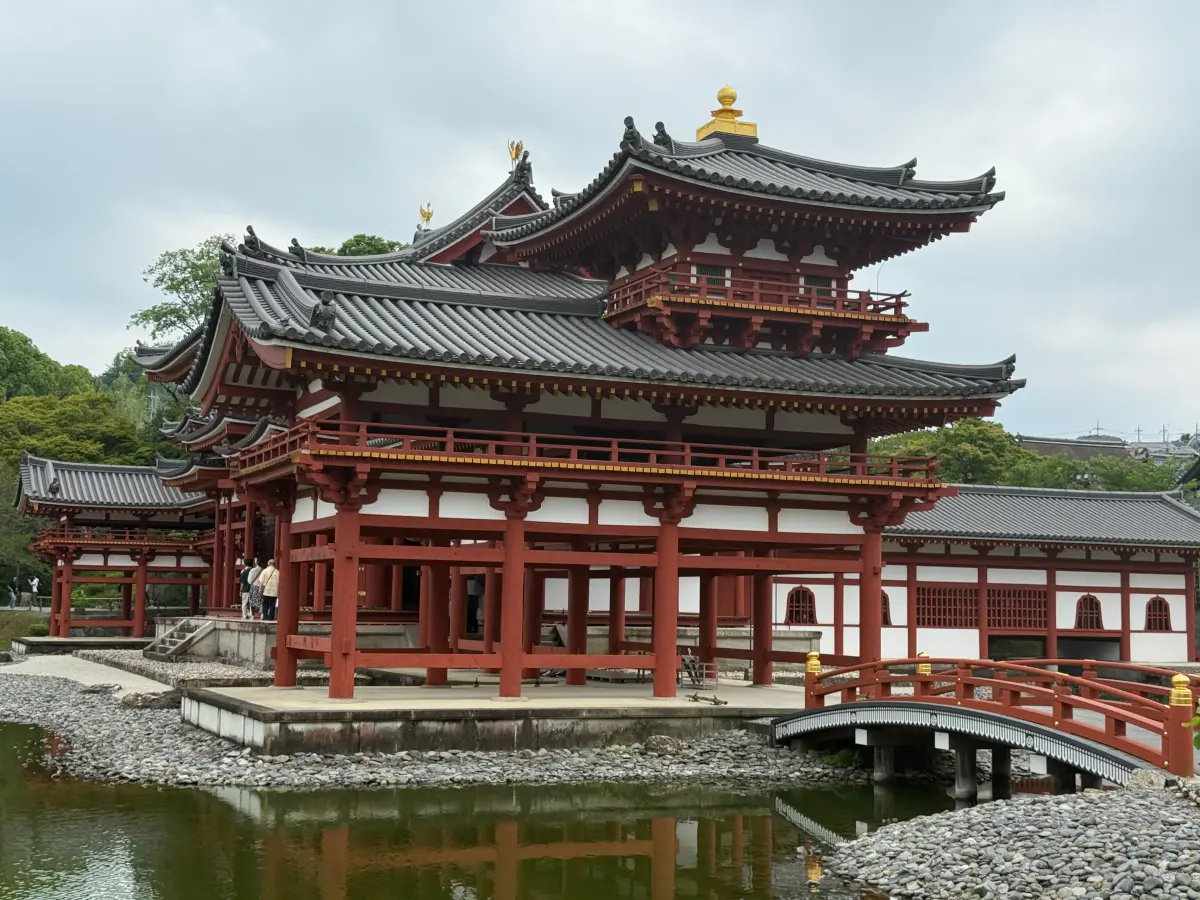
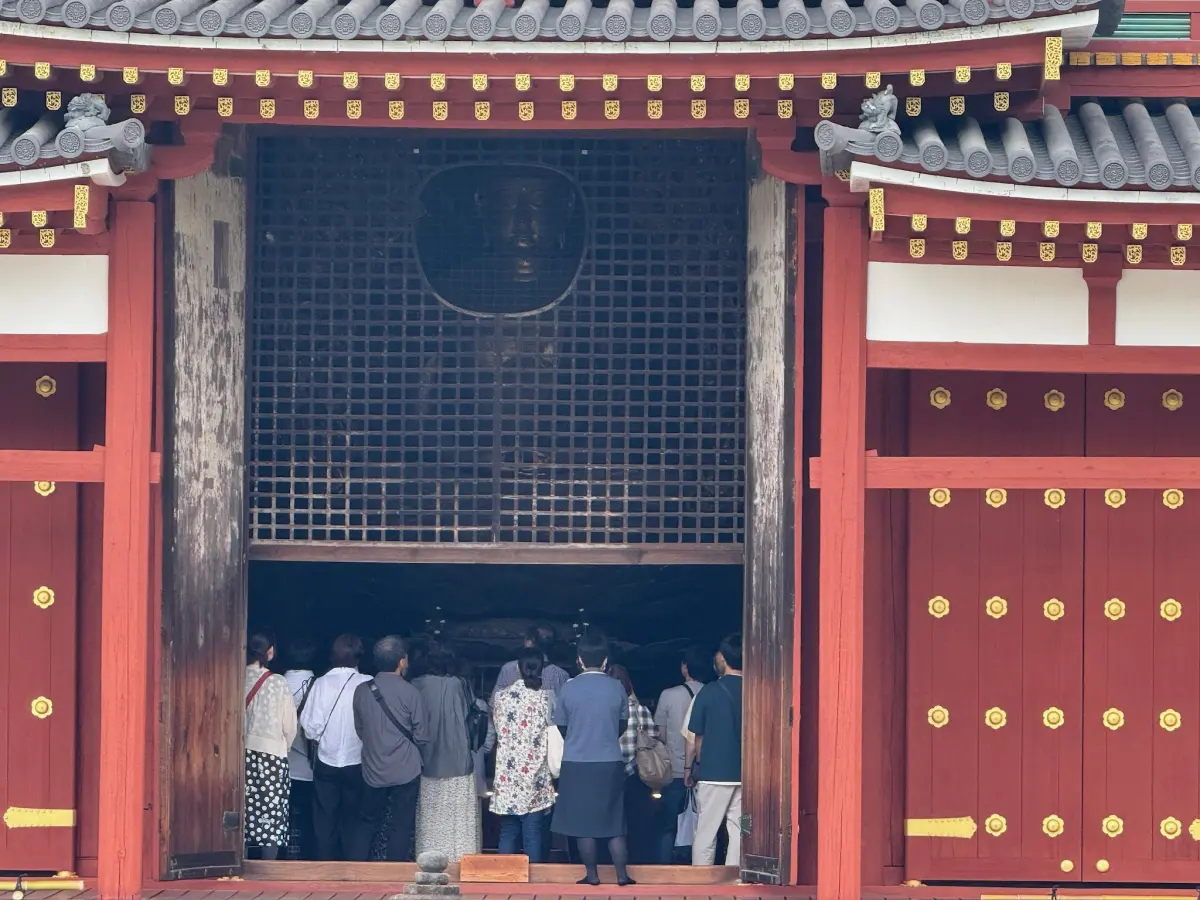
Notable in the close-up of Phoenix Hall is the hole in the façade in front of Amida Buddha (Amitābha). The façade and overall design represent the Buddhist “Pure Land” (paradise). The temple is designed to face east, allowing the morning sun to illuminate the hall, symbolizing new beginnings, enlightenment, and the rising sun, often associated with the “Sun Faced Buddha,” a metaphor for eternal, unchanging truth.