Kyoto: Gyoen National Garden and Imperial Palace
First thing our guide Taka took us to was the Gyoen National Garden and Imperial Palace.
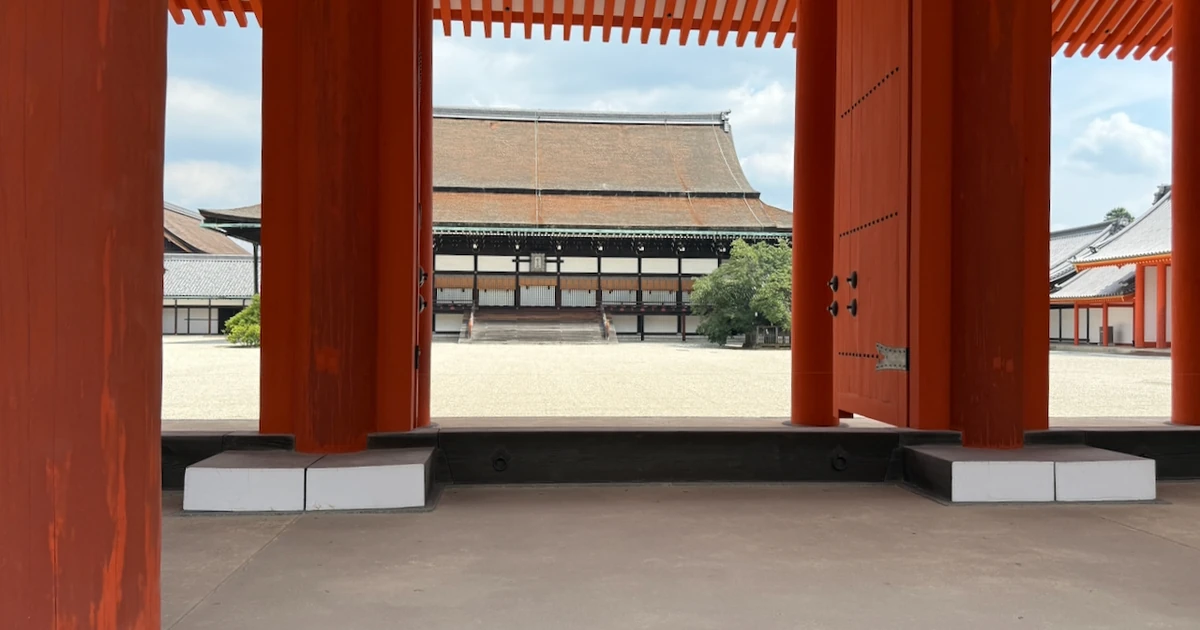
Today we were met at our hotel by our guide Taka. He works for a taxi company, but on certain days he hires himself out as a guide. He has lived in the US, so he speaks English quite well. He brings his taxi for transport, eliminating the need for buses and taxis and making access to some locations easier.
Today, on our first day with him, we will explore various sites in Kyoto we haven’t visited yet, and tomorrow we’ll go outside Kyoto. He has picked some not-so-touristy places for us, but of course, some locations are must-sees, even with tourists.
Our previous explorations, on our own, were chosen in coordination with him as things we could easily do ourselves, so we can spend the next two days on things that are either a little harder to reach or would benefit from the presence of an experienced guide. The first location to visit today was the Sentō Imperial Palace (仙洞御所) 🗾 located inside the Kyoto Gyoen National Garden.
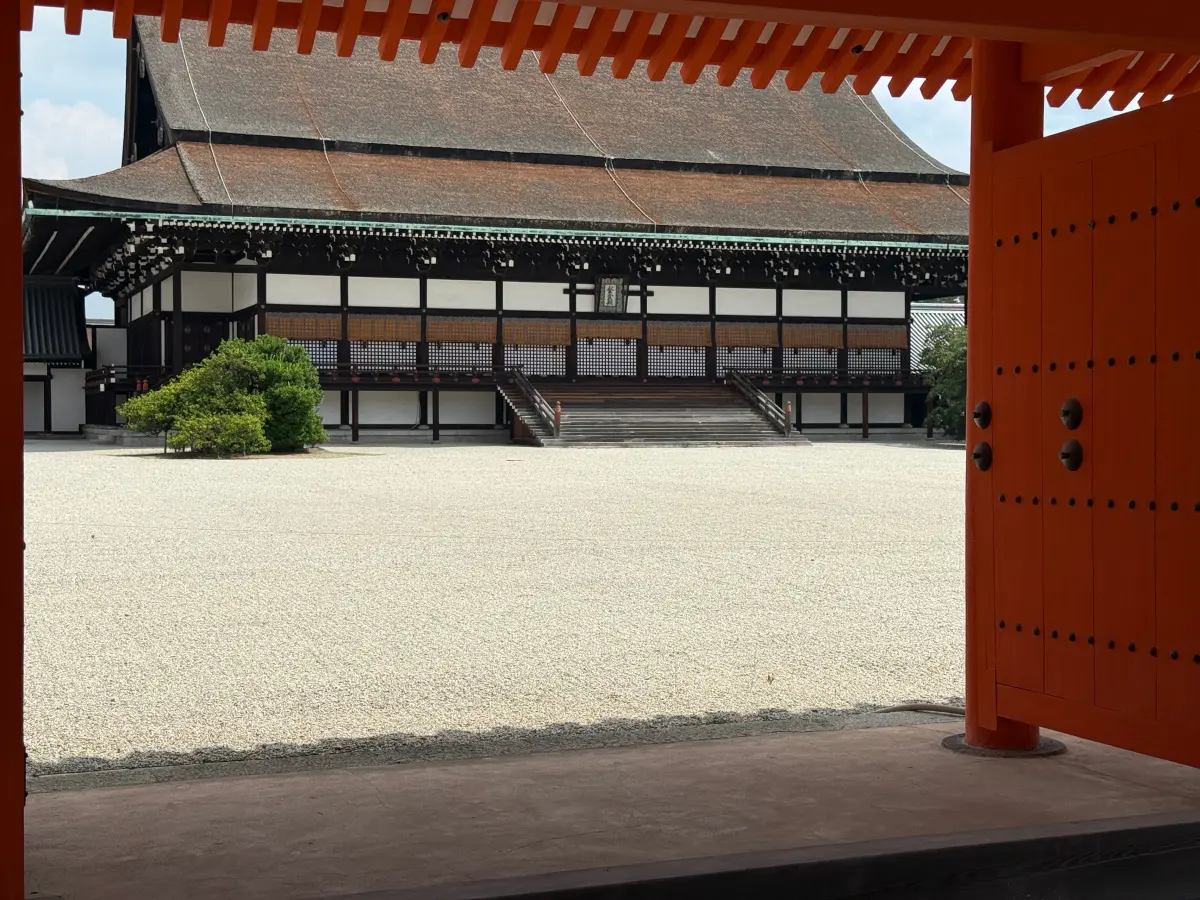
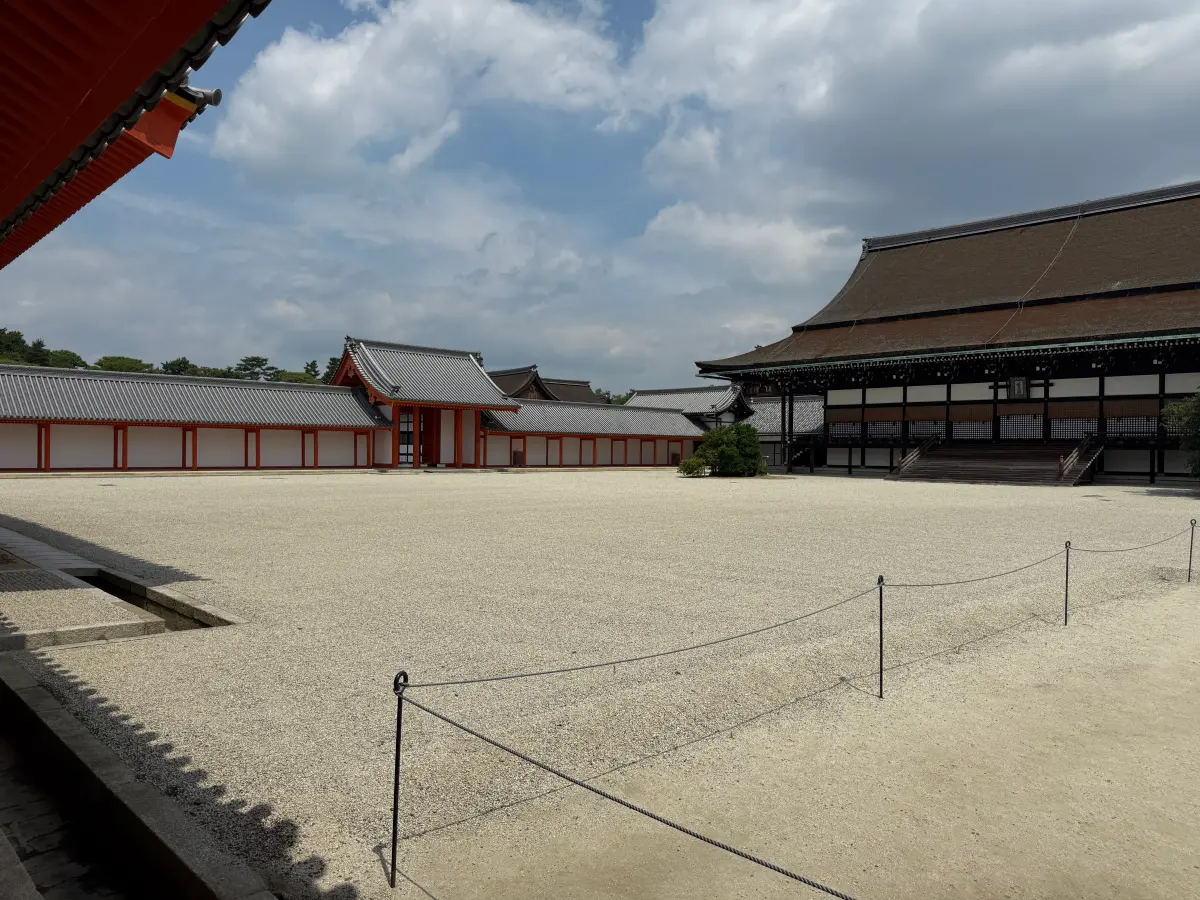
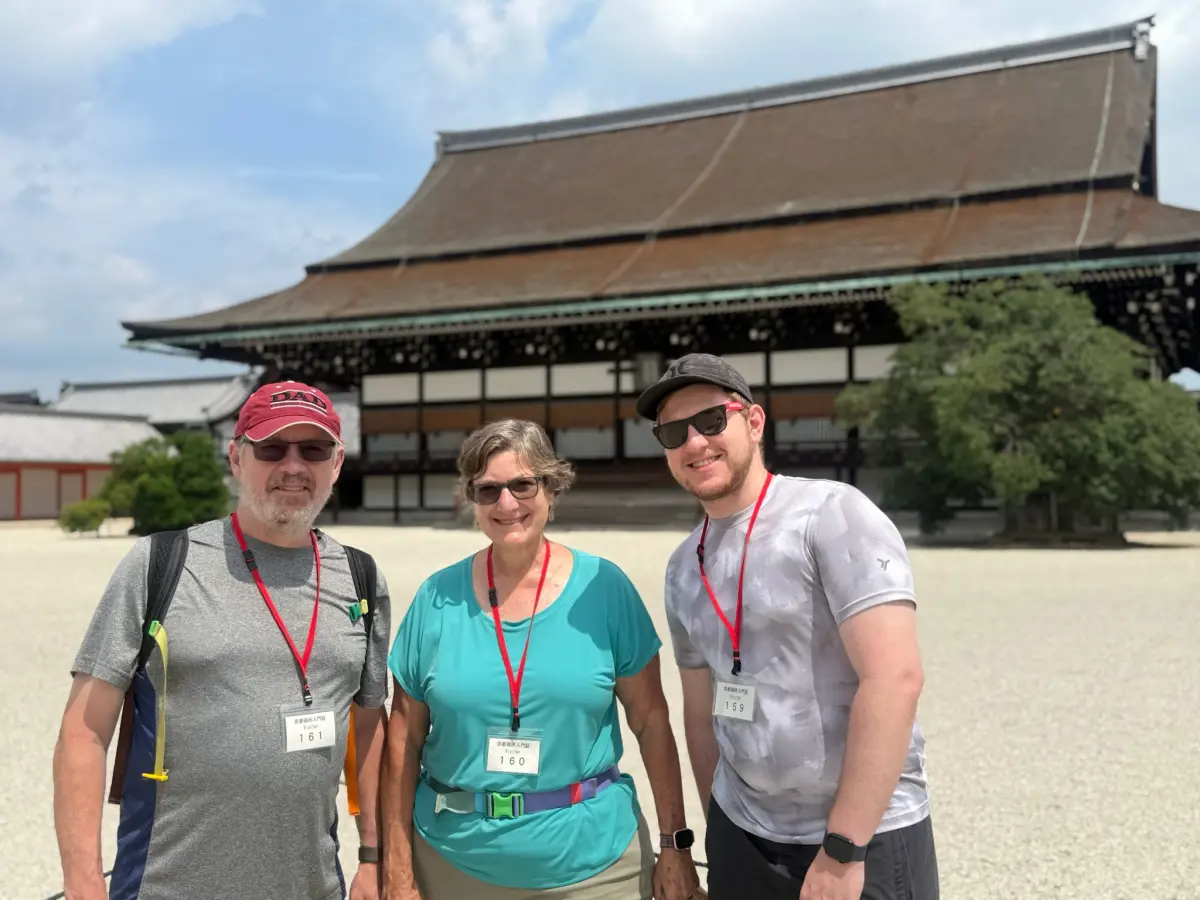
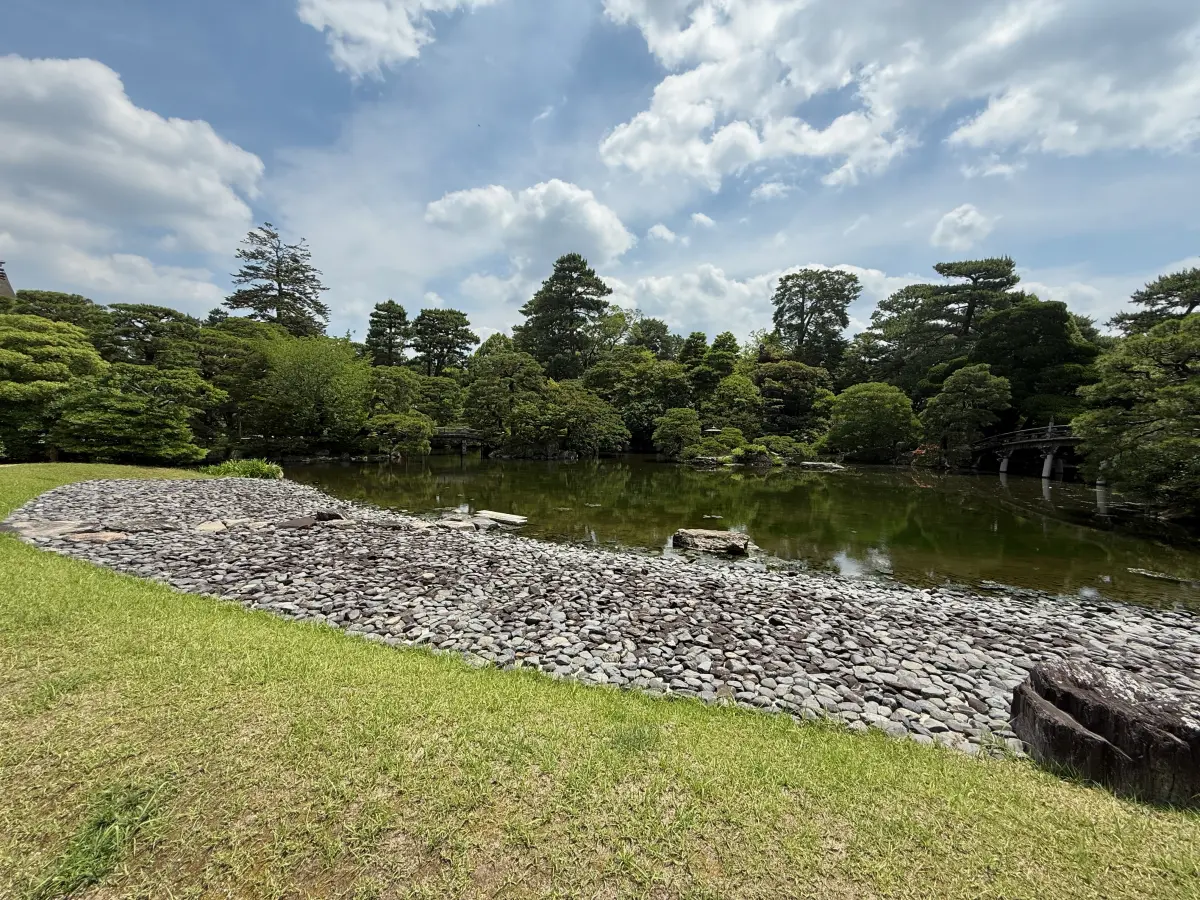
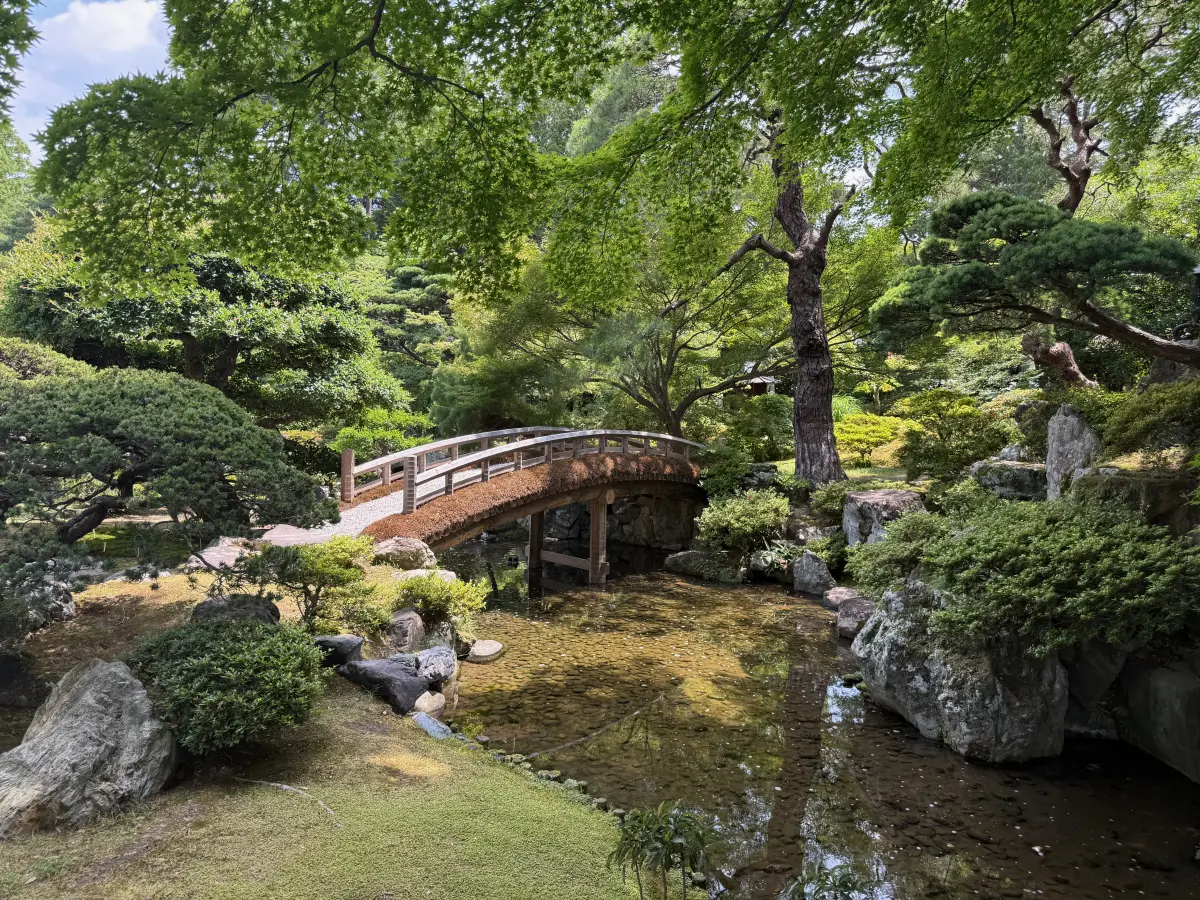
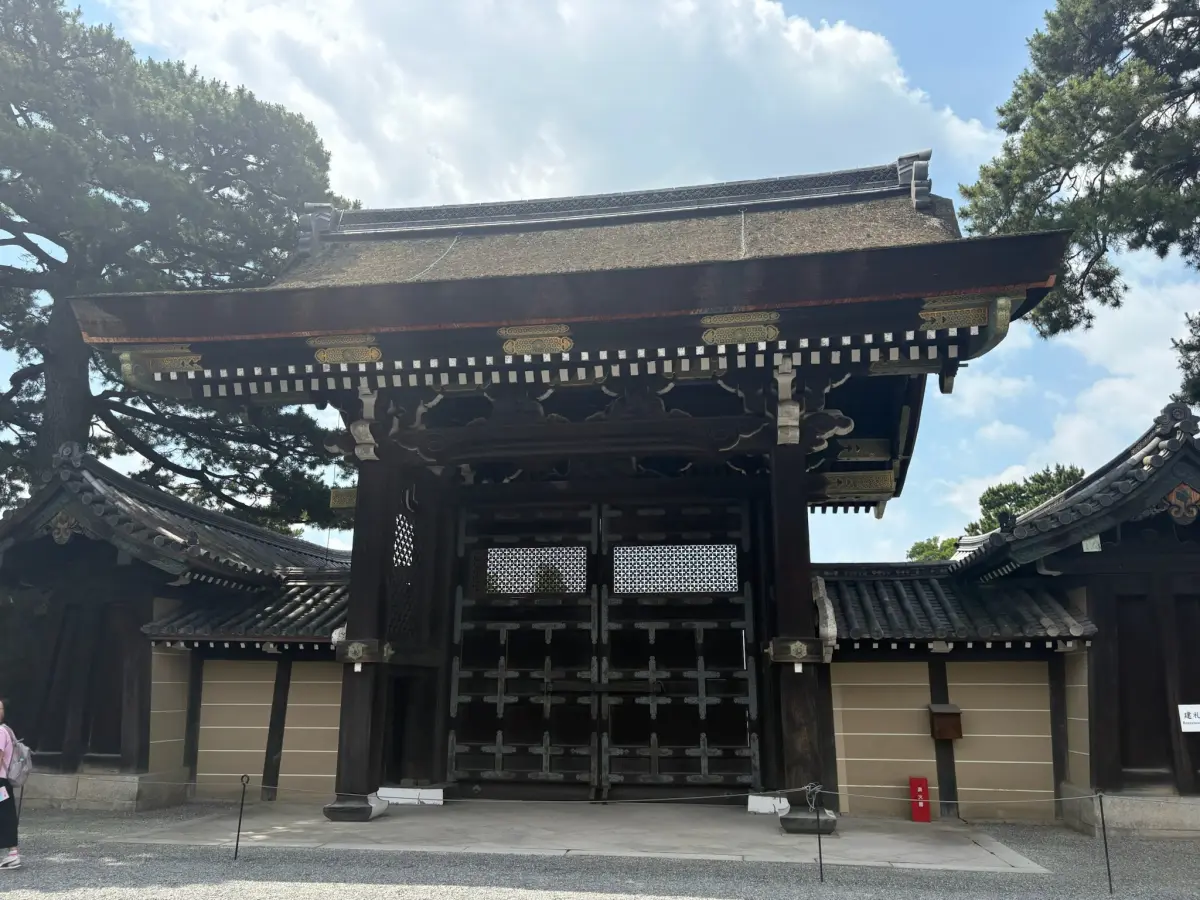
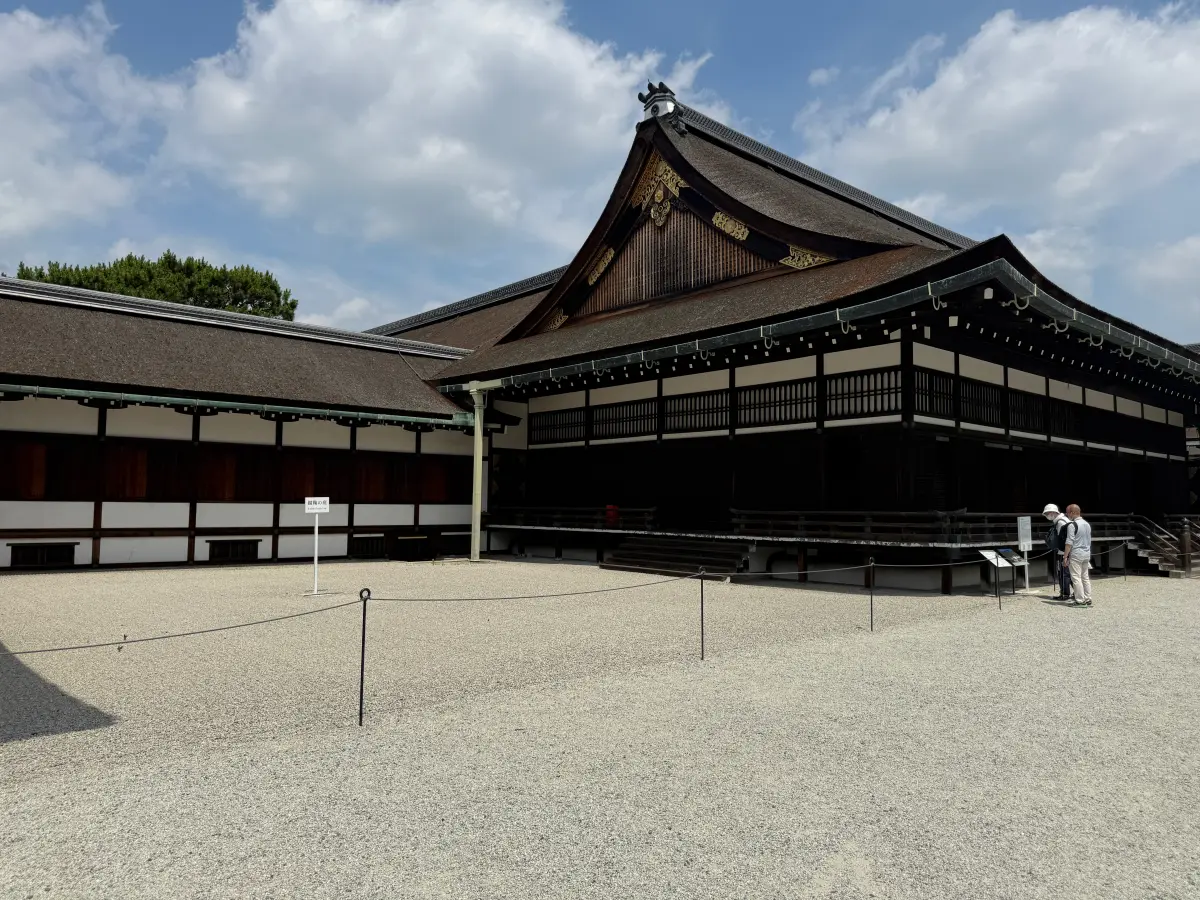
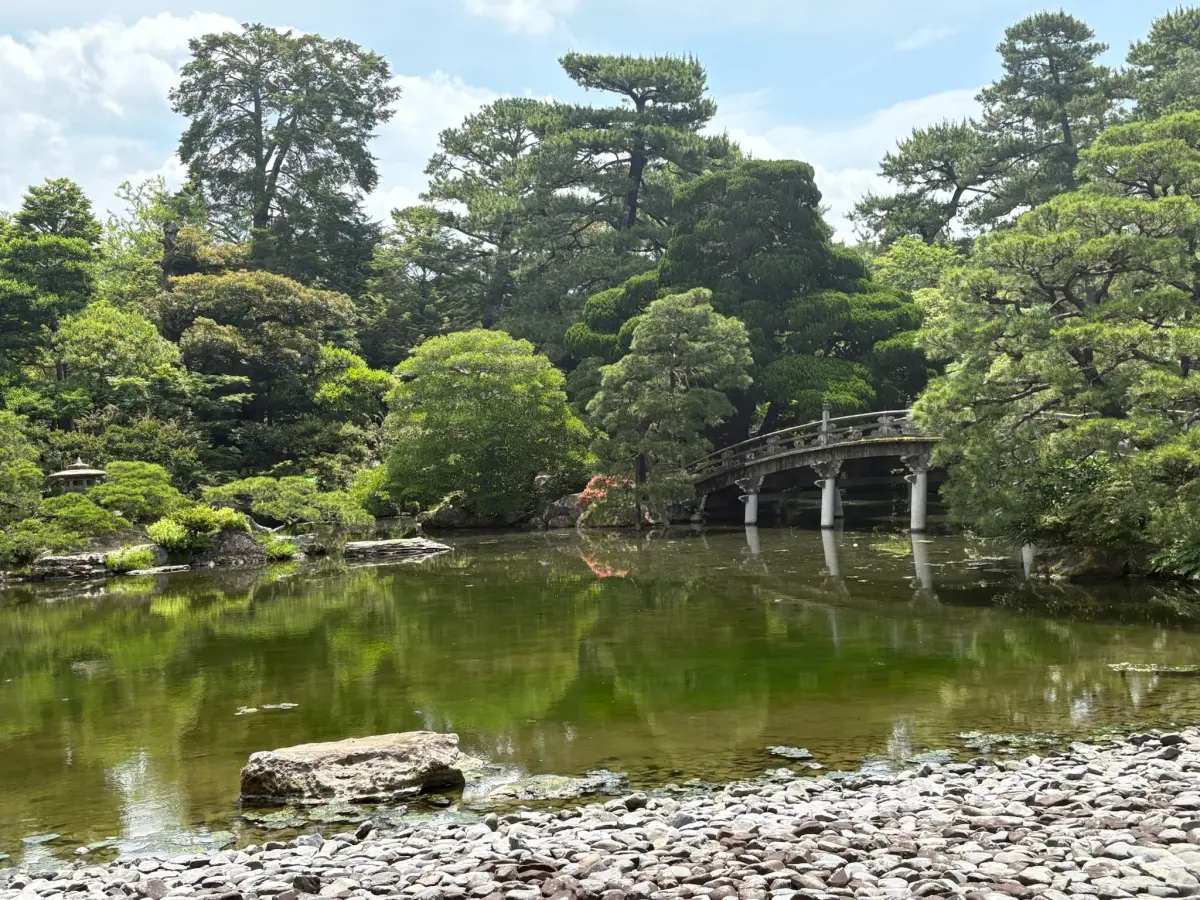
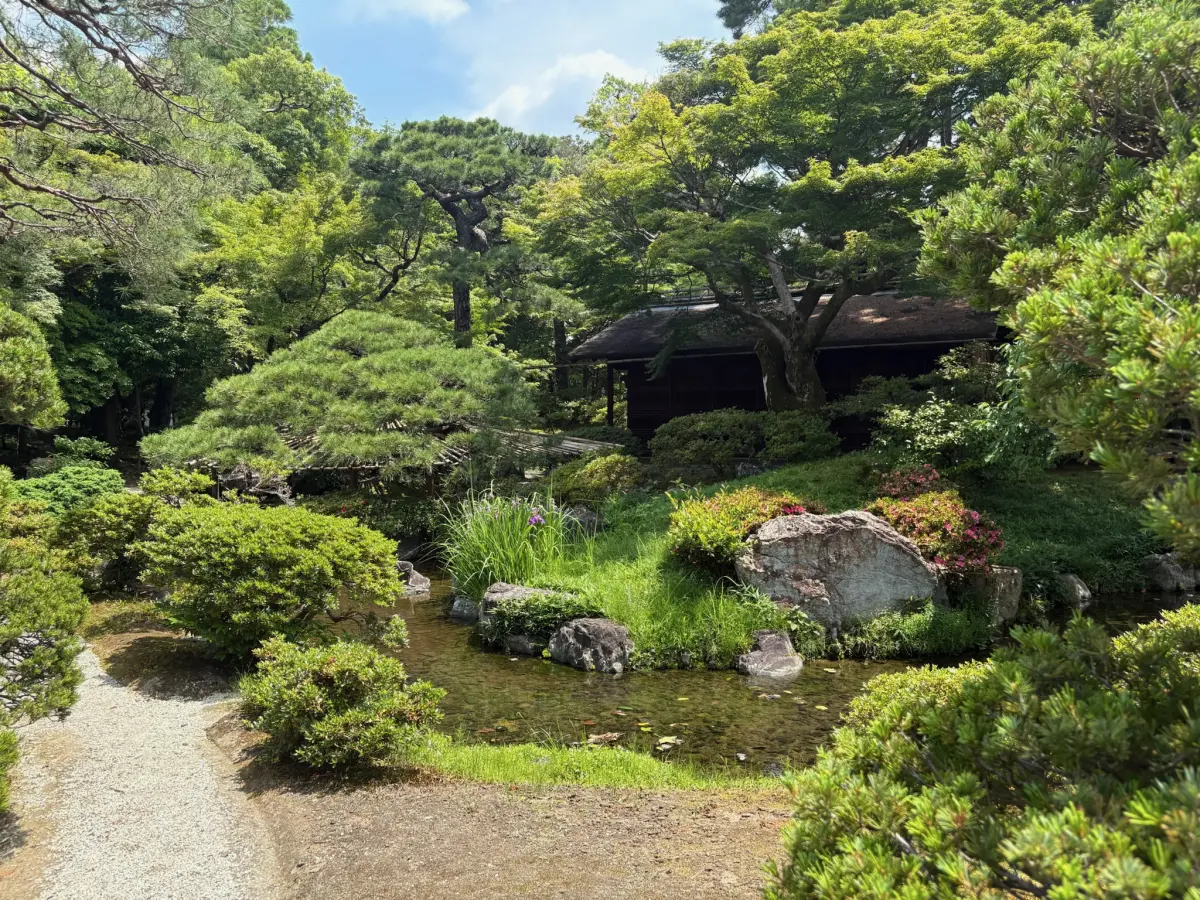
None of the buildings we visited had inside access! The area, which is much larger than the few photos would suggest, was not very busy, so we walked around and got explanations of the importance of some of the buildings.
In particular, about the history and current use of Shishinden. This building dates back to the Heian period (794-1185). The Shishinden became the stage for the dawn of a new era with the Meiji Restoration. It was the site for the proclamation of the Gokajo-no-goseimon (Charter Oath or Five-Article Oath) in 1868 and served as a venue for Imperial audiences with foreign envoys, and all kinds of court ceremonies, and today holds the Takamikura (Imperial Throne) and the Michodai (August Seat of the Empress), which are used exclusively for the Enthronement Ceremony.
We could easily have spent several more hours, but there was more to see elsewhere, so on we went.